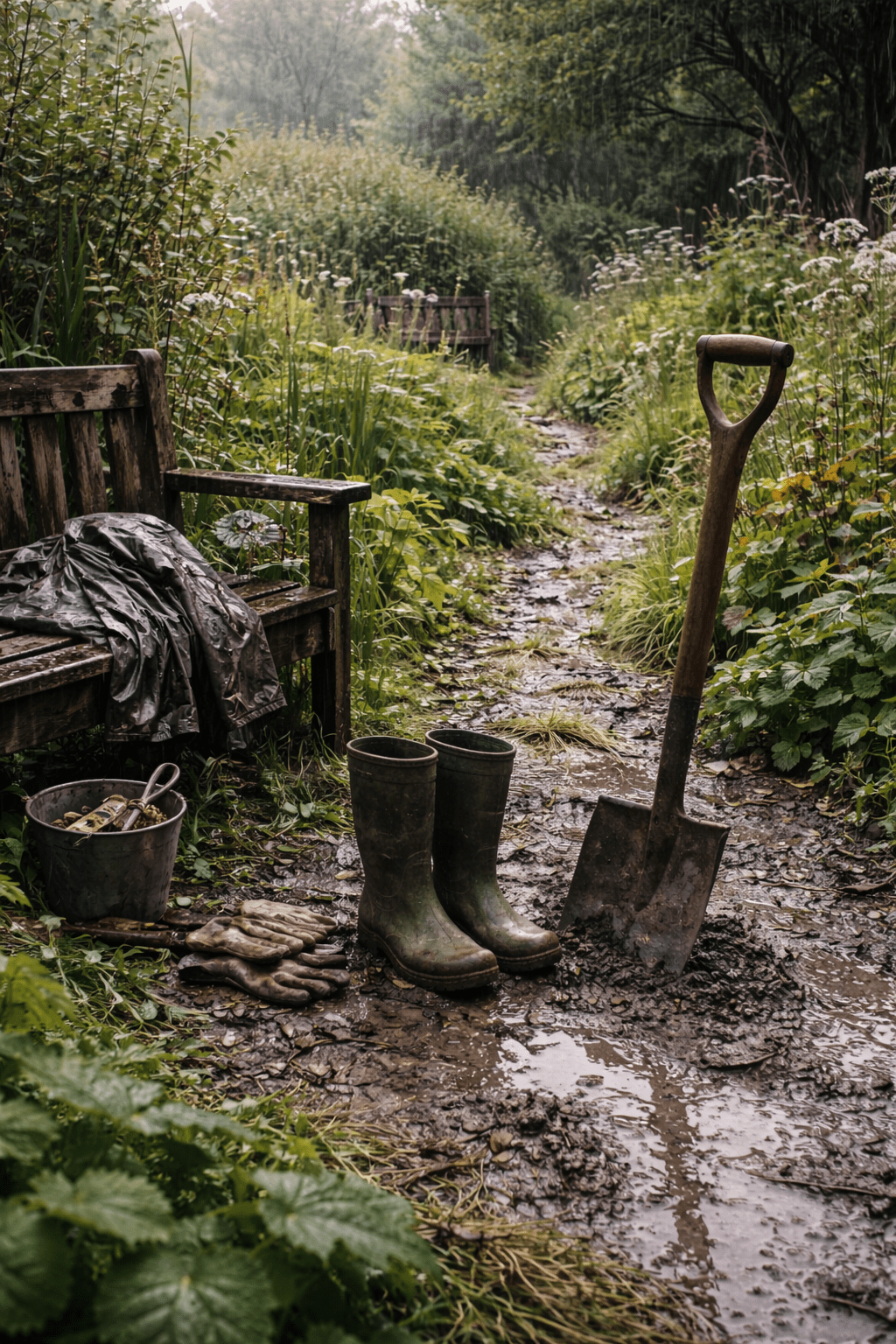
| Knowing when effort helps — and when it harms soil and self Rain is often treated as a test of commitment. If you’re serious, you’ll go out anyway. If you care enough, you won’t let the weather stop you. Gardening culture quietly rewards pushing through, even when conditions are working against you. That mindset causes more damage than missed days ever could. Gardening in the rain is not automatically wrong. But it’s not automatically virtuous either. Knowing the difference is one of the clearest markers of experience. Rain changes everything the moment it hits the ground. Soil structure shifts. Weight increases. Drainage patterns reveal themselves. What was firm becomes plastic. What was resilient becomes vulnerable. The same action that helps in dry weather can undo weeks of progress when the ground is wet. The garden feels the difference immediately. So does the gardener. One of the biggest misunderstandings is assuming rain is neutral. It isn’t. Light rain behaves differently from prolonged saturation. A passing shower refreshes. Sustained rainfall overwhelms. Working in the middle of the two without recognising which one you’re dealing with is where most mistakes happen. Wet soil remembers pressure. Foot traffic compresses air spaces that roots rely on. Wheelbarrows cut ruts that channel water in the wrong direction. Digging smears soil particles together, reducing structure rather than improving it. These effects aren’t dramatic at first. They show up later, as poor drainage, weak growth, and soil that never quite recovers. By the time the damage is visible, the moment to avoid it has long passed. Gardening in the rain is often justified by the urgency of the task. Jobs feel pressing. Weeds won’t wait. Lawns are getting long. There’s a sense that if you don’t act now, you’ll lose control. But wet conditions amplify the cost of every decision. Rain demands discrimination, not determination. There are tasks that suit damp conditions. Gentle hand weeding in loose soil can be easier after rain. Light pruning can be fine if you’re not spreading disease. Observational work is often better in wet weather because problems are more readily apparent. But there are also tasks that should stop entirely. Digging. Heavy mowing. Rotavating. Dragging equipment across beds. Anything that relies on soil resilience rather than delicacy should wait. The mistake is treating all work as equal. Another overlooked aspect of gardening in the rain is the gardener’s body. Cold, wet conditions reduce grip, slow reaction time, and increase fatigue. Slips happen quietly. Strains build unnoticed. What feels manageable for an hour becomes a problem by the next morning. The culture of pushing through doesn’t account for cumulative wear and tear. Gardening is physical work. It relies on joints, balance, and repetition. Working in the rain increases the load while reducing feedback. You’re less aware of how hard you’re pushing until you’ve already gone too far. Restraint here is not weakness. It’s longevity. There’s also the question of intention. Gardening in the rain often becomes about proving rather than achieving. You’re out there because you feel you should be, not because the work actually benefits the garden. That distinction matters. Gardens don’t reward martyrdom. They respond to timing. Knowing when to stop is as important as knowing when to start. Rain provides a clear boundary if you’re willing to respect it. Some of the most useful gardening days involve not touching the soil at all. Watching how water moves. Noting where puddles linger. Seeing which areas drain first and which stay cold and heavy. These observations are lost if you’re too busy trying to work through them. Rain shows you the truth of a garden’s design. Another reason people feel compelled to garden in the rain is guilt. Time is limited. Weather windows are unpredictable. Skipping a day feels like falling behind. But gardens don’t operate on attendance. They operate on conditions. Forcing work into unsuitable conditions often creates more work later. Compacted soil takes seasons to recover. A damaged structure invites weeds. Poor drainage stresses plants through the summer. One rainy afternoon of effort can cost months of quiet correction. Waiting is often the faster option. This doesn’t mean abandoning responsibility. It means shifting focus. Wet days are ideal for tool maintenance, planning, reviewing problem areas, or doing lighter work that doesn’t involve pressure or disturbance. They are also legitimate rest days. Gardening is not improved by exhaustion. There is a deeper lesson here about control. Rain reminds us that gardens are not ours to command. They respond to forces far larger than intention. Respecting those forces is part of working well, not a concession to them. The best gardeners don’t fight conditions; they work with them. They read them. Rain also exposes a common confusion between effort and care. Doing more does not always mean caring more. Sometimes care looks like restraint, delay, or walking away and letting things settle. This can feel uncomfortable in a culture that equates value with output. But gardens don’t share that value system. They respond to patience. One of the quiet skills that develops over time is recognising when rain has tipped conditions from workable to harmful. It’s rarely dramatic. It’s felt underfoot. In the weight of the soil. In how tools behave. In how quickly fatigue sets in. Listening to those signals is part of learning the garden. Gardening in the rain is not about bravery. It’s about judgment. Sometimes the right decision is to carry on gently. Sometimes it’s to stop entirely. Both choices require attention and experience. There is no badge for pushing through bad conditions. There is only the long-term result. Healthy soil is built by what you don’t do as much as what you do. Healthy gardeners last by knowing when to pause. Rain offers a clear invitation to practise both. You don’t need to earn your place in the garden by suffering in it. Sometimes the most responsible thing you can do is leave the ground alone and yourself dry. The garden will still be there tomorrow. Often, it’s better to wait. |
Unless stated, featured images are my own work, created independently or with the assistance of AI.
 Earthly Comforts