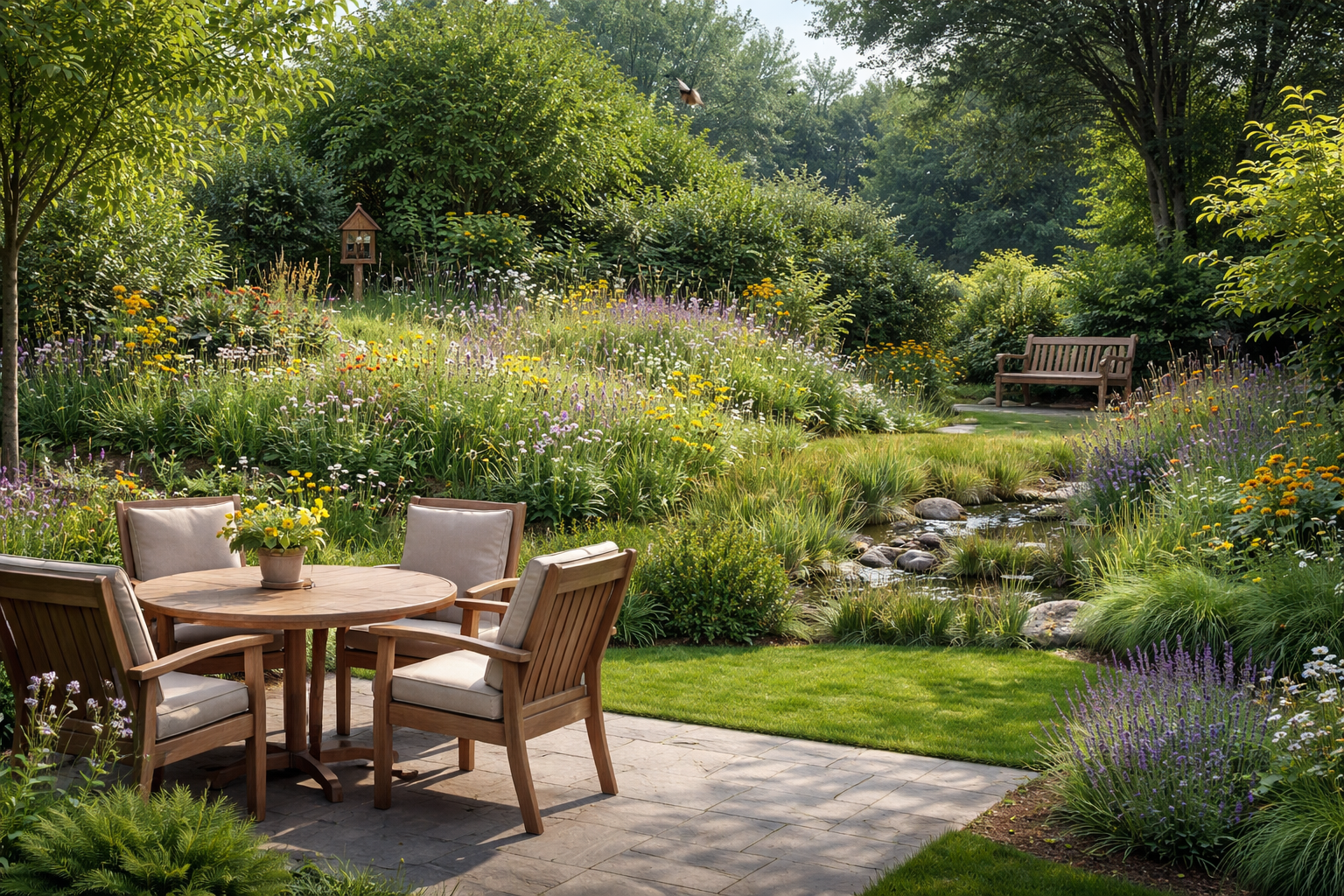
| Biodiversity is often portrayed as universally good, unquestionably positive, and always welcome. We are encouraged to plant wildflowers, leave areas untidy, add ponds, install log piles, and invite nature back into our lives. In principle, this is sound advice. A healthy, diverse ecosystem underpins soil fertility, pollination, climate resilience, and long-term environmental stability. But in practice, biodiversity is not always neutral, nor is it always benign when it is placed directly beside homes, paths, workspaces, or heavily managed gardens. Supporting biodiversity does not have to mean inviting every ecological process into immediate proximity. One of the biggest misunderstandings around biodiversity is that “more nature” automatically means “better outcomes everywhere.” In reality, ecosystems function best when they are appropriate to their setting. A wildflower meadow on the edge of a town can be a haven for insects without disrupting daily life. The same meadow squeezed into a narrow domestic frontage may create maintenance issues, accessibility problems, pest pressure, or conflict with neighbouring properties. Biodiversity thrives on scale, continuity, and thoughtful placement—not simply enthusiasm. Domestic gardens, courtyards, and shared green spaces are often expected to perform multiple roles at once. They are places for rest, safety, visibility, drainage, access, and sometimes for growing food. When biodiversity features are added without considering these roles, the result can feel chaotic rather than restorative. Overgrown areas can harbour rodents, create damp microclimates, or reduce natural surveillance. Dense planting near buildings can trap moisture against walls or interfere with gutters and foundations. These are not arguments against biodiversity; they are arguments for boundaries. There is also the issue of human tolerance. Not everyone experiences wildlife in the same way. What feels like a joyful sign of ecological success to one person may feel intrusive or distressing to another. Insects entering homes, birds nesting in roof spaces, or amphibians crossing pathways can create real anxiety or inconvenience. Sustainable landscapes should respect human comfort as well as ecological function. A garden that causes ongoing stress is unlikely to be cared for in the long term, and neglected biodiversity rarely benefits anyone. Supporting biodiversity “not nearby” means creating intentional distance between wild systems and human infrastructure. This might involve encouraging dense planting at the rear of a garden rather than along doorways or seating areas, or placing habitat features away from boundary fences where they could affect neighbours. It can also mean using transition zones—areas that gradually shift from tidy, managed planting into more natural growth. These buffer spaces reduce conflict while still allowing species to thrive. Another important consideration is management capacity. Biodiverse areas still require oversight. Meadows need cutting regimes. Ponds need monitoring. Shrubs need thinning. When these elements are placed in awkward or highly visible locations, they are more likely to be overmanaged or removed altogether. Locating biodiversity features where they can be left largely undisturbed improves their ecological value and reduces pressure on the gardener or land manager. There is also a difference between biodiversity and neglect, a line that is often blurred. True biodiversity involves a variety of species interacting in balance. Neglect often results in dominance by a small number of aggressive plants or pests. When wild areas are placed too close to high-use spaces, they are more likely to be “half managed,” creating conditions where problems flourish rather than ecosystems. Distance allows nature to self-regulate more effectively. From a design perspective, supporting biodiversity at arm’s length allows for clearer visual structure. Humans respond well to legibility in landscapes—paths that are obvious, edges that are defined, and spaces that feel intentional. Wildness framed by order is far more likely to be accepted than wildness without context. A hedgerow at the edge of a property feels purposeful; brambles spilling across a walkway do not. Design is not the enemy of nature; it is often what allows nature to persist. Urban and suburban environments are particularly sensitive to this balance. Space is limited, and competing demands are constant. In these settings, biodiversity hubs—clusters of habitat concentrated in suitable areas—are often more effective than scattered interventions. A single well-placed wildlife strip can support more life than multiple compromised features squeezed into unsuitable spots. Concentration can be a strength. There is also an equity dimension to consider. Expecting every household to host the full ecological process can unfairly shift responsibility onto people who may lack time, resources, or physical ability. Supporting biodiversity at a community or landscape scale—through shared green spaces, field margins, reserves, or managed corridors—spreads both the benefits and the responsibilities more evenly. Not everything has to happen in the back garden. Climate resilience further reinforces the case for strategic placement. As weather patterns become more extreme, gardens and green spaces must also manage water, shade, and airflow. Over-densifying planting near buildings can exacerbate flooding or heat retention. Locating biodiverse planting where it can absorb excess rainfall or cool open areas, rather than where it might cause structural issues, is a more resilient approach. Ultimately, supporting biodiversity is about intention rather than proximity. It is possible to care deeply about the natural world while also valuing cleanliness, safety, and order in immediate surroundings. Distance does not equal disinterest. In many cases, it reflects respect for both ecological processes and human needs. The goal is coexistence, not collision. By allowing nature space to be nature, and by placing wild systems where they can truly function, we create landscapes that are healthier, more stable, and more likely to endure. Biodiversity does not need to be everywhere to matter. Sometimes, giving it room—just not right next to us—is the most supportive act of all. |
Supporting Biodiversity—Just Not Nearby
 Earthly Comforts