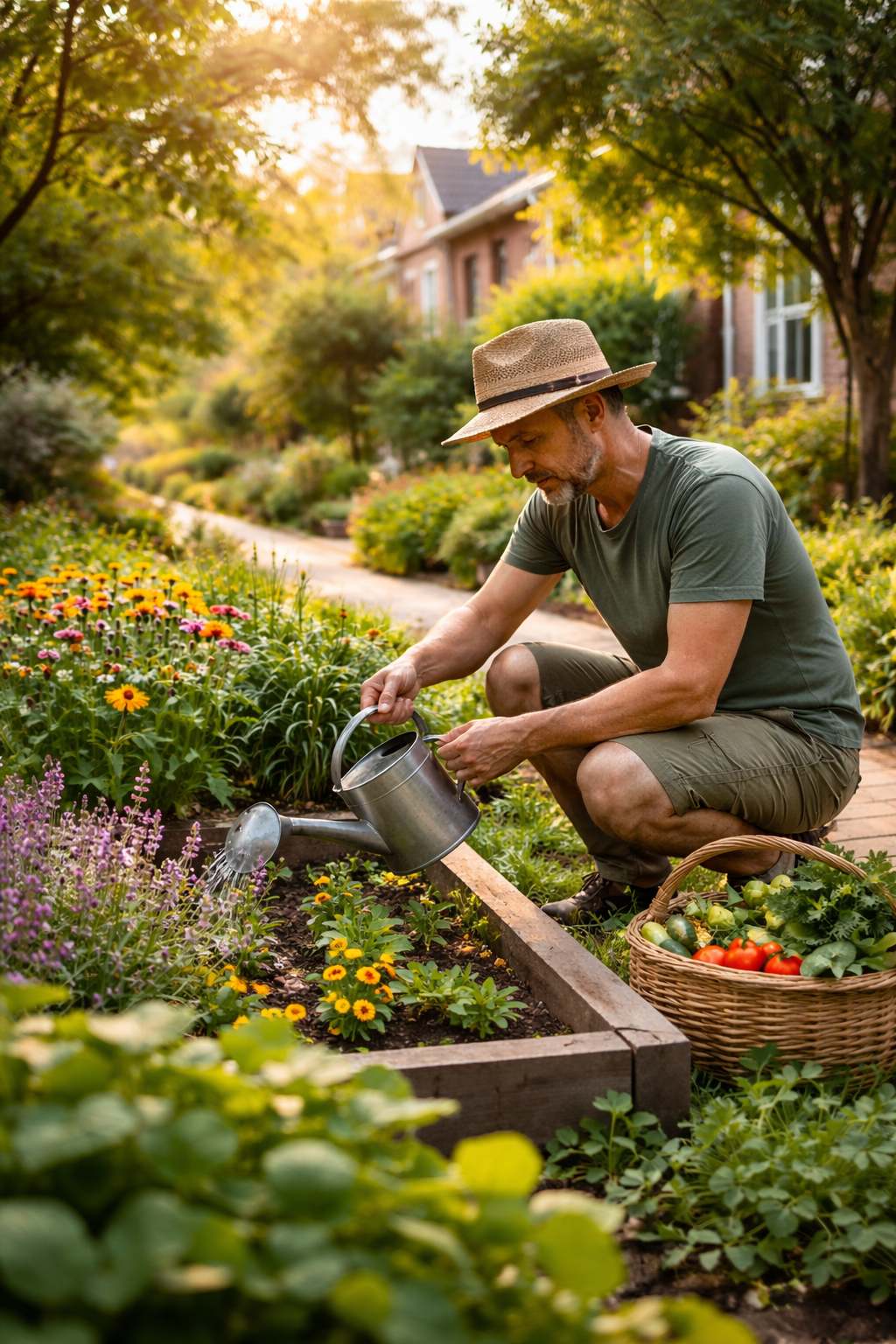
| Even When Done Alone Gardening is often spoken about as a solitary pursuit. A person, a patch of ground, a few tools, and the slow passing of time. Yet even when done alone, gardening is rarely about the individual alone. It is a quiet form of community care, one that operates through invisible connections: soil shared across boundaries, seeds passed hand to hand, habitats extended beyond fences, and rhythms that link people who may never meet. When someone tends a garden, they are participating in a much larger system. Plants do not recognise property lines. Pollinators move freely from garden to garden. Rainwater flows through multiple plots before reaching streams and rivers. In this way, even the most private garden contributes to a collective landscape. Caring for one small space improves the health of the spaces around it, often without acknowledgement or reward. Community care is usually imagined as something social and visible: organised projects, shared spaces, group efforts. Gardening offers a quieter version. It is care enacted through consistency rather than conversation. A garden that is mulched, watered, and planted with intention reduces runoff, cools the surrounding air, and supports insects and birds that serve the wider area. These benefits ripple outward, touching neighbours and ecosystems alike, regardless of whether the gardener ever speaks to them. There is also an emotional dimension to this form of care. Gardens soften neighbourhoods. They slow people down. A well-tended front garden can change the tone of a street, offering a sense of stability, pride, and reassurance. Even an unassuming patch of green can signal that someone is paying attention, that the place matters. For people walking past, especially those feeling isolated or overwhelmed, this can be quietly grounding. Gardening done alone often deepens attentiveness. Without distraction, the gardener notices subtle changes: soil structure improving, insects returning, plants responding to weather. This attentiveness mirrors the kind of care communities need but often lack—care that is responsive rather than reactive, patient rather than performative. By practising this mindset in the garden, individuals cultivate skills that translate into how they show up in the wider world. There is also the matter of time. Gardening teaches long-term thinking. Plants require care now for results that may not appear for months or even years. This outlook contrasts sharply with the short-term cycles that dominate modern life. When gardeners commit to long timelines, they are implicitly committing to a future they may not fully control. This is an act of trust in both the land and the people who will inherit it. Even solitary gardeners are often unknowingly part of informal networks. Advice is exchanged over fences. Cuttings are left on doorsteps. Surplus produce is shared quietly. These small acts rarely feel like “community work,” yet they are the glue that holds local relationships together. Gardening provides a natural, non-intrusive way to form without obligation or pressure. Wildlife-friendly gardening makes this sense of shared responsibility even clearer. When someone chooses to leave seed heads standing, create shelter, or reduce chemical use, they are prioritising the needs of creatures that rely on multiple gardens to survive. One person’s choices become part of a collective safety net. Even if done in isolation, the intention is outward-facing. There is also dignity in tending neglected or overlooked spaces. A gardener working alone may be restoring soil that has been compacted, polluted, or ignored. This mirrors forms of community care that focus on repair rather than expansion. The act says: ” This place is worth attention, even if no one is watching. That message resonates beyond the garden itself. Gardening can also be a form of self-care that indirectly supports others. A person who gardens regularly often develops greater emotional regulation, patience, and resilience. These qualities influence how they interact with neighbours, clients, family members, and strangers. Caring for a garden can make someone more capable of caring for people, even if the connection is not obvious. Importantly, gardening as community care does not require perfection. Messy gardens still provide habitat. Small efforts still count. A single container planted with herbs can support pollinators. A compost heap reduces waste, leaving the area. The scale is less important than the intention and consistency behind it. In a world that often demands visible productivity and constant interaction, gardening offers an alternative model of contribution. It allows people to participate in care without burnout, noise, or pressure to perform. It honours quiet effort and long-term thinking. It reminds us that community is not only built through meetings and initiatives, but also through steady, unseen acts repeated over time. Gardening done alone is never truly alone. It is a conversation with soil, weather, insects, and future inhabitants. It is care offered without expectation of thanks. And in its quiet way, it helps hold communities together—root by root, season by season. |
Gardening as Community Care
 Earthly Comforts