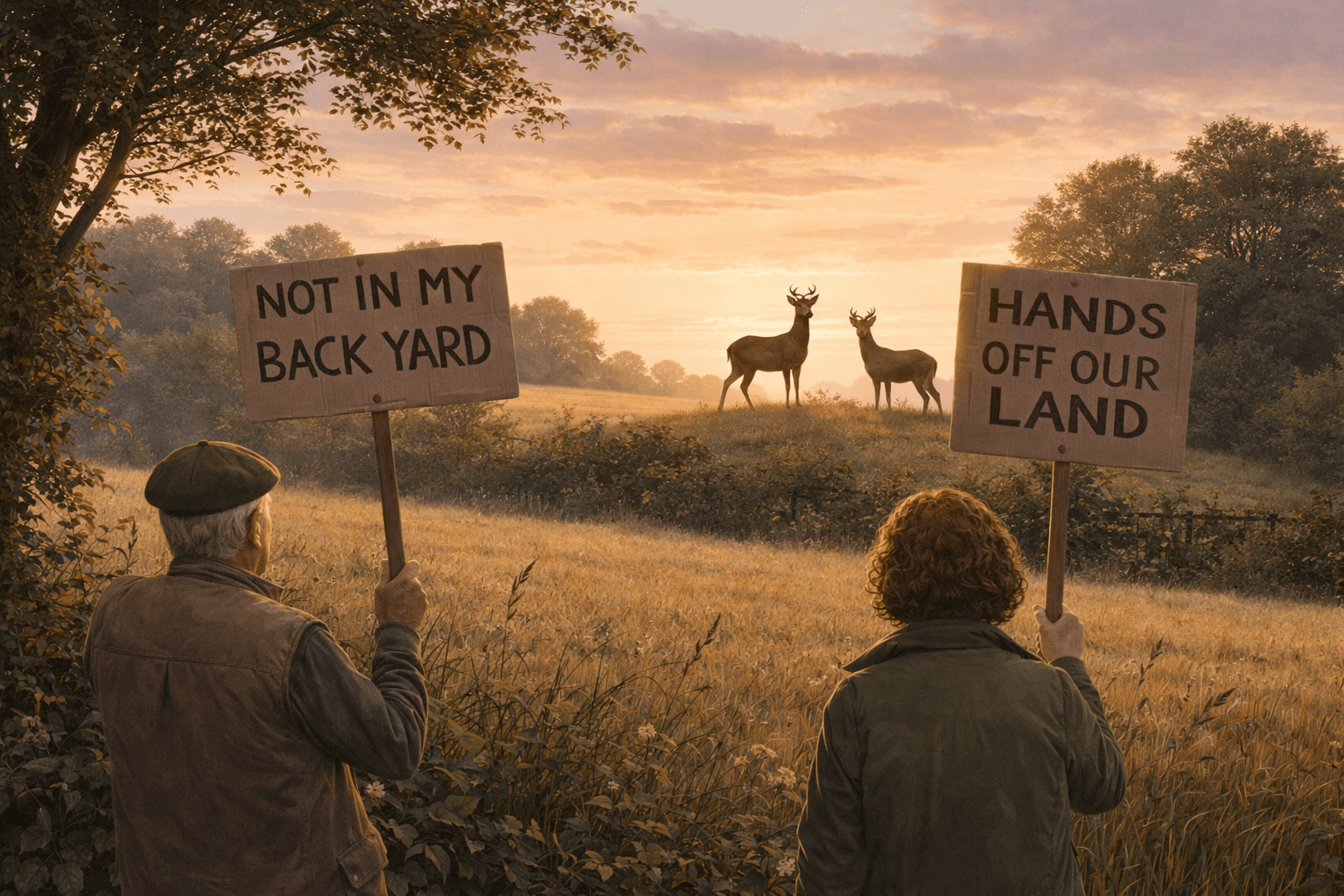
| Loving Nature Until It Disrupts Comfort Most people say they care deeply about nature. We praise green spaces, share wildlife photos, and talk about protecting the countryside as though it were a shared moral duty. Yet when environmental change occurs close to home—when land is rewilded, homes are built, energy infrastructure is installed, or access patterns shift—support often evaporates. This contradiction sits at the heart of NIMBYism: “Not In My Back Yard.” NIMBYism is not simply selfishness. It is a complex emotional response rooted in fear, attachment, habit, and identity. People may sincerely value nature, but often only in forms that align with their expectations of comfort, order, and control. When nature becomes unpredictable, messy, or socially disruptive, affection turns into resistance. At its core, NIMBYism reveals how many of us love the idea of nature more than its lived reality. We are comfortable with managed hedgerows, tidy footpaths, and landscapes that feel frozen in time. What we struggle with is change—especially when it challenges our sense of place or our perceived right to stability. Land conflict emerges where ideals collide with reality. A proposed housing development may be essential for local workers, yet framed as an attack on the “green belt.” A solar farm may support climate goals while disrupting a cherished view. Rewilding projects may increase biodiversity but unsettle residents who associate unmanaged land with neglect or danger. Each case highlights the same tension: shared environmental ambition versus personal inconvenience. Much of this conflict is driven by proximity. The closer a change comes to home, the more abstract values are replaced by immediate concerns. Noise, traffic, altered views, unfamiliar people, or a perceived loss of control quickly outweigh distant environmental benefits. This does not make people hypocrites; it reflects how human psychology prioritises the familiar and the personal. There is also a powerful element of nostalgia at play. Landscapes are rarely neutral. They carry memories, routines, and emotional meaning. When land changes, it can feel like a loss of identity rather than a planning decision. Opposition often adopts the language of protection—“saving the countryside,” “preserving character”—even when the land in question has already been heavily shaped by human intervention. Ironically, many of these conflicts arise because modern society has been separated from working landscapes. Farming, land management, and ecological processes are largely invisible to those who live nearby. Nature is expected to behave like a static backdrop rather than a system in motion. When it asserts itself—through flooding, wildlife returning, or land-use shifts—it feels like an intrusion rather than a reminder of interdependence. This tension becomes particularly visible at the domestic scale. Many people choose homes with gardens because they offer a gentle closeness to nature without demanding engagement. A lawn, a hedge, or a view of trees provides calm and beauty while maintaining clear boundaries. Yet that closeness often comes with an unspoken expectation: nature should remain decorative, predictable, and contained. When a wildlife reserve, rewilded field, or unmanaged land sits beyond the garden fence, those expectations are tested. Wildlife does not respect property lines. Deer eat planting schemes, foxes cross patios, insects multiply, and birds arrive loudly and early. What was once marketed as “backing onto nature” can quickly feel like exposure rather than privilege. The garden, in this sense, becomes a buffer—allowing people to feel environmentally aligned while limiting how much nature intrudes. Conservation is welcomed in principle, but resisted when it introduces uncertainty into daily life. Nature is admired as a backdrop, not always accepted as a neighbour. Comfort plays a larger role in this dynamic than many people are willing to acknowledge. Clean energy is popular until turbines appear on the horizon. Wildlife is celebrated until it affects pets, crops, or insurance premiums. Affordable housing is supported until it alters parking, noise levels, or neighbourhood demographics. These reactions are rarely framed as comfort-seeking, yet that is often the underlying driver. There is also a subtle sense of entitlement bound up in these responses. Homeownership can foster the belief that tranquillity, views, and separation have been purchased along with the property. When conservation or development changes those conditions, the reaction is often framed as loss rather than adjustment, even when the land in question was never static to begin with. NIMBYism also reflects power imbalances. Those with time, confidence, and resources are more likely to object, attend consultations, and influence outcomes. Meanwhile, those who most need housing, jobs, or resilient infrastructure are frequently absent from the conversation. Land conflict is therefore not only environmental, but also social. Public consultation processes can unintentionally amplify this problem. They often reward loud opposition over quiet support and privilege those who already feel ownership over a place. When compromise fails, projects stall, resentment grows, and trust erodes between communities and decision-makers. Yet dismissing NIMBYism as ignorance or selfishness is unhelpful. Resistance often signals genuine anxieties about change, fairness, and transparency. Many people feel decisions are imposed rather than co-created. When communities lack agency, even well-intentioned projects can feel threatening. The challenge, then, is not to silence opposition but to deepen understanding on all sides. Environmental progress cannot succeed if it ignores lived experience, just as personal comfort cannot remain the ultimate measure in a changing climate. The question is not whether land should change, but how change is shared, explained, and supported. A more honest conversation about land would acknowledge that sustainability involves trade-offs. Protecting nature sometimes means accepting disruption. Climate resilience may require visible infrastructure. Biodiversity recovery may look untidy before it looks beautiful. When these realities are softened or obscured, opposition hardens when reality arrives. Equally, people need reassurance that change will not be careless or extractive. Thoughtful design, clear communication, and genuine local benefit matter. When communities see tangible advantages—jobs, access, affordability, long-term stewardship—resistance often softens into cautious support. Ultimately, NIMBYism asks us to examine our own values. Do we support environmental action only when it remains theoretical? Are we prepared to share space, views, and convenience for collective resilience? Loving nature in principle is easy. Living alongside its demands is harder. Land conflict is not a failure of caring; it is a test of it. As pressures on land intensify—through climate change, housing needs, and ecological decline—these tensions will only grow. The future depends on whether we choose comfort as our compass or responsibility as our guide. |
| About our writing & imagery Many of our articles are written by us, drawing on real experience, reflection, and practical work in gardens and places we know. Some pieces are developed with the assistance of AI as a drafting and research tool. Featured images may include our own photography, original AI-generated imagery, or—where noted—images kindly shared by other creators and credited accordingly (for example, via Pixabay). All content is shaped, edited, and published by Earthly Comforts, and the views expressed are our own. |
 Earthly Comforts