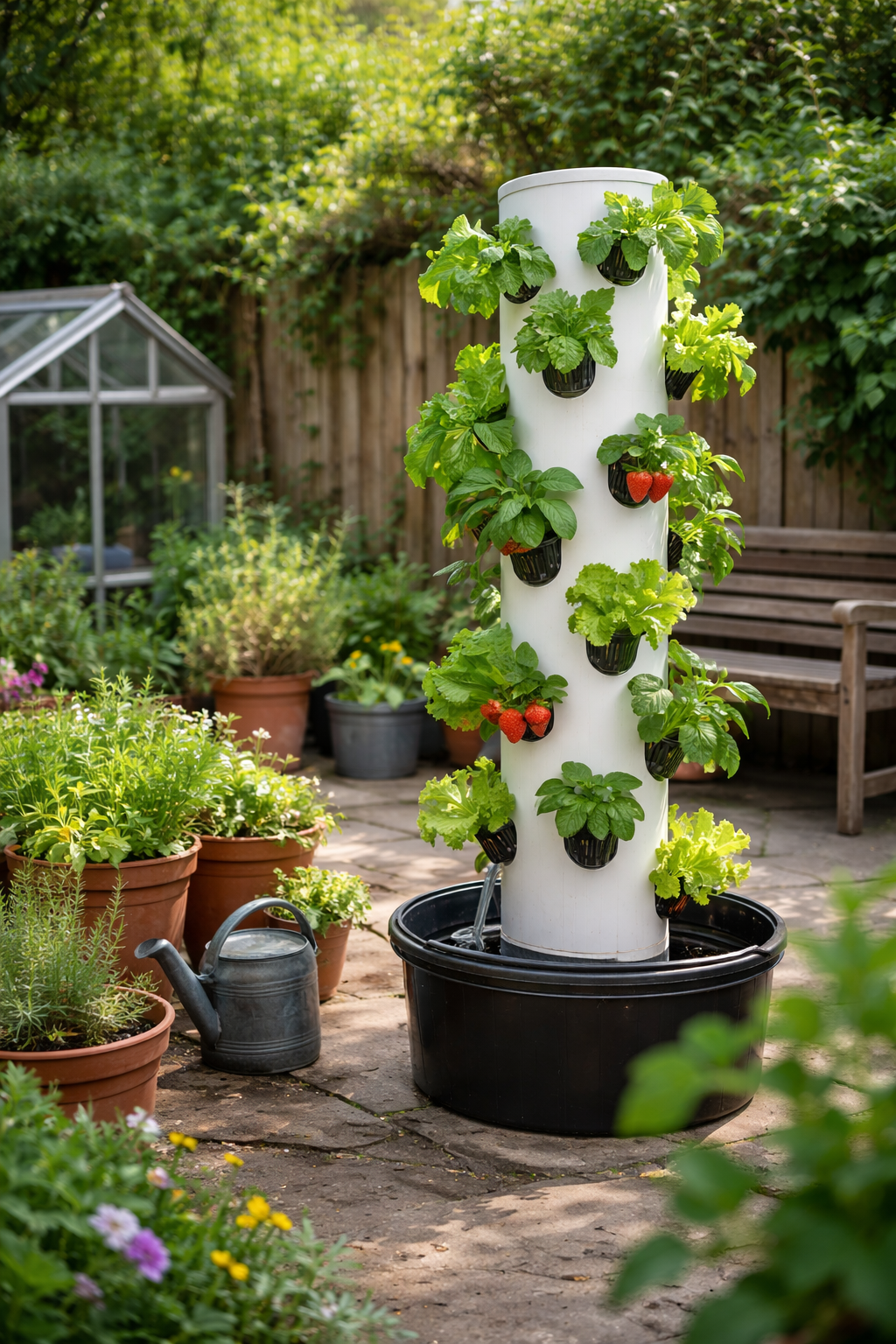
| A Practical Look at Whether Water-Grown Gardening Has a Future Hydroponics has been hovering on the edge of mainstream gardening for a long time. Most people have heard the word; fewer understand what it actually involves, and many assume it’s either too technical or too artificial to be relevant at home. It’s often associated with commercial salad factories, futuristic warehouses, or expensive plug-and-play systems. But stripped back to basics, hydroponics is simply growing plants in water rather than soil. The real question isn’t whether it works — it clearly does — but whether it makes sense for the everyday gardener and homeowner. For most people, gardening is about balance. Space is limited, time is limited, water is increasingly precious, and physical energy matters more as the years go by. Against that backdrop, hydroponics deserves a calm, grounded look rather than instant dismissal or blind enthusiasm. At its simplest, hydroponics replaces soil with a controlled water-based environment. Plant roots are fed directly with nutrients dissolved in water, and oxygen is introduced through movement, air exposure, or design. There are many variations — from trays and channels to buckets, towers, and rafts — but the principle remains the same. The plant doesn’t care where the nutrients come from, only that they’re available in the right balance. For the home gardener, this changes a few fundamental things. There’s no digging. No weeding. No soil compaction. No guessing whether the ground is too poor, too wet, or too dry. Instead, the growing conditions are concentrated and observable. You see the roots. You see the water level. You see how the plant responds. That alone is appealing to people who like clarity and control. One of the most accessible entry points into home hydroponics is the vertical system, particularly simple DIY builds using PVC pipe. These systems take up very little ground space while offering a surprising amount of growing capacity. A single vertical pipe can hold a dozen or more plants, all fed from a shared reservoir. Gravity does most of the work. A small pump keeps water circulating. There’s nothing especially high-tech about it. What these systems highlight is one of hydroponics’ biggest strengths: efficiency. Water is recirculated rather than lost into the ground. Nutrients are delivered directly rather than diluted through the soil. In practical terms, this means far less waste. For homeowners dealing with hosepipe bans, water meters, or dry summers, that efficiency starts to look less like a novelty and more like a sensible adaptation. That said, hydroponics isn’t a universal solution. It suits some plants far better than others. Leafy greens, herbs, and quick-growing crops thrive in water-based systems. Lettuce, rocket, basil, mint, spinach — all perform exceptionally well. These are also the crops people tend to buy frequently, often wrapped in plastic, and often with a short shelf life. Growing them at home, close to the kitchen, makes practical sense. Where hydroponics struggles is with heavy, long-term, or fruiting crops. Tomatoes, courgettes, and peppers can be grown hydroponically, but they demand stronger structures, closer monitoring, and higher nutrient input. For most home gardeners, soil still wins for these plants. Hydroponics works best when it plays to its strengths rather than trying to replace everything. Maintenance is another area where expectations matter. Hydroponics is not maintenance-free, but it is predictable. Water levels need checking. Nutrients need topping up. Pumps need to keep running. Systems need occasional cleaning. This suits people who prefer small, regular checks over big seasonal jobs. It suits those who want to plant and forget. There’s also the question of resilience. Soil gardens have a natural buffer. Miss a watering or a feed, and the soil often carries the plant through. Hydroponic systems are more immediate. If the pump fails or the reservoir runs dry, plants feel it quickly. That doesn’t make the system fragile, but it does require a mindset shift. Observation becomes part of the routine. Sustainability is often raised as both a strength and a weakness of hydroponics. On the positive side, water use is dramatically reduced, land use is more efficient, and production can occur in areas with poor or unavailable soil. On the other hand, most systems rely on plastic components, manufactured nutrients, and electricity. Whether that aligns with someone’s values depends on context. For a homeowner growing herbs that would otherwise be bought weekly from a supermarket, the equation often makes sense. For someone committed entirely to soil and compost cycles, it may not. What’s becoming clear is that hydroponics doesn’t need to be an all-or-nothing choice. It works best as part of a mixed approach. Soil beds for long-term, heavy crops. Raised beds for flexibility. Vertical hydroponic systems for fast, high-turnover plants. Each method does what it does best. Looking ahead, it’s hard to imagine hydroponics remaining a niche. As gardens get smaller, populations age, and water becomes more tightly managed, systems that reduce physical strain and resource use will naturally gain ground. That doesn’t mean every garden will be full of pipes and pumps. It does mean that water-based growing will likely become more familiar, more accepted, and more quietly normal. For the everyday gardener and homeowner, hydroponics isn’t about chasing the future. It’s about adapting to the present. Used thoughtfully, at the right scale, and for the right crops, it offers a practical tool rather than a technological statement. And in gardening, tools that genuinely make life easier tend to stick around. |
Hydroponics at Home
 Earthly Comforts