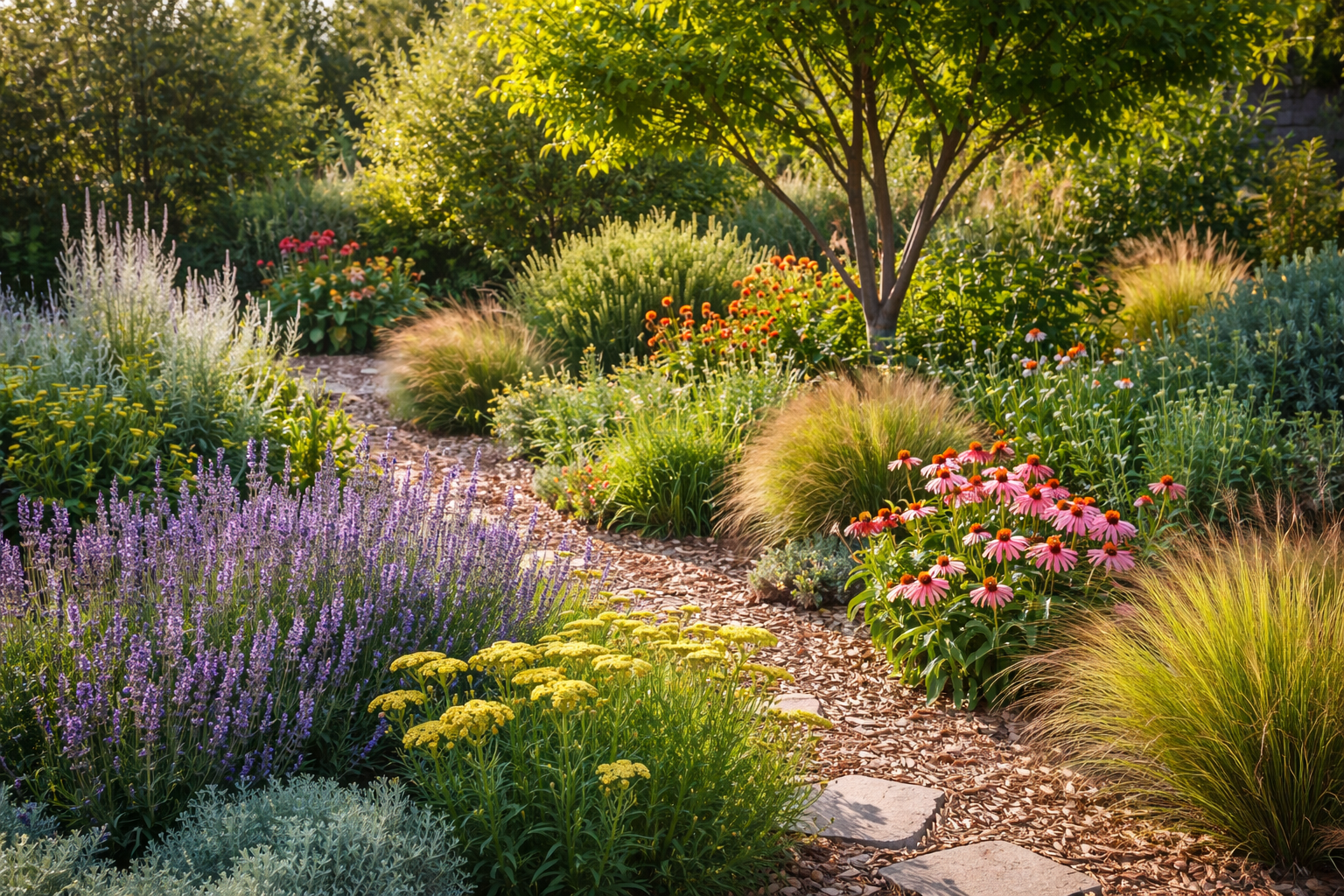
| Gardening for an Uncertain Future Climate-resilient planting is no longer a niche interest for specialist growers. It has become a practical response to real changes gardeners are already experiencing: longer dry spells, sudden downpours, warmer winters, late frosts, heat stress, and shifting pest pressures. Choosing the right plants is one of the most effective ways to future-proof a garden while reducing maintenance, water use, and disappointment. Climate resilience in plants does not mean accepting a dull or sparse garden. It means selecting species and varieties that can tolerate variability. Plants that cope with heat, cold snaps, inconsistent rainfall, and poorer soils tend to establish better, require fewer inputs, and recover more quickly from stress. Over time, this approach creates gardens that feel calmer, healthier, and more self-sustaining. One of the core principles of climate-resilient planting is working with natural plant adaptations rather than against them. Many plants have evolved traits that help them survive challenging conditions: deep root systems that access moisture far below the surface, waxy or silvery leaves that reflect sunlight, narrow foliage that reduces water loss, or flexible growth habits that allow them to withstand wind and heavy rain. When these traits are understood and used intentionally, gardens become far more robust. Perennials play a major role in climate-resilient gardens. Unlike short-lived annuals, well-chosen perennials build stronger root systems year after year, making them more tolerant of drought and temperature extremes. Once established, they often require less watering and feeding, and they provide consistent structure even during difficult seasons. Many also recover quickly after stress, resprouting from the base if top growth is damaged. Shrubs are another cornerstone of resilience. Woody plants tend to buffer environmental extremes better than soft, shallow-rooted species. Shrubs with dense branching can shelter lower plants from wind and sun, creating microclimates within the garden. This layered planting approach not only improves resilience but also increases biodiversity, offering habitat and food for insects and birds. Trees, where space allows, are one of the most powerful tools for climate adaptation. A single well-placed tree can cool surrounding areas, reduce soil evaporation, improve drainage, and moderate wind. Deciduous trees are particularly valuable, providing shade in summer while allowing light through in winter. Even small gardens can benefit from compact or multi-stem tree forms that deliver these advantages without overwhelming the space. Drought tolerance is often the first consideration when thinking about climate resilience, but it should not be the only one. Increasingly, gardens must cope with both drought and sudden heavy rainfall. Plants that thrive in free-draining soils yet tolerate short periods of waterlogging are especially valuable. These plants tend to have resilient root structures that resist rot while remaining efficient at water uptake when conditions improve. Soil health is inseparable from plant resilience. Healthy soils act like sponges, holding moisture during dry spells and draining excess water during heavy rain. Plants suited to resilient gardens are often those that perform well in soils that are not overly enriched. Excessively rich soils can encourage soft, lush growth that is more vulnerable to heat, frost, and pests. Choosing plants adapted to moderate or lean soils often leads to stronger, more stable growth. Another important aspect of climate-resilient planting is seasonality. Gardens that rely heavily on peak summer performance are more vulnerable to heatwaves and drought. By choosing plants that offer interest across multiple seasons—spring growth, summer flowering, autumn structure, and winter presence—you spread risk and reduce reliance on perfect conditions at any single time of year. This approach also creates gardens that feel alive and purposeful year-round. Pest and disease resilience is becoming increasingly important as warmer temperatures allow new problems to emerge. Plants that are naturally robust tend to attract fewer issues and recover more easily if problems occur. Diversity is key here. A garden dominated by a narrow range of species is far more vulnerable than one with varied plant types, growth habits, and flowering times. Mixed planting disrupts pest cycles and supports beneficial insects that help maintain balance. Native and near-native plants often perform well in climate-resilient gardens, but they are not the only option. Plants from regions with similar conditions—such as dry summers, mild winters, or exposed coastal environments—can also adapt successfully. The focus should be on function and adaptability rather than strict origin. What matters most is whether a plant can cope with current and future conditions in your specific setting. Maintenance expectations must also shift when designing for resilience. Climate-resilient plants are not maintenance-free, but they respond best to thoughtful, lighter-touch care. Overwatering, overfeeding, and excessive pruning can weaken plants and reduce their natural tolerance to stress. Allowing plants to establish slowly and grow at their own pace often results in stronger, longer-lived specimens. Ultimately, climate-resilient plant choices are about resilience at every level: the plant, the soil, the garden, and the gardener. These gardens demand less emergency intervention, waste fewer resources, and deliver more consistent results over time. They offer reassurance in an unpredictable climate and a sense of partnership with nature rather than constant correction. As conditions continue to change, gardens built on adaptability rather than control will thrive. Choosing climate-resilient plants today is an investment not just in a garden’s appearance, but in its long-term health, stability, and ability to endure whatever seasons lie ahead. |
Climate-Resilient Plant Choices
 Earthly Comforts