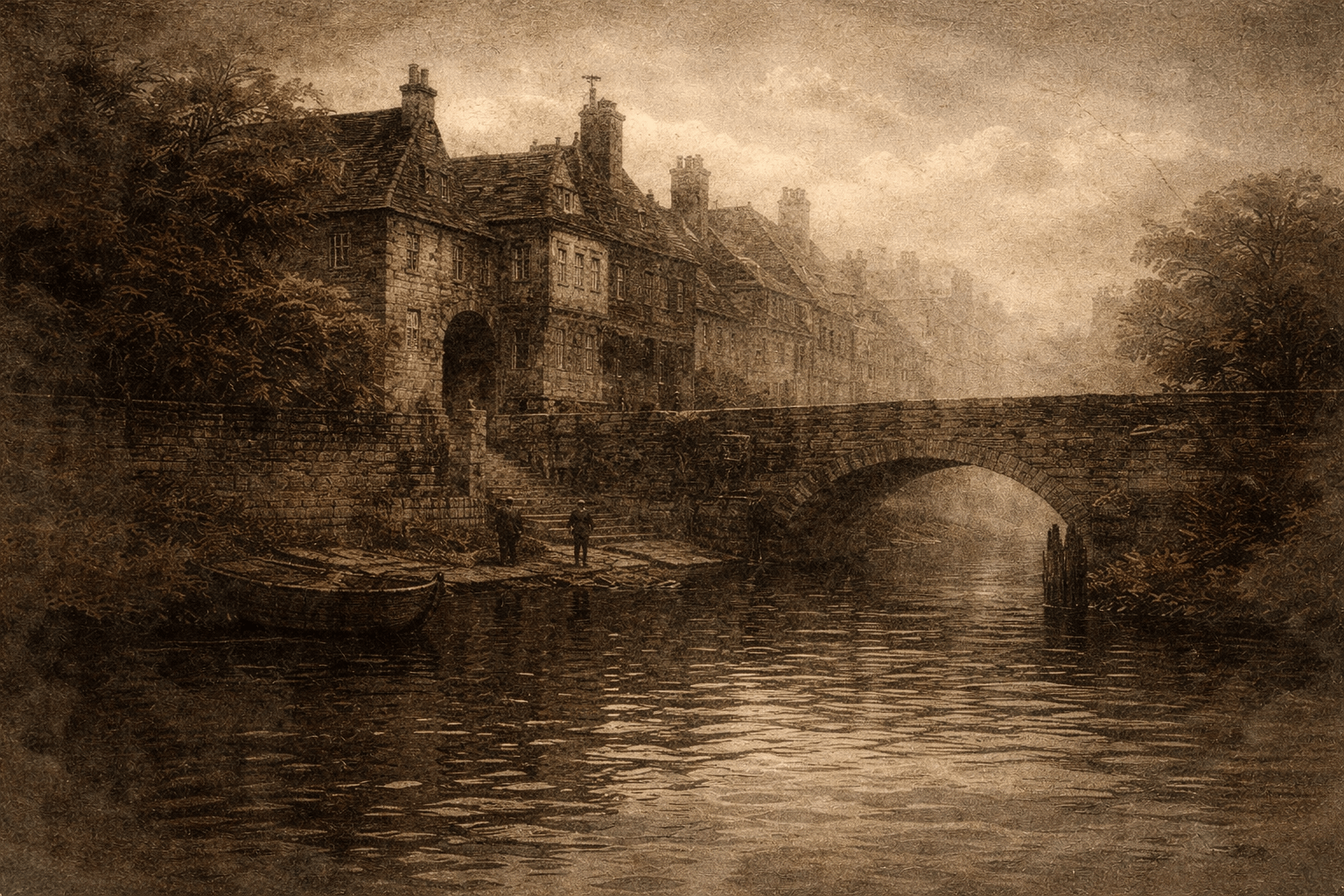
| Part One This series begins with a simple premise: before you can understand the history of Sandwich, you have to understand that it was never inevitable. It wasn’t planned, imposed, or confidently established. It came about because a particular stretch of land and water allowed it to do so for a time, and because people were prepared to work within those limits rather than against them. Sandwich is often described as an old town, and that’s true, but age on its own doesn’t explain much. Plenty of places are old. What makes Sandwich different is that it has always existed in negotiation with its surroundings. The land here was never entirely solid. The water was never entirely obedient. From the outset, the town depended on things that move slowly, subtly, and without regard for human ambition. This matters because most histories focus on events: charters, kings, wars, trade, and decline. All of that will come later. But none of it makes sense unless you first pay attention to the ground beneath it. Sandwich exists where it does because the River Stour slowed here, widened here, and dropped what it carried. That behaviour created shelter, access, and opportunity, long before anyone thought in terms of streets or permanence. People noticed. They settled. And from that decision, everything else followed. Early life here wasn’t about mastery. It was about reading conditions accurately. Knowing where water lingered, where it retreated, and which ground could be trusted after rain mattered more than long-term plans. The landscape dictated behaviour. Buildings followed the land. Movement followed the firmest paths. The environment wasn’t something to be improved; it was something to be worked with carefully, because the cost of getting it wrong was immediate. Over time, that careful relationship began to change. What started as useful turned into important. Sandwich grew into a port of national significance, its position valued for trade and connection rather than simply survival. With that shift came confidence. Structures became more permanent. The river was managed rather than followed. Channels were maintained, banks reinforced, and water was increasingly expected to behave predictably. For a while, it did. That period of success is well documented and often celebrated, but it’s only half the story. The same river that made Sandwich possible also carried the conditions for its gradual undoing. Silting wasn’t sudden. There was no single failure, no dramatic collapse. The harbour simply became harder to use. Maintenance became constant. Effort increased, while advantage slowly eroded. The town didn’t fall; it adjusted, again and again, to diminishing returns. What’s important here is not blame, but consequence. People acted sensibly, based on what they knew and needed at the time. The land responded as it always does, not with punishment, but with cumulative change. Marshes were altered. Water was redirected. Soil shifted. None of this was malicious or careless, as modern narratives sometimes suggest. It was practical, incremental, and largely unavoidable given the pressures of the time. This series isn’t an attempt to retell well-worn facts or dress them up with sentiment. It’s an effort to view Sandwich as a place shaped by long-term decisions rather than short moments. The environment will feature throughout, not as a modern concern imposed on the past, but as a constant presence that never stopped influencing what was possible here. Water, land, and human effort are inseparable in this story. They always have been. Equally, this isn’t a nostalgic project. The past wasn’t better, simpler, or more enlightened. It was harder, more uncertain, and often less forgiving. What it did have, particularly in the earlier periods, was a clearer understanding of limits. People knew when the land allowed something and when it didn’t. That awareness faded gradually as technology, trade, and confidence grew. The consequences of that shift are written quietly into the town’s later history. As you walk through Sandwich today, it can feel settled, even finished. Streets are firm, buildings secure, boundaries defined. But beneath all of that is the same uncertain ground, the same waterlogged soil, the same ancient channels that once dictated every decision made here. The town hasn’t escaped its origins. It has simply built over them carefully and, for the most part, successfully. This series will move slowly through that history. It won’t rush to conclusions or force lessons. It will examine how the town formed, how it functioned, how it adapted, and how it changed as the conditions that supported it began to shift. Some parts will focus on people, some on power, some on work, and some on decline, but always with an awareness that none of these things existed independently of the land beneath them. If there is a thread running through all twelve parts, it is this: Sandwich has always been a place allowed by circumstance rather than guaranteed by design. Understanding that makes its history clearer, its survival more impressive, and its present quieter, but more meaningful. Everything that follows in this series rests on that starting point. Part Two If the first part of this series was about why Sandwich exists at all, this part is about what it relied on most — and misunderstood earliest. The river was never just a feature. It was the condition. Everything here depended on water behaving well enough, for long enough, to be trusted. The River Stour does not announce itself dramatically as it approaches Sandwich. It slows. It widens. It hesitates. That hesitation is what made settlement possible, but it also planted the seed of every future problem. A slow river is generous, but it is never idle. What it carries, it eventually leaves behind. Early on, the river was followed rather than forced. Boats arrived when tides allowed. Goods moved when water permitted. The pace of work was set by conditions rather than schedules. This wasn’t wisdom or restraint in any moral sense — it was necessity. The tools to do otherwise didn’t yet exist, and the cost of ignoring the river’s limits was immediate. What water offered here was shelter. Compared to exposed coastal landings, Sandwich provided access without constant danger. Ships could reach inland without committing fully to the open sea. Trade could move with fewer losses. For a long time, that balance held. The river gave just enough, and people asked for a little more. But usefulness has a habit of turning into expectation. As trade increased and the town’s importance grew, patience began to thin. Delays caused by tides became inconveniences rather than accepted facts. Maintenance that had once been occasional became routine. The river was no longer something to read carefully; it was something to manage. This is where the relationship subtly changed. Channels were kept open. Banks were reinforced. The idea took hold that water could be persuaded to behave consistently if enough effort was applied. And for a while, it seemed true. The harbour remained active. Goods continued to pass through. Sandwich’s position within wider trade networks felt secure. Yet the river never stopped doing what rivers do. It continued to slow here. It continued to deposit silt. Every intervention required another. Every solution created the need for maintenance. None of this arrived as a crisis. It arrived at work. More labour for the same result. More effort to preserve what had once come freely. Silting is not dramatic. It doesn’t arrive with noise or urgency. It accumulates quietly, often unnoticed until it has already changed the terms of engagement. The harbour became shallower. Navigation grew more difficult. Ships that once arrived easily now required care, timing, and favourable conditions. The advantage of the location began to narrow. What’s important is that no one misunderstood the problem. They could see it. They responded as best they could with the knowledge and tools available to them. The issue was not ignorance, but scale. The river’s timescale was longer than any single generation’s patience. Human effort worked in years and decades. Water worked for centuries. As the town leaned harder on control, the river leaned back in consequence. More management meant more dependency. The system became less forgiving. When conditions were favourable, things worked. When they weren’t, the margin for error had gone. This is the quiet cost of relying too heavily on stability in a place that was never stable to begin with. Sandwich’s success rested on a moving foundation, and movement can be slowed, but not stopped. The river did not turn against the town. It simply continued, indifferent to how much depended on it behaving otherwise. Over time, trade routes shifted. Other ports offered deeper water with less constant maintenance. Sandwich remained active, but its dominance softened. The river had not failed the town. It had outlasted the assumptions placed upon it. Today, it’s easy to look at the Stour and see calmness, even obedience. Its edges are defined. Its course appears settled. But that appearance is the result of continuous effort layered over centuries. Beneath that calm surface is the same slow process that shaped the town’s earliest days. Understanding this changes how Sandwich’s history reads. The town wasn’t undone by neglect or poor decisions. It was shaped by a long reliance on something that could never truly be fixed in place. Water allowed settlement, enabled prosperity, and then gradually reminded the town of its limits. The river has always been consistent in that way. It gave, carried, deposited, and moved on. The only thing that changed was the amount expected of it. |
Sandwich: A Town Allowed
 Earthly Comforts