| The Most Honest Street in My Town |
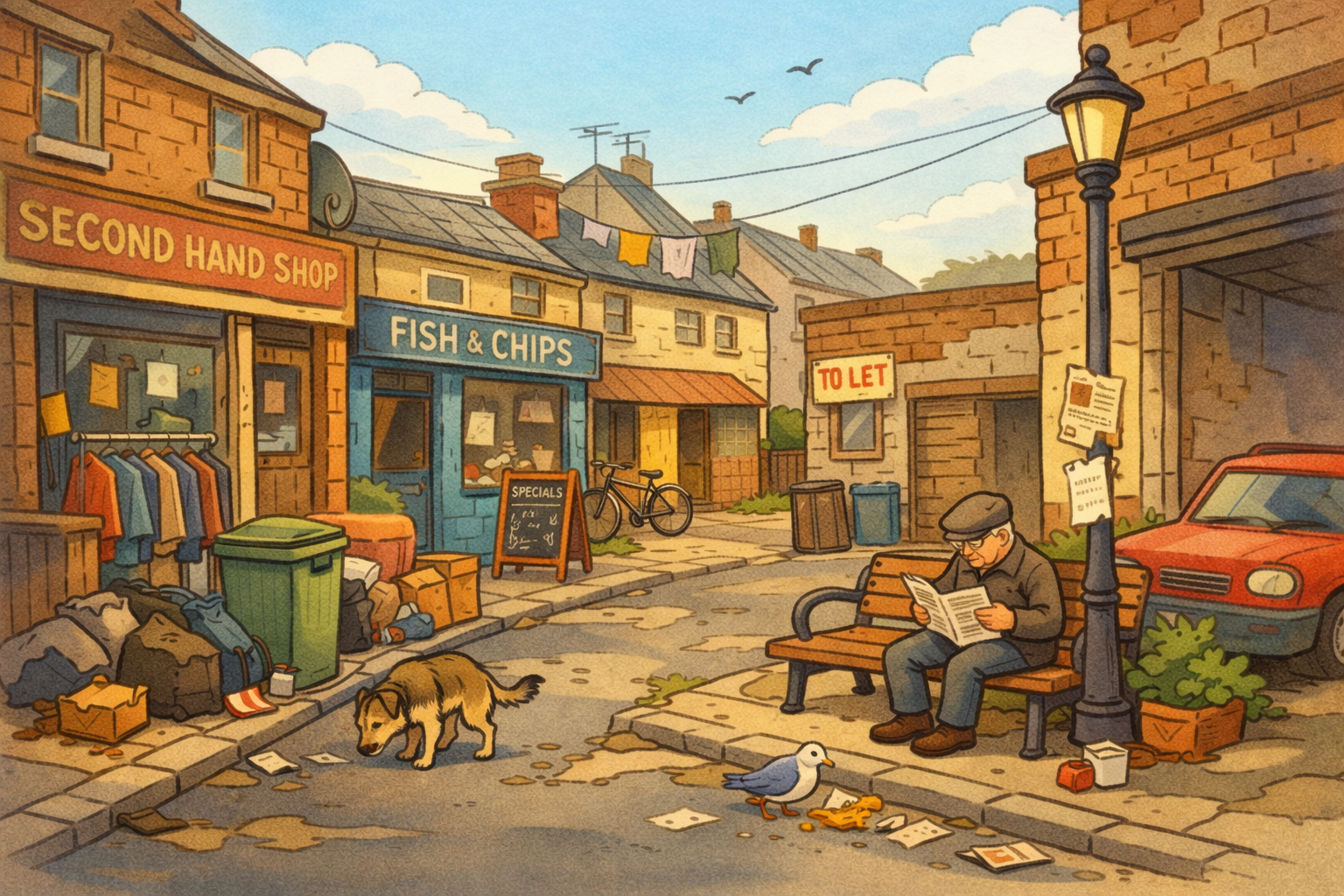
| Every town has a street that doesn’t bother performing. It isn’t the prettiest, and it isn’t the worst. It doesn’t feature on postcards or get mentioned when people talk about regeneration. It simply exists, doing its job without apology. Over time, I’ve come to think of this as the most honest street in a town — not because it tells the whole truth, but because it doesn’t pretend to be something else. I overlooked ours at first. I walked it often enough, but only as a route between other places. It was useful, not interesting. That usefulness made it invisible. What changed wasn’t the street itself, but my pace. One morning, I was delayed — nothing dramatic, just enough to break routine — and found myself standing still instead of passing through. When you stop moving, streets start speaking. The first thing I noticed was how mixed it was. Not in a curated way, but in a lived one. A small row of terraces pressed up against light industrial units. A café next to a locksmith. A patch of planting someone had clearly tried to care for, now half-retreated into weeds. Nothing matched, yet nothing felt accidental. Gardening has trained me to read these kinds of arrangements. You learn quickly that the most revealing areas of a garden are rarely the showy ones. It’s the side beds, the fence lines, the bits that aren’t being consciously presented. They tell you what the place really needs, not what it wants to appear like. The same applies to streets. On the most honest street, you see how people actually use space, where bins are dragged to, where cars mount kerbs because there’s no other option. Where grass survives because feet have learned to step around it. These small negotiations between people and place don’t happen on showcase streets. They happen where function outweighs appearance. There’s a common assumption that decline and neglect always go hand in hand. Walking this street challenged that. Some buildings were tired, but not abandoned. Repairs had been done cheaply but thoughtfully. You could see effort without polish. The intention is to keep things going, rather than reinvent them. That distinction matters. In gardening, there’s a difference between neglect and restraint. Not every area needs improvement. Some need to be allowed to continue doing what they already do well. Overworking a space can strip it of its resilience. The honest street isn’t aspirational. It doesn’t sell a future version of itself. It reflects the present — economic pressures, practical compromises, and uneven attention. And because of that, it’s often the place where you find the most continuity. Businesses that have quietly lasted decades. Houses are adapted rather than replaced—people who know the area well enough not to need novelty from it. I’ve noticed that visitors often miss these streets entirely. They pass through towns guided by signage, recommendation, or instinct toward the attractive. Long-term residents, meanwhile, stop seeing them because they’ve become part of the routine. The honest street sits between these two forms of blindness. It’s also where maintenance becomes most evident. Drains that work. Pavements patched rather than relaid. Lighting that isn’t decorative but reliable. The work done here is not glamorous, but it’s effective. Things function. This challenges another quiet myth: that improvement must be visible to be valuable. In reality, the most valuable changes often go unnoticed because they preserve normality. When a street remains usable year after year, it’s easy to assume that’s the default rather than earned. Standing there longer than I needed to, I realised this street felt familiar, not because I knew it well, but because it resembled so many others. Every town has one. And if you’re paying attention, they start to look less like failures of planning and more like records of adaptation. They show you where money runs thin, yes — but also where ingenuity steps in. Where people fix rather than replace. Where space is shared imperfectly but persistently. Where the town reveals how it actually functions when it isn’t being watched. The most honest street in my town didn’t ask to be noticed. It didn’t change. I did. And once you see a street like that properly, it becomes harder to dismiss the quieter parts of places — or the quieter forms of care that keep them standing. |
| About our writing & imagery Most articles reflect our real gardening experience and reflection. Some use AI in drafting or research, but never for voice or authority. Featured images may show our photos, original AI-generated visuals, or, where stated, credited images shared by others. All content is shaped and edited by Earthly Comforts, expressing our own views. |
 Earthly Comforts