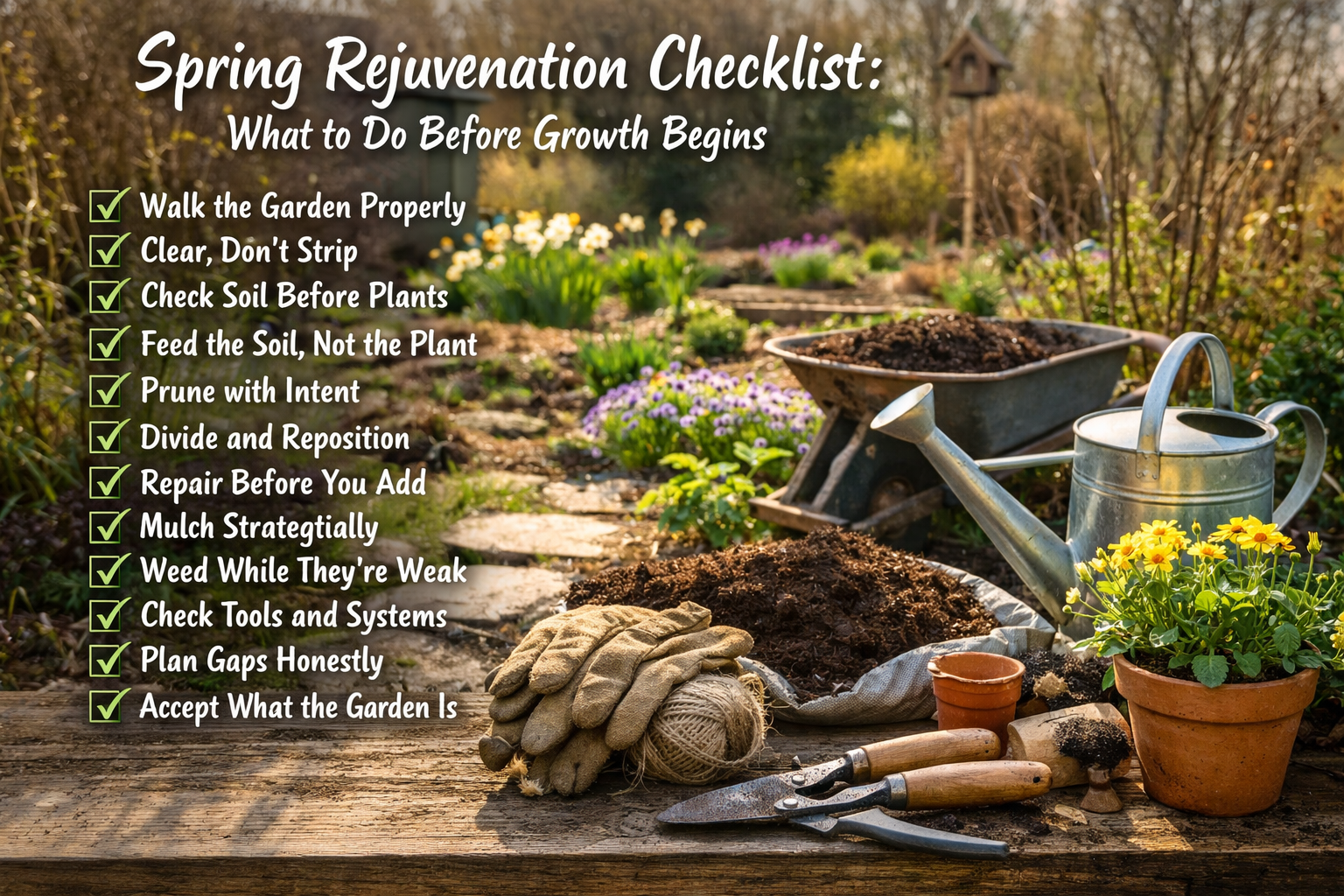
| What to Do Before Growth Begins Spring doesn’t begin when the first flowers open. It begins weeks earlier, quietly, below the surface. Soil warms. Roots wake. Sap starts to rise. What you do in this window — before growth is obvious — has a huge impact on how manageable, healthy, and resilient your garden will be for the rest of the year. This checklist isn’t about perfection or forcing growth. It’s about preparing the ground so plants can do what they’re designed to do, without stress or intervention later on. |
| Walk the Garden Properly Before touching a tool, take a slow walk. Not a glance — a proper look. Notice what’s held up well over winter and what hasn’t. Look for broken branches, compacted soil, waterlogged patches, and areas that feel tired rather than dormant. This is the moment to observe patterns: shade shifts, pooling water, exposed roots. A few minutes now saves hours later. Clear, Don’t Strip Winter debris has value. Leaves, hollow stems, and old seed heads shelter insects and protect the soil. The aim isn’t to remove everything — it’s to remove what blocks air, light, and space. Clear paths, borders that are smothered, and beds where growth will struggle to push through. Leave quiet corners alone. Spring isn’t a reset button; it’s a continuation. Check Soil Before Plants Most spring problems start underground. If the soil is compacted, lifeless, or sticky, plants will struggle no matter how much attention they get later. Gently loosen the surface where needed, especially in borders walked on during winter. This isn’t digging — it’s opening the soil so air and moisture can move again. If it smells sour or looks grey, it’s asking for help. Feed the Soil, Not the Plant This is the moment to add organic matter. Compost, leaf mould, or well-rotted material improves structure, water retention, and microbial life. Spread it on the surface and let nature do the rest. There’s no rush to mix it in. Roots will find what they need. Feeding now supports steady growth rather than a soft, needy flush later. Prune With Intent Early spring pruning isn’t about tidying — it’s about direction. Remove dead, damaged, or crossing growth first. Then step back. Ask what shape the plant wants to be, not what you want it to look like. Hard pruning too early can trigger weak growth if frost returns, while leaving it too late wastes stored energy. Clean cuts, clear decisions, then stop. Divide and Reposition Crowded perennials lose strength. If clumps are dense or flowering has dropped off, now is the time to lift and divide. Replant what you need and move surplus to tired areas. This spreads vigour across the garden and reduces the need for replacements. Plants don’t mind being moved when they’re just waking up — they resent it later. Repair Before You Add It’s tempting to buy new plants early. Resist until the basics are sorted. Fix edging, reset paving that’s shifted, and check fences, supports, and trellises. Spring growth is fast. Repairs made now disappear visually once everything fills out. Leave them too late, and they become awkward jobs around established plants. Mulch Strategically Mulching isn’t cosmetic. It regulates temperature, holds moisture, and suppresses weeds before they get started. Apply once the soil has warmed slightly, not straight after cold rain. Keep it off stems and crowns. A thin, even layer works better than dumping it thickly in one go. Think protection, not insulation. Weed While They’re Weak Early weeds pull out easily and haven’t yet seeded. A short session now saves endless effort later. Focus on perennial roots and self-seeders you know will become a problem. Don’t aim for total eradication — aim for control. A few minutes per bed is enough if done early. Check Tools and Systems Spring exposes problems quickly. Blunt blades tear growth. Leaking hoses waste water. Before the season kicks off, clean tools, sharpen where needed, and test irrigation or watering routines. Efficient tools reduce effort and damage. Gardening should feel purposeful, not like a fight. Plan Gaps Honestly Bare patches appear clearly before growth begins. Decide whether they’re intentional or neglected. Some gaps are pauses. Others need planting. Make that decision now so you’re not rushing later with whatever’s available. A calm plan beats impulse planting every time. Accept What the Garden Is Every winter changes a garden slightly. Some plants won’t return. Others will surprise you. Spring rejuvenation isn’t about forcing the garden back to how it was. It’s about working with how it is. Adjust expectations, respond thoughtfully, and let the garden evolve rather than resetting it. Final Thought A good spring garden isn’t built in April — it’s prepared in the quiet weeks before growth takes off. Small, deliberate actions now reduce maintenance, improve resilience, and allow the garden to carry itself through the season. Do less, but do it well, and the garden will meet you halfway. |
Unless stated, featured images are my own work, created independently or with the assistance of AI.
 Earthly Comforts
Very useful tips
LikeLiked by 1 person
Thanks Sadje 🙂
LikeLiked by 1 person
My pleasure. 😇
LikeLiked by 1 person
Excellent advice, Rory, and thank you for sharing.
LikeLiked by 1 person
Pleasure, thank you Eugenia 🙂
LikeLiked by 1 person
You’re welcome, Rory. 😊
LikeLiked by 1 person