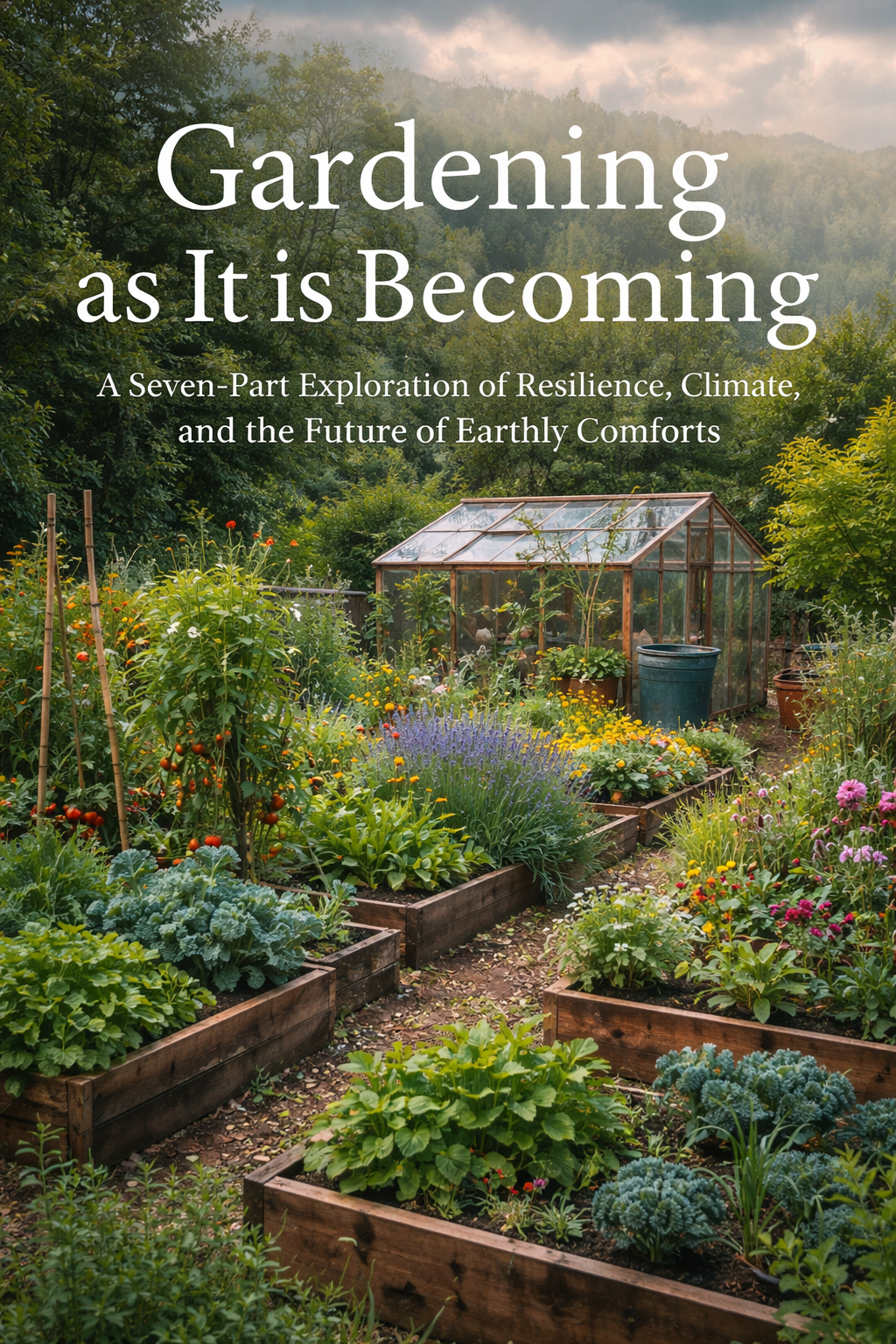
| A Seven-Part Exploration of Resilience, Climate, and the Future of Earthly Comforts |
| Part VI — Rewilding, Soil, and the Evolving Garden Butler |
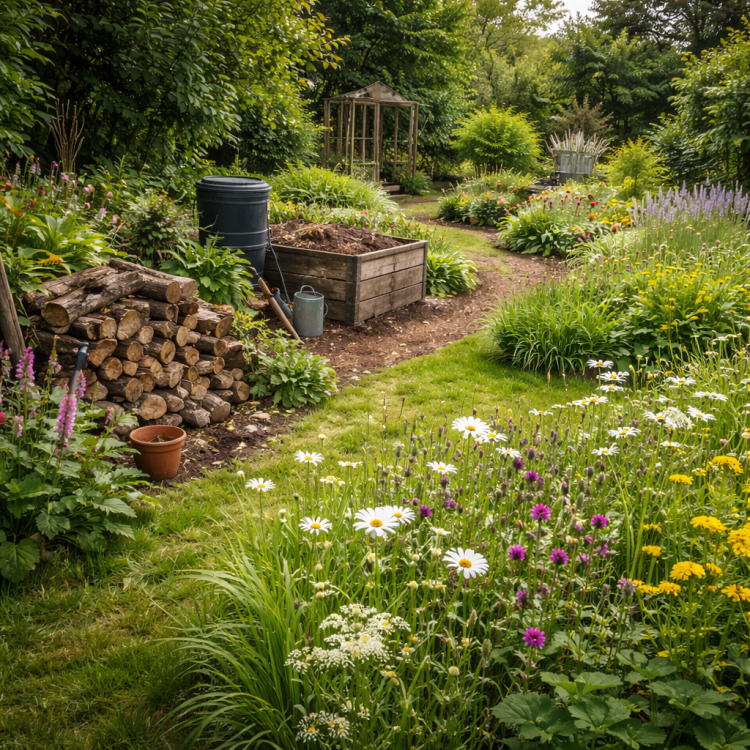
| From contractor to steward in a climate-altered landscape The previous parts of this series have examined structural change through climate data, global lawn-reduction trends, modular microsystems, economic diversification, and experimental plant trials. Part VI turns to something less tangible but equally significant: identity. If climate volatility is reshaping the physical and economic structure of garden work, it is also reshaping the role of the professional gardener. Historically, much domestic maintenance was carried out within a contractor framework. The gardener cut, trimmed, cleared, and restored visible order. Success was measured by neatness and conformity to expectation. While horticultural knowledge underpinned the work, its public expression was often cosmetic. Climate instability challenges that model. When soils are stressed, water fluctuates unpredictably, and biodiversity loss becomes visible, surface order alone is insufficient. Gardens require systems thinking. They require ecological awareness. They require stewardship rather than mere servicing. The term “rewilding” has gained cultural traction in recent years, though it is frequently misunderstood. In a domestic context, rewilding does not imply abandonment. It suggests selective restoration of ecological processes — encouraging biodiversity, reducing chemical dependence, and allowing certain areas to function more naturally. For a small-town garden, this may take the form of mixed planting borders, reduced mowing zones, log piles for invertebrates, and pollinator corridors. From a business perspective, rewilding introduces new service layers. Habitat creation, soil regeneration, and biodiversity management are not incidental tasks; they are deliberate interventions. A gardener who understands plant communities, soil microbiology, and seasonal habitat needs becomes more than a maintenance operative. They become a steward. Soil sits at the centre of this evolution. Climate pressure manifests most visibly through soil stress — compaction, erosion, nutrient depletion, and water imbalance. Traditional maintenance routines often treated soil as a substrate rather than a living system. A resilience-based approach reverses that perspective. Soil health becomes foundational. Mulching, compost cycling, and organic matter incorporation move from occasional tasks to core practices. Composting itself illustrates this shift. Where waste removal once represented tidiness, on-site composting now represents resource retention. Leaf mould, shredded green waste, and decomposed plant material return nutrients to beds, improving structure and water retention. This cyclical model reduces disposal costs while strengthening ecological resilience. Rewilding and soil stewardship also alter aesthetic expectations. Gardens that prioritise biodiversity may appear less uniformly manicured. Edges soften. Flowering sequences extend. Seasonal dieback is sometimes left in place to support overwintering insects. These adjustments require client education and clear communication. They also require professional confidence. From a commercial standpoint, stewardship can be formalised into service packages. Instead of marketing simple “maintenance,” a business may offer ecological garden management. This encompasses: Soil improvement planning Biodiversity assessments Habitat installation and monitoring Seasonal pruning aligned with wildlife cycles Reduced chemical inputs Such services require skill and planning, and therefore justify differentiated pricing. The transition from contractor to steward does not eliminate routine tasks. Lawns still require cutting. Hedges require shaping. Paths require clearance. However, these tasks become part of a broader ecological strategy rather than isolated actions. There are practical constraints. Not all clients desire reduced mowing zones or wildflower areas. Space limitations may restrict habitat creation. The objective is not uniform application but selective integration. Even modest ecological adjustments — a small pollinator strip, a composting system, a log pile — contribute incrementally. Climate change amplifies the relevance of this approach. Biodiversity loss weakens ecological resilience. Diverse plant communities tend to cope better with extremes than monocultures. Deep-rooted species improve soil stability during heavy rain and enhance water access during dry spells. By integrating mixed planting schemes and encouraging structural diversity, the garden becomes more adaptive. For the gardening workforce, this shift demands expanded knowledge. Staff must understand plant associations, seasonal wildlife needs, and soil processes. Training becomes integral rather than peripheral. Experimental beds discussed in Part V feed directly into this learning. Observations from microtrials inform planting decisions in rewilded zones. Economically, stewardship aligns with diversification. Ecological services are less dependent on grass growth cycles. Soil improvement work continues regardless of mowing frequency. Habitat installations generate project-based revenue followed by ongoing oversight. There is also reputational value. As public awareness of environmental issues increases, clients may seek gardeners who demonstrate responsible practice—a visible commitment to soil health and biodiversity positions the business within contemporary discourse without requiring performative activism. It is essential, however, to avoid romanticising rewilding. Domestic gardens operate within social expectations and planning constraints. Balance remains crucial. A well-managed biodiversity zone differs markedly from neglect. Professional oversight ensures that ecological integration enhances rather than undermines overall garden coherence. The evolving “Garden Butler,” in this sense, becomes a mediator between aesthetics and ecology. The role blends traditional horticulture with environmental awareness. Tasks are undertaken not only for immediate appearance but for long-term system health. This evolution reflects broader industry trends. Across the UK and internationally, horticultural bodies emphasise sustainable practices, soil health, and support for biodiversity. The domestic gardening sector, while diverse, increasingly acknowledges that climate adaptation and ecological responsibility are interconnected. For Earthly Comforts, the implication is structural. Rewilding principles and soil stewardship are not add-ons but extensions of climate resilience. They reduce input dependency, improve water retention, and strengthen plant communities. When integrated thoughtfully, they diversify revenue and deepen expertise simultaneously. In a volatile climate, resilience is cumulative. Soil health supports plant health. Biodiversity supports ecological balance. Stewardship supports business stability. Part VII will conclude this series by examining how these strands — climate awareness, modular infrastructure, economic diversification, experimental learning, and ecological stewardship — combine to shape a deliberate long-term direction for Earthly Comforts. |
| About our writing & imagery Most articles reflect our real gardening experience and reflection. Some use AI in drafting or research, but never for voice or authority. Featured images may show our photos, original AI-generated visuals, or, where stated, credited images shared by others. All content is shaped and edited by Earthly Comforts, expressing our own views. |
 Earthly Comforts