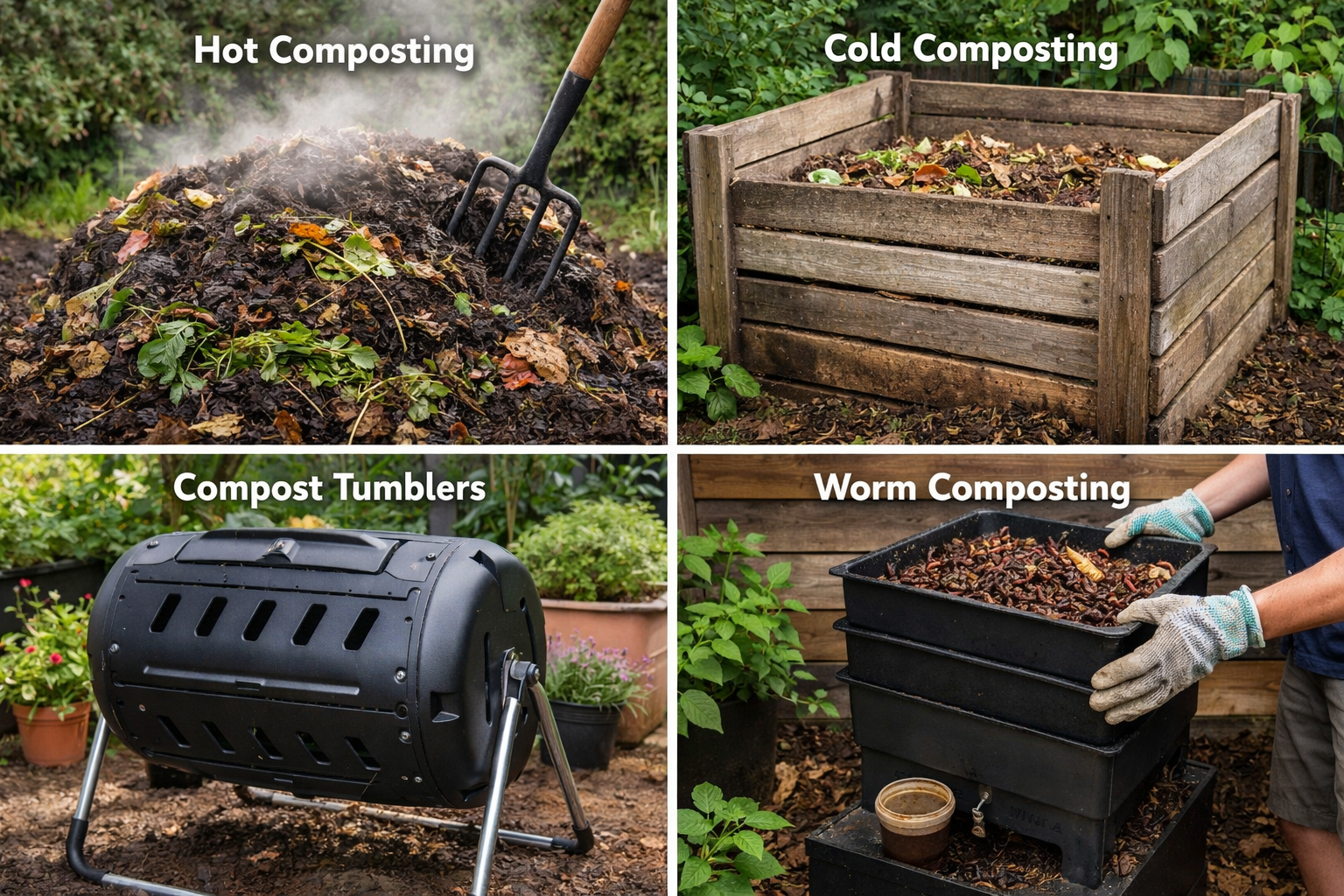
| Hot, cold, in-bin, tumbler, and worm composting — explained plainly Composting is one of those things that sounds either wonderfully simple or strangely intimidating, depending on who you last spoke to. One person swears by a steaming heap that breaks down in weeks; another quietly adds peelings to a bin at the bottom of the garden and forgets about it for a year. Both are composting. Both are right. The mistake people often make is assuming there’s a best method. There isn’t. There’s only the method that fits your space, your time, and your tolerance for fuss. The moment composting feels like a chore, it stops happening. This guide is about helping you choose a system you’ll actually stick with. I’ll walk through the main composting methods — hot, cold, in-bin, tumbler, and vermicomposting — and explain who each one suits, what it requires of you, and what you can realistically expect in return. First, a quick reality check Before choosing a method, be honest about three things: space, time, and temperament. If you have a big garden but little patience, you’ll compost differently from someone with a tiny courtyard who enjoys tinkering. If you’re out gardening daily, hot composting might suit you. If you’re flat-out working and just want peelings dealt with quietly, something slower and simpler is better. Composting should reduce waste and improve soil — not add stress. Keep that as the anchor point. Hot composting: fast, efficient, and hands-on Hot composting is what most people picture when they imagine “proper” composting. A large heap, built all at once, carefully layered with greens and browns, turned regularly, and heating up enough to steam on a cold morning. When it works well, it’s impressive. Material breaks down quickly, weed seeds are killed, and you can have usable compost in a couple of months. But it asks a lot in return. You need space — a decent footprint, not a tucked-away corner. You need volume — small heaps don’t heat properly. You also need time and physical effort, because turning is essential to keep oxygen flowing and temperatures up. Hot composting suits people who generate a lot of garden waste at once, enjoy an active role, and don’t mind getting stuck in. It’s excellent for allotments, larger gardens, and people who like systems that reward attention. It’s not ideal if you’re short on time or consistency. Cold composting: slow, forgiving, and steady Cold composting is the quiet workhorse of composting. No rushing, no turning schedule, no pressure to get the mix just right. You add material as it comes; nature does the rest. This method doesn’t heat up much, so decomposition proceeds more slowly. It can take a year or more for material to fully break down, and some tougher items may need to be sieved out at the end. Weed seeds aren’t reliably destroyed, so you need to be sensible about what goes in. That said, cold composting is incredibly forgiving. If you forget about it for weeks, nothing goes wrong. If the mix isn’t perfect, it still works. For many households, especially those new to composting, this is the most realistic place to start. If your priority is reducing waste and gradually improving soil, rather than speed or perfection, cold composting is a solid choice. In-bin composting: contained and neighbour-friendly In-bin composting isn’t a separate process so much as a way of managing space. It can be hot or cold, but everything happens inside a container rather than an open heap. Bins help keep things tidy, reduce smells when used properly, and are far more acceptable in smaller gardens or shared spaces. They also help retain moisture and heat, which speeds things up slightly compared to an open cold heap. The trade-off is access. Turning material inside a bin is harder, and retrieving finished compost from the bottom can be awkward. Some bins crack over time, especially cheaper plastic ones exposed to the sun and frost. In-bin composting suits small to medium gardens, town plots, and anyone who wants composting to stay visually contained. It’s often the best compromise between practicality and effectiveness. Tumbler composting: neat, fast, and controlled. Compost tumblers promise speed and convenience — and to an extent, they deliver. Being raised off the ground improves airflow and drainage, and turning the compost is as simple as rotating the drum. They heat up faster than static bins and are excellent for kitchen waste mixed with dry material. They’re also very tidy, which makes them appealing where appearance matters. However, tumblers have limits. Their capacity is fixed, so they don’t suit large volumes of garden waste. They can dry out quickly if not monitored, and once full, you need a second system or a pause while contents finish composting. Tumblers are best for households that produce regular kitchen waste, small gardens, and people who prefer controlled systems. They’re less suitable if you do large seasonal cutbacks or generate a lot of bulky material. Vermicomposting: small-scale and surprisingly effective Vermicomposting uses worms — usually tiger worms — to break down food waste. It’s compact, fast, and produces incredibly rich compost and liquid feed. This method is ideal for flats, kitchens, sheds, or anywhere outdoor space is limited. Worm bins don’t smell when managed properly, and they handle food waste better than most traditional compost systems. That said, worms are living things. They don’t like extremes of heat, cold, dryness, or neglect. You can’t just dump everything in and walk away. Some foods need to be limited, and you need to keep conditions stable. Vermicomposting suits people who enjoy a hands-on approach, want to compost food waste efficiently, and don’t have a garden. It’s not ideal if you want a set-and-forget solution. Matching method to material One of the most overlooked aspects of composting is what you’re composting. If most of your waste is garden cuttings, leaves, and woody material, you’ll need space and patience — cold composting or a large bin system works well. If you generate a lot of food waste but little garden waste, a tumbler or a worm bin makes more sense. Trying to force the wrong material into the wrong system is where composting frustrations usually begin. Common mistakes worth avoiding Overcomplicating things is the biggest one. Compost doesn’t need perfection. It needs balance and time. Another mistake is neglecting moisture. Compost should feel like a wrung-out sponge. Too dry and it stalls; too wet and it smells. Most problems trace back to that balance. Finally, don’t expect instant results. Composting works on natural timescales. If you accept that from the start, everything feels easier. So, which method is right? If you want speed and don’t mind effort, hot composting is rewarding. If you want simplicity and reliability, cold composting is hard to beat. If you need things contained and tidy, an in-bin system is a good fit. If you value neatness and rotation, a tumbler works nicely. If space is tight and food waste is the main concern, worms are excellent. The “right” method is the one you’ll keep using six months from now. Start there. You can always refine or expand later. Composting isn’t about doing it perfectly. It’s about doing it consistently, returning something useful to the soil, and letting waste become a resource again — quietly, steadily, and on your terms. |
Unless stated, featured images are my own work, created independently or with the assistance of AI.
 Earthly Comforts