
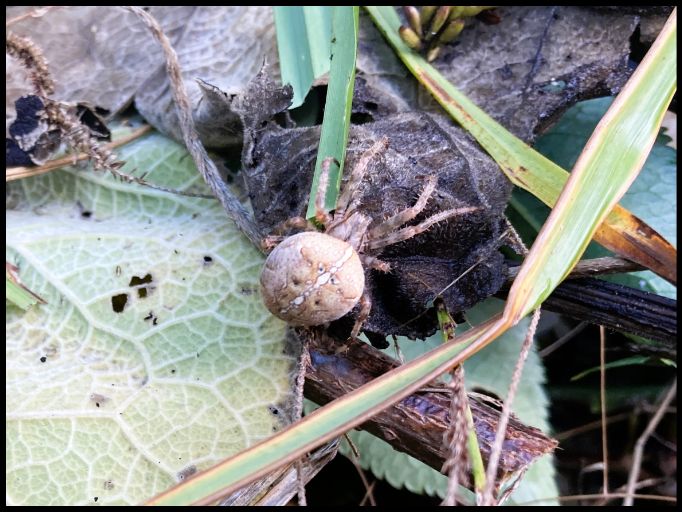
| The Spiders of the Spade Spiders are always the first to arrive when the soil is opened. The moment a spade breaks ground, they appear — not dramatically, not aggressively, but purposefully. A pause. A recalculation. Then movement. Some retreat instantly, others freeze, trusting stillness more than speed. A few stand their ground, legs braced, as though interruption is merely a temporary inconvenience. These are the spiders of the spade. The ones you meet not by searching, but by working. In Britain, spiders don’t dominate gardens through size or spectacle. They dominate through presence. Quiet, constant, largely unseen until the earth is disturbed. They live in the seams of things — beneath stones, within root systems, along fence lines, under shed lips, inside compost heaps that never quite cool. What surprised me most when I began gardening in earnest was how many different kinds there were. Ground hunters that don’t bother with webs at all. Sheet weavers whose silks sit low and nearly invisible until dew gives them away. Web builders who rebuild patiently after every disruption, as if damage is simply part of the arrangement. Each one occupies a specific layer, a specific role, a specific rhythm. Spiders, I learned, are not accidental residents. They are infrastructure. They respond instantly to change. Turn soil, and predators reposition. Clear leaf litter, and numbers drop. Allow corners to soften, and they return. Their presence maps a garden’s health more accurately than almost anything else. As a child, spiders were fascination, fear, companions, and lessons all rolled into one. As a gardener, they became confirmed. If spiders are there — especially in variety — something is working. Behind the spade, I’ve come to respect their timing. They don’t rush. They don’t waste energy. They wait for an imbalance and then respond. Aphids rise, spiders follow. Flies gather, webs appear. Nothing theatrical. Nothing sentimental. Just function. British spiders ask something different of you than their Australian cousins ever did. They ask you not to flinch. Not to tidy too much. Not to assume that the absence of drama means the absence of life. They also ask for trust. A garden rich in spiders is not a neglected one — it is a balanced one. One where chemical intervention isn’t required because predation is already happening. Quietly. Constantly. Without asking permission. Every time I lift the spade now, I pause. I look. I give them a second to move, to recalibrate, to disappear back into the places they were holding long before I arrived. Because the spiders were there first. And if they stay, it means I’m doing something right. |
| 10 True Facts About British Spiders The UK has over 650 recorded spider species. Most are small, discreet, and rarely noticed unless the ground is disturbed. Almost all British spiders are harmless to humans. While many can bite, their fangs are usually too weak to penetrate skin, and bites are extremely rare. Spiders are present in gardens year-round. Even in winter, many species remain active in soil, sheds, compost heaps, and leaf litter. Not all spiders build webs. Many British species are ground hunters that chase prey rather than trapping it in silk. Spiders are highly sensitive to vibration. They detect movement through soil, silk, and surfaces long before they can see it. A healthy garden supports many different spider types Web builders, ambush hunters, and roaming predators all occupy different layers of the same space. Spiders are important natural pest controllers. They feed on flies, aphids, mosquitoes, and other insects that damage plants. Most garden spiders rebuild their webs frequently. Damage from wind, rain, or gardening is expected — webs are temporary tools, not permanent homes. Spiders respond quickly to environmental change. Remove cover or leaf litter, and their numbers drop; restore it, and they return. Seeing spiders when digging is a good sign Their presence often indicates healthy soil and a functioning food web. |
 Earthly Comforts