
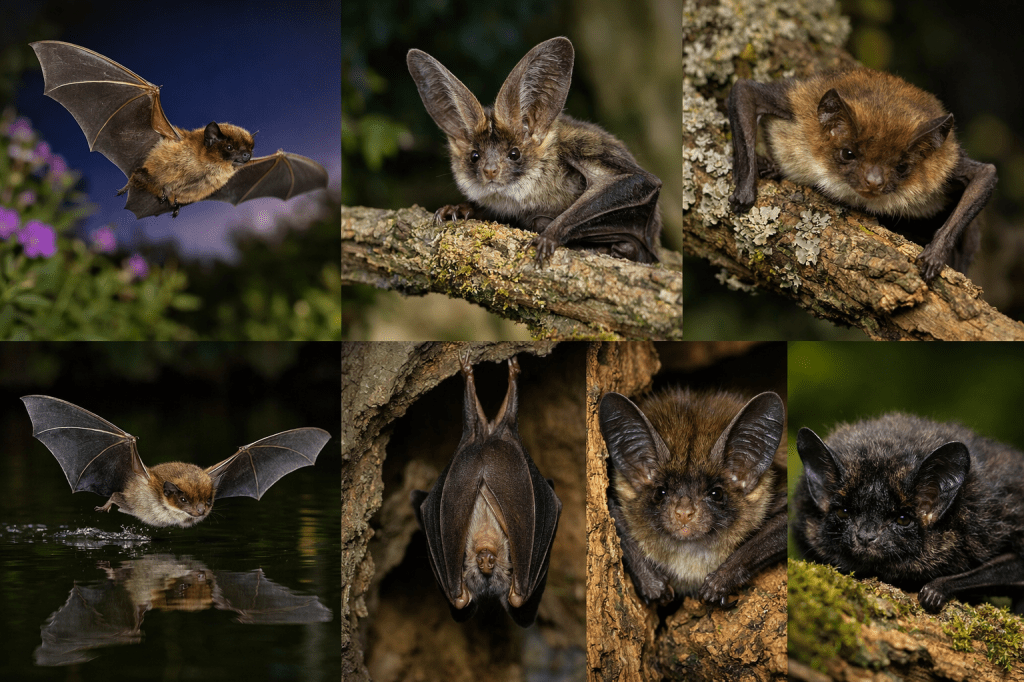
| AI G [AI Generated] Images |
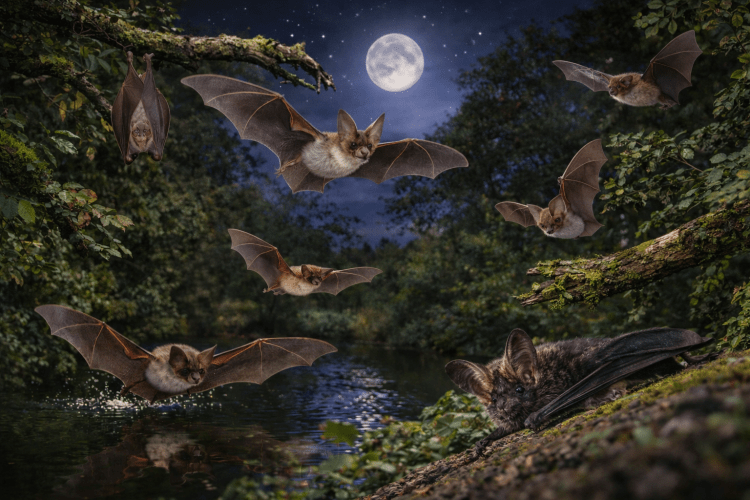
| Field Guide to 8 Key Species Bats don’t just “live in the dark” — they use it. Each species has its own way of reading the landscape: some follow hedgerows like railway lines, some skim water like a stone, some hunt by listening for the softest rustle of wings. When you stitch these behaviours together, you get a clearer truth: bats are not random night-fliers. They are specialists in routes, edges, shelter, and continuity. This guide combines eight of the UK’s most characteristic species into one joined-up story, so you can understand what you’re seeing (or not seeing), what each bat needs, and what your land, garden, or local patch can do to help. You’ll meet: Lesser horseshoe bat (delicate corridor specialist) Greater horseshoe bat (ancient, landscape-dependent hunter) Daubenton’s bat (water-surface “trawler”) Common pipistrelle (urban neighbour and garden regular) Brown long-eared bat (the listener and gleaner) Brandt’s bat (the balanced generalist) Bechstein’s bat (ancient woodland loyalist) Barbastelle bat (quiet moth-hunter of old trees) Across the UK, gardens are a genuine bat habitat — not just a place bats pass through. In most areas, the species you’re most likely to see in gardens are common pipistrelles (often the regular dusk “darting” bat), and in many places you may also get brown long-eared bats (especially in older, quieter neighbourhoods near trees/hedges) and Brandt’s bats where there’s nearby woodland edge, mature trees, or dark lanes. Daubenton’s bats can appear in gardens too if your garden backs onto, or is very close to, a river, canal, lake, or large pond — they’ll usually stick tightly to the water line rather than criss-crossing lawns. By contrast, lesser and greater horseshoe bats, Bechstein’s bats, and barbastelles are far less likely to be “garden regulars” across the UK as a whole, because they depend on very specific landscapes (dark connected corridors, traditional pasture/hedge systems, and/or ancient woodland with veteran trees) — but in the right regions, with the right habitat networks, they can still use garden edges as part of a wider commuting route. The Big Pattern: How Bats Organise the Night Most of these bats aren’t really choosing “places” as much as they’re choosing systems: Commuting corridors: hedges, tree lines, woodland edges, riverbanks Feeding zones: where insects concentrate (water margins, pasture, woodland rides, gardens) Roost networks: safe warm sites for summer, cool stable sites for winter Darkness as habitat: light can be a wall, not a convenience If a landscape becomes simplified — fewer hedges, fewer old trees, brighter roads, tidier “sealed” buildings — bats don’t just lose a little habitat. They lose connectivity, and connectivity is survival. |
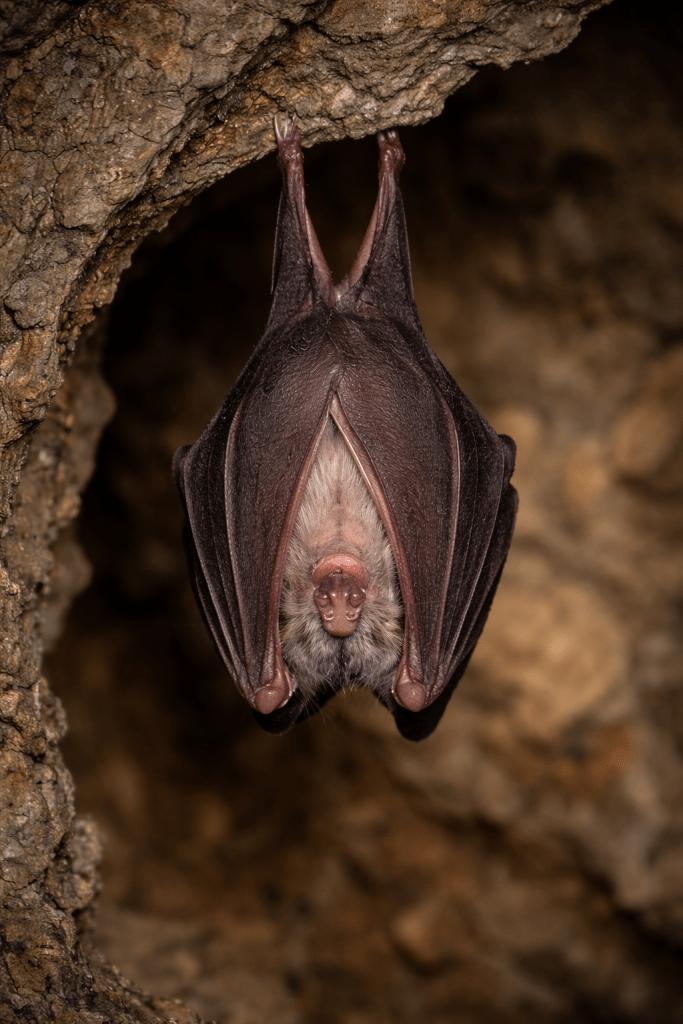
| Lesser Horseshoe Bat |
| Horseshoe Bats: The Architects of Dark Corridors Lesser Horseshoe Bat & Greater Horseshoe Bat Horseshoe bats feel like they belong to an older Britain: quieter lanes, thicker hedges, darker nights, and buildings with gaps and character. Both species share an instantly recognisable feature: the horseshoe-shaped noseleaf, which focuses echolocation through the nose rather than the mouth. Think of it as a precision tool for hunting in cluttered places. Lesser Horseshoe Bat: finesse, loyalty, and stillness The lesser horseshoe bat is small, gentle-looking, and extremely detail-oriented. What it does best Flies slowly and deliberately Travels close to vegetation along fixed routes Hunts in sheltered edges (hedgerows, woodland margins, tree-lined lanes) What it needs Continuous dark corridors (even small breaks can stop movement) Calm conditions (wind and bright light work against it) Roosts that stay stable in temperature and airflow Roost life Lesser horseshoes often roost fully visible, hanging freely, wrapped in their wings — not squeezed into cracks. Summer maternity roosts are especially sensitive: disturbance, lighting changes, drafts, noise, or renovations can lead to abandonment. Key lesson from this species It survives through continuity, not flexibility. Greater Horseshoe Bat: power shaped by tradition The greater horseshoe bat is larger, stronger, and carries a real “ancient presence.” It doesn’t thrive in modern simplified landscapes — it thrives where land still has structure. Where it feeds Woodland edges and hedgerows Pastureland, especially where grazing animals support insect life Orchards and traditional farmland mosaics How it hunts It often patrols rather than chases. Strong, steady flight, low routes, and repeatable paths. Its echolocation (nasal, constant-frequency) excels at detecting fluttering insects — but it’s more easily disrupted by light and disturbance than many other bats. Why it declined Not one big event — a slow reshaping: Hedge removal Intensification of farmland Conversion/sealing of old buildings Increased lighting and fragmentation Key lesson from this species Some bats need whole landscapes, not “patches.” |
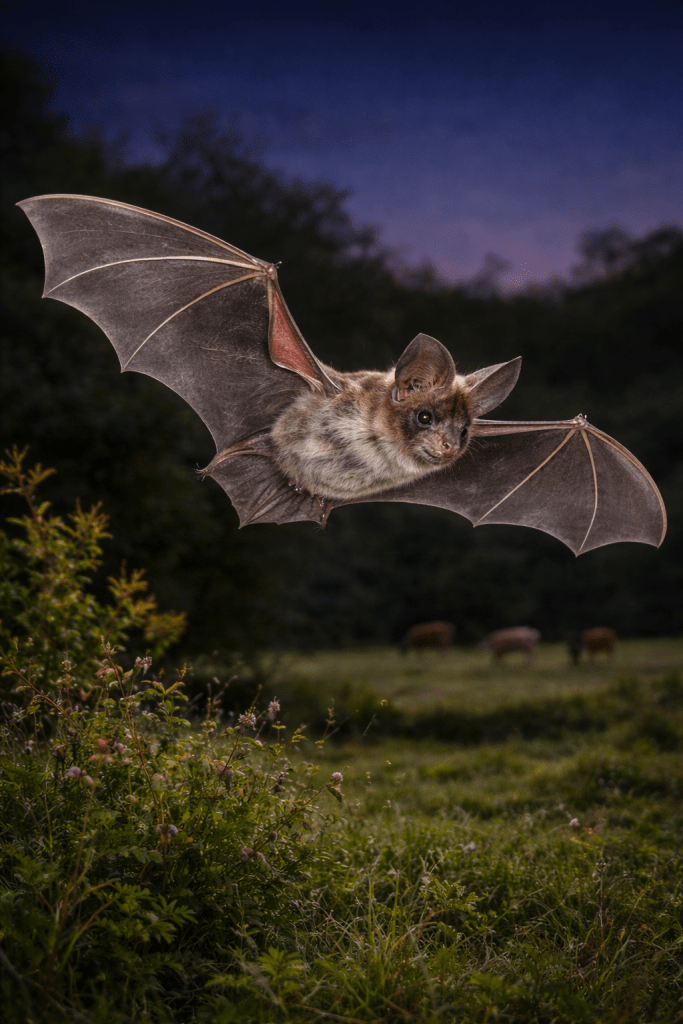
| Greater Horseshoe Bat |
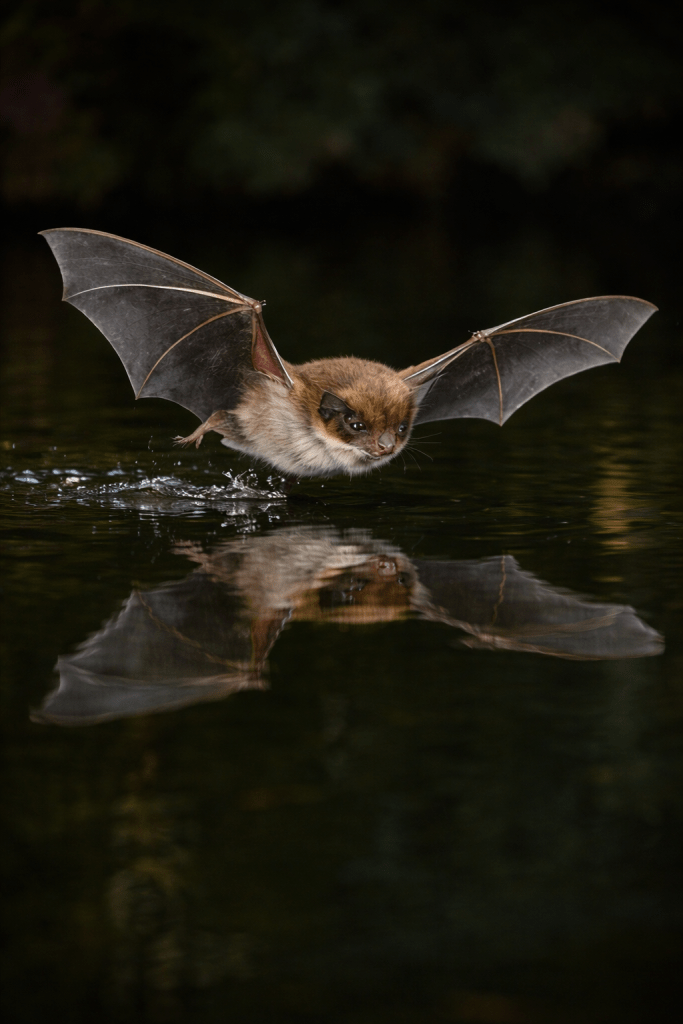
| Daubenton’s Bat |
| The Water Specialist: Daubenton’s Bat The Water Skimmer of Twilight If you stand by a river, canal, lake, or large pond at dusk and see a bat flying low and smooth — almost “mechanical” in its consistency — you may be watching Daubenton’s bat. Signature behaviour: trawling This bat hunts by skimming the surface: Detects insects above or on the water film Dip’s feet or tail membrane Scoops prey without breaking flight rhythm It’s a feeding style built on control and calm water. Where water is clean and insect-rich, this bat can feed efficiently with minimal wasted effort. It’s best habitat Slow rivers, canals, reservoirs, gravel pits, ponds Tree-lined banks (wind shelter + insects + dark corridor) Bridges and structures that offer roosting crevices near feeding areas Roosting Daubenton’s bats often roost close to water: Tree cavities Bridge crevices and stonework cracks Tunnels/culverts What threatens it Water quality changes can ripple upward: Pollution and reduced aquatic insects Riverside tree loss Bright lighting along waterways Engineering that strips shelter and slows insect abundance Key lesson from this species For Daubenton’s, water quality is the food supply. |
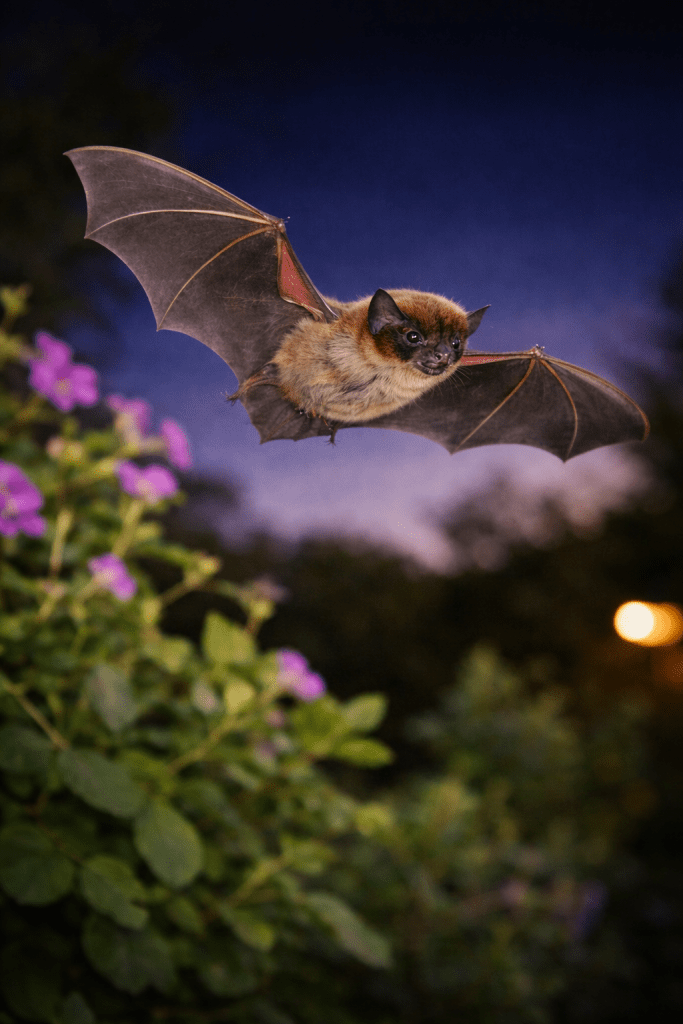
| Common Pipistrelle |
| The Neighbour Bat: Common Pipistrelle The Small Bat You’re Most Likely to See The common pipistrelle is the bat most people unknowingly share space with. It’s small, fast, and adaptable — but still depends on insects and roost access. How it hunts Quick, darting flight Catches small insects on the wing (midges, mosquitoes, small flies, tiny moths) Often uses garden edges, hedgerows, and even street corridors. Pipistrelles can appear around lights where insects gather, but “more light” isn’t always better — harsh lighting can also disrupt routes and reduce insect diversity over time. Where it roosts Commonly in buildings: Under tiles, in soffits, wall cavities, roof voids, behind cladding Colonies range from small groups to large summer maternity roosts. These bats don’t gnaw or build nests; droppings are dry, crumbly, mostly insect remains. Main pressures Renovations that seal access points Declining insects Loss of hedges/trees Over-lighting that fractures feeding routes Key lesson from this species Coexistence already works — but it depends on leaving small imperfections in buildings and darkness in the right places. |
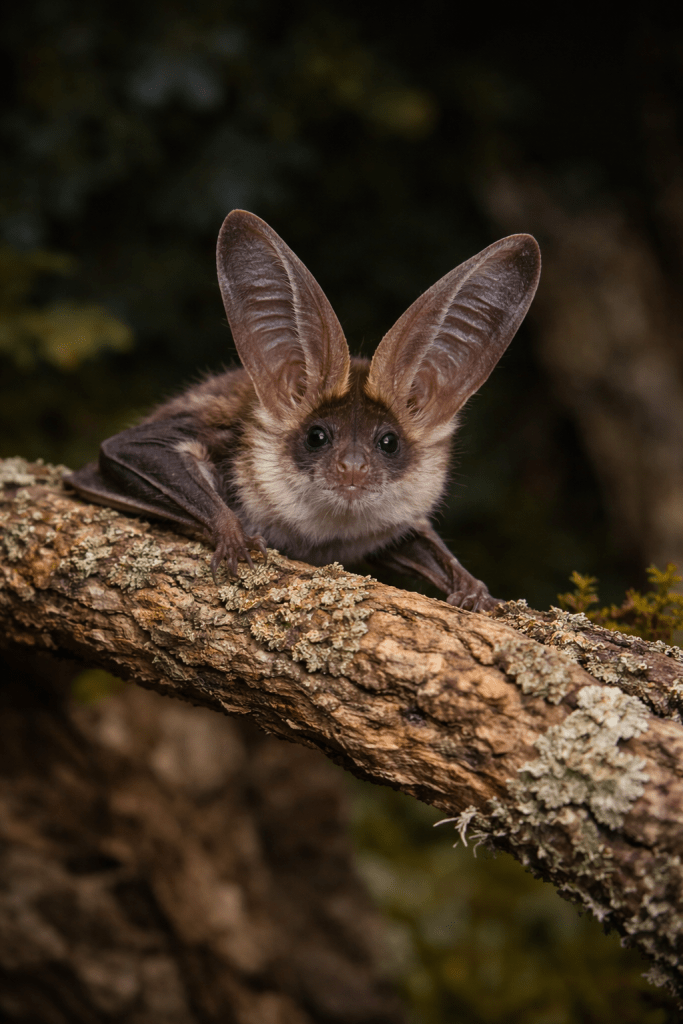
| Brown Long-Eared Bat |
| The Listener: Brown Long-Eared Bat The Gleaner That Hears Its Prey If the pipistrelle is the sprinter, the brown long-eared bat is the careful hunter with enormous ears — often nearly body-length — built for listening, not shouting. It’s a special skill It can hear insects moving: The flutter of a moth wing A beetle rustling a leaf Tiny vibrations in vegetation Because it can hunt by listening, it may use very quiet echolocation — sometimes almost none — to avoid alerting prey. How it feeds A lot of its hunting is gleaning: Picks insects off leaves, branches, and walls May hover briefly to pluck prey with precision Prefers calm, cluttered environments with texture and cover Where it lives Woodland edges, hedgerows, orchards, parkland Villages and rural gardens near vegetation Old buildings with beams and calm roof spaces What threatens it Renovations that remove roof void roosts Loss of hedgerows/orchards Moth declines Bright rural lighting Key lesson from this species This bat thrives where the world remains textured, dark, and quiet enough to listen. |
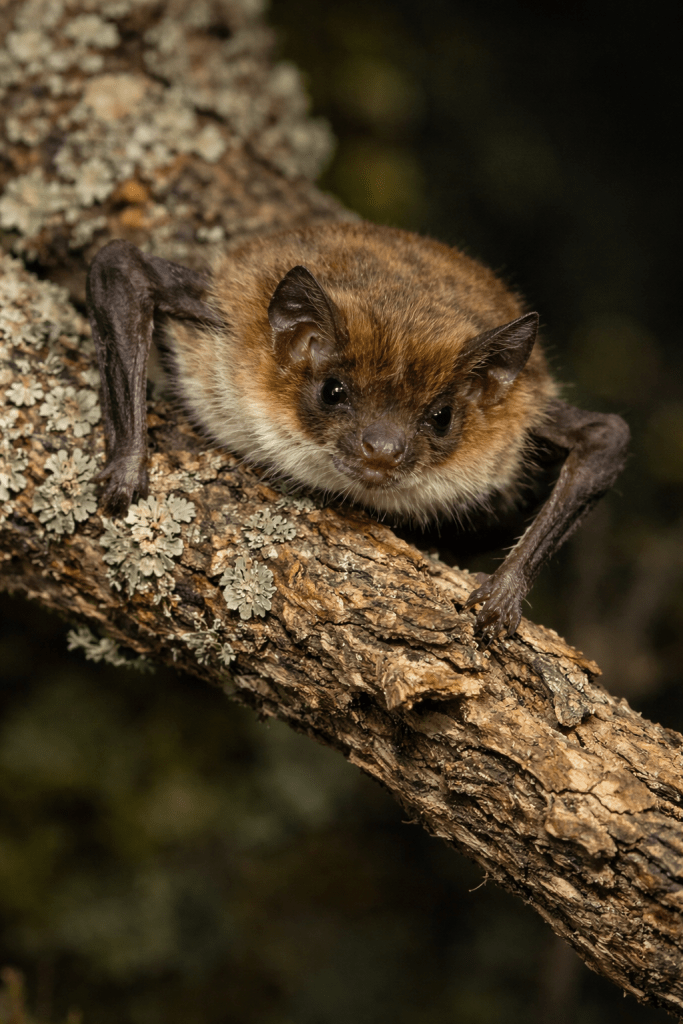
| Brandts Bat |
| The Balanced One: Brandt’s Bat The Steady Generalist with Limits Brandt’s bat doesn’t shout for attention. It survives by being consistent: adaptable within boundaries, resilient when landscapes stay mixed. Where it does well Deciduous and mixed woodland Woodland edges, rides, tree-lined lanes Parkland and larger gardens Often near water, but not dependent on it like Daubenton’s Feeding style Smooth, controlled flight Low to medium height Broad diet (flies, moths, beetles) That varied diet makes it better able to handle seasonal swings — as long as insect life remains generally healthy. Roosting Flexible but needs options: Tree cavities and cracks Buildings (roof spaces, barns, behind tiles/cladding) Winter hibernation in caves, tunnels, mines, and cellars What threatens it Not catastrophe — slow imbalance: Hedge and tree line loss Woodland simplification Over-lighting Insect declines Modern building practices that remove roost gaps Key lesson from this species Moderation is powerful — until the landscape tips too far into simplification. |
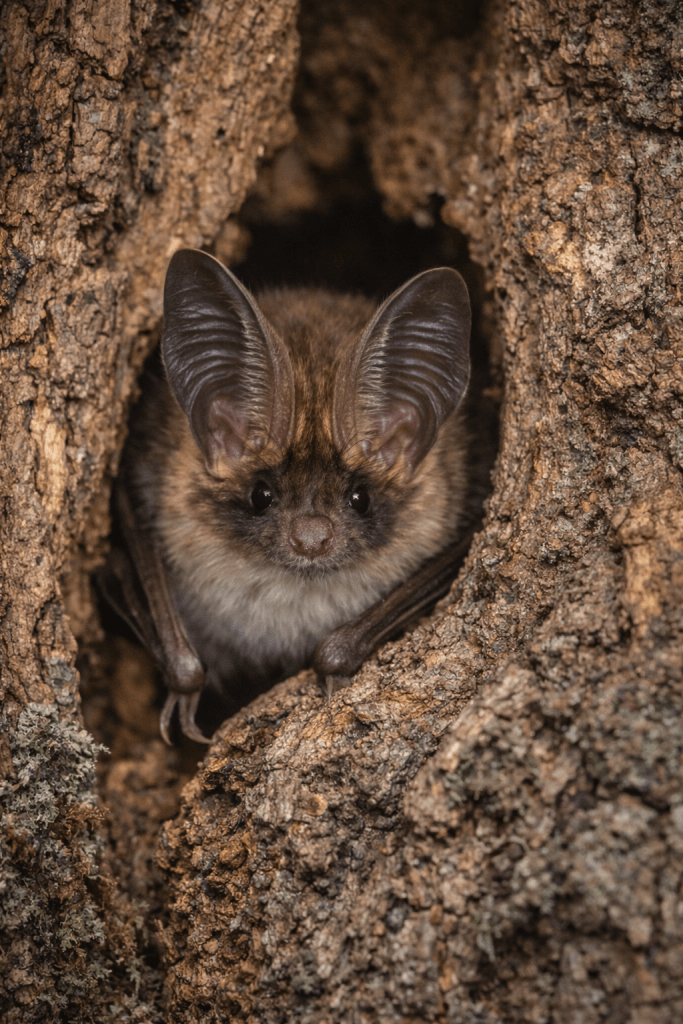
| Bechstein’s Bat |
| The Woodland Loyalist: Bechstein’s Bat The Forest Bat That Lives by Time Bechstein’s bat is a reminder that not all wildlife can “just adapt.” It is tied to old woodland systems, veteran trees, and a continuity that can’t be quickly replaced. How it hunts Slow, skilled flight inside woodland Moves under canopy, along rides, between trunks Often gleans insects off surfaces. Roosting: a network, not a single home Bechstein’s bats roost mainly in trees: Cavities, woodpecker holes, splits, cracks Uses a roost network, shifting frequently That means losing a few veteran trees can break an entire system. New woodland won’t replicate this quickly — these are decades-long habitats. Social structure Females form stable maternity colonies. Strong site loyalty, reluctant to leave Populations are very place-tied and therefore hard to replace Why it rare Because modern landscapes rarely provide: Ancient woodland continuity Veteran tree abundance Dark connected routes High insect diversity Key lesson from this species Some conservation is simply allowing forests to become old. |
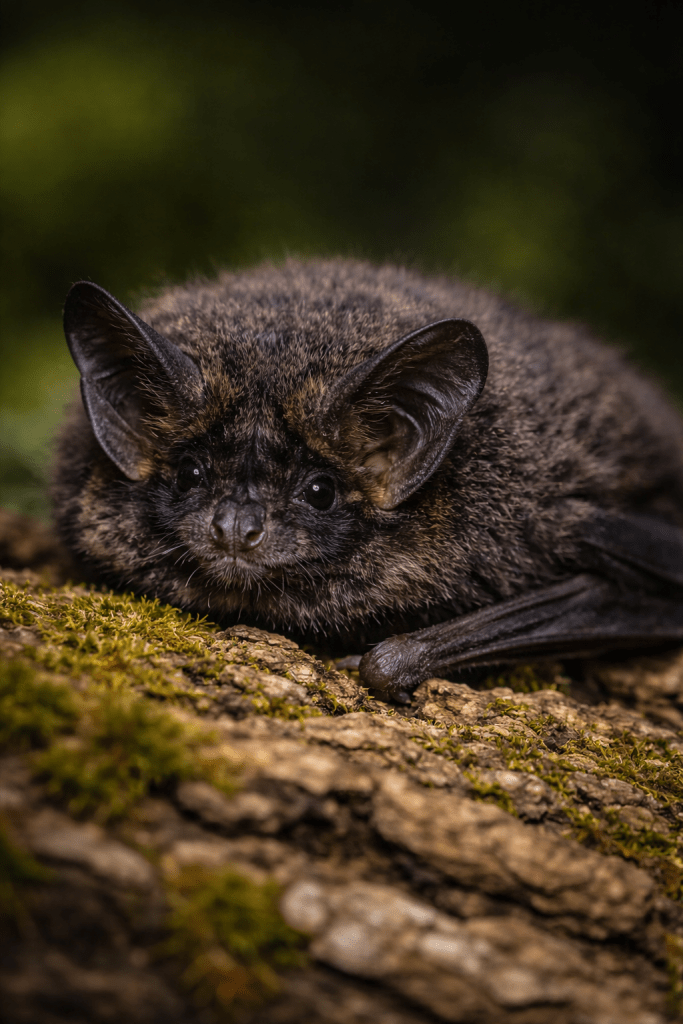
| Barbastelle Bat |
| The Quiet Moth-Hunter: Barbastelle Bat The Elusive Guardian of Old Landscapes Barbastelles are often described as elusive for a reason: even people who love wildlife may never see one. They favour shadowed woodlands and old trees — and they hunt with unusually quiet echolocation. The twist: quiet calls Many moths can hear bats and evade them. Barbastelles use low-volume calls to approach moths without triggering their defences. It’s a specialist strategy — incredibly effective, but dependent on the right landscapes. Habitat needs Ancient deciduous woodland Wood pasture and parkland with old trees Hedgerows linking woods to feeding zones Roost sites behind loose bark and in narrow tree features Barbastelles often rotate roosts every few days, so they need many suitable trees, not a single “bat tree.” What threatens them Removal of old/dying trees for tidiness or perceived safety Over-lighting near woodland edges Fragmentation by roads/development Moth declines and simplified insect communities Key lesson from this species For barbastelles, “neat and bright” can be the enemy of survival. |
| How to Tell Them Apart in the Real World (without handling) Most people identify bats by where they’re flying and how they move: Low over water, smooth skimming → likely Daubenton’s Fast, darting in gardens/around houses at dusk → likely Common pipistrelle. Slow, hovering/close to vegetation, very gentle movement → often Brown long-eared Slow, hedge-hugging corridor flight; very sensitive to light → could be Lesser horseshoe (in the right regions/habitats) Strong, deliberate, low routes in traditional pasture/hedge landscapes → could be Greater horseshoe (where present) Deep woodland interior, veteran trees, very local and rare → Bechstein’s territory Woodland edges, later activity, hard to spot, moth-heavy feeding → Barbastelle possibility Mixed landscapes, steady presence, not showy → Brandt’s is a candidate (often requires acoustic confirmation) (And yes, many small bats look similar in silhouette. That’s normal. Location and behaviour are your best first clues.) |
| What Helps All of Them: The Shared “Bat-Friendly” Checklist If you want a landscape that supports most of these species, focus on the shared essentials: 1) Keep it connected Maintain hedgerows, tree lines, and woodland edges. Avoid creating “gaps” between roost areas and feeding zones. 2) Treat darkness as habitat Use warm, low, shielded lighting only where needed. Keep dark corridors along hedges, rivers, and between trees. Avoid flooding woodland edges or watercourses with bright lights. 3) Protect roost choices Old buildings, roof voids, barns, bridges, trees with cavities: these are living assets Renovate with awareness (bats are legally protected; good practice is planning before sealing gaps) 4) Build insect life Reduce pesticide use Plant for long flowering seasons Leave some “messy” corners (log piles, long grass patches, native shrubs) Protect water quality and bankside vegetation. 5) Value the imperfect Many of these bats rely on what modern life tries to erase: Old timber, cracks, loose bark, hollow limbs, unsealed roof gaps The “not too tidy” bits are often the most alive. |
| Closing Thought: What These Eight Bats Really Measure These species are more than bats. They are living indicators of how a place is managed: Horseshoe bats measure darkness and continuity. Daubenton’s measures water health Pipistrelles measure coexistence and insect abundance. Long-eared bats are quite complex. Brandt’s measures balance Bechstein’s and barbastelles measure time, old trees, and restraint. If you protect the routes, the roost options, the insect life, and the darkness between them, you aren’t just supporting bats — you’re rebuilding the night ecosystem. |
 Earthly Comforts