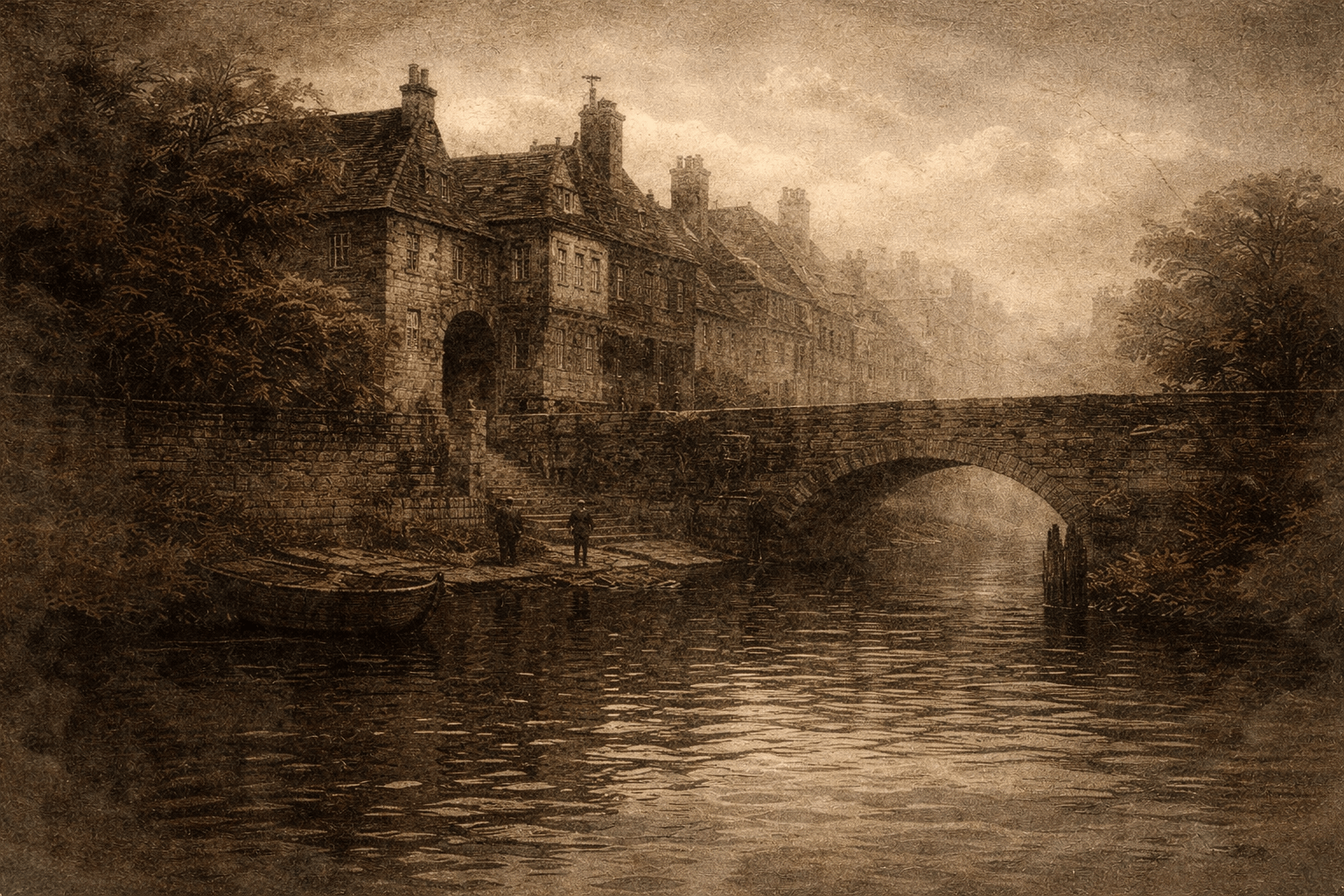
| Part Three By the time Sandwich began to feel established, the work had already decided what kind of place it would be. Not the kind recorded in charters or praised in ceremony, but the daily work that kept people fed, sheltered, and occupied. Ports are remembered for ships and trade, but they survive on labour that rarely makes it into the record. Most lives here were not lived on the water, but around it. Loading, unloading, storing, repairing, cleaning, waiting. The river set the rhythm, but it was human effort that filled the hours. Goods arrived in bulk and were left in fragments. Nothing moved cleanly from one place to another. Everything passed through hands. This kind of work does not encourage grand thinking. It demands attention to the immediate. Weather, tide, light, and fatigue mattered more than ambition. A delayed shipment meant longer hours. A poor harvest inland meant thinner margins at the quay. The town’s prosperity was never abstract. It was counted daily, often painfully, in effort rather than wealth. Land work mattered just as much as river work. Beyond the quay and warehouses, fields were drained where they could be. Marsh was edged back carefully, never entirely conquered. Grazing land had to be watched. Soil had to be managed without the benefit of modern inputs. Overuse showed quickly. The land here was productive, but it did not forgive impatience. What’s often missed is how interconnected these efforts were. Trade depended on food. Food depended on land that remained usable. The town’s success rested on a quiet balance between what could be taken and what had to be left alone. That balance was not theorised. It was felt. When it tipped, people noticed. Labour in Sandwich was steady rather than spectacular. There were busy seasons and lean ones, but little certainty beyond that. Work expanded when conditions allowed and contracted when they didn’t. This created a town accustomed to adjustment. Stability was something worked towards, not assumed. This also shaped the social fabric. A place built on variable conditions tends to value reliability over status. Skills mattered. Experience mattered. Knowing when not to push mattered most of all. Those lessons were learned slowly and passed on informally, through practice rather than instruction. The town’s physical layout reflected this pragmatism. Buildings were functional first. Streets followed movement patterns rather than ideals. Expansion happened where the ground allowed it and stopped where it didn’t. Nothing about Sandwich suggests excess confidence in permanence. Even at its height, it behaved like a place aware of limits. Over time, prosperity brought pressure. More work meant more land altered, more storage built, more strain placed on systems that had previously absorbed change quietly. The margin between effort and return narrowed. What had once been manageable through attention alone began to require intervention. This is where work becomes more than labour. It becomes maintenance. Keeping things going rather than improving them. Maintenance doesn’t attract notice, but it consumes time, energy, and resources. For Sandwich, maintenance became the cost of staying relevant in a changing world. None of this happened quickly. There was no clear moment when work stopped paying off. Instead, each generation inherited a slightly heavier load than the one before. More to maintain. More to watch. Less room for error. The land and the river continued to offer what they had always offered, but the terms were tightening. It’s tempting to view this as a decline, but that oversimplifies things. Sandwich didn’t stop working. It worked harder for less certainty. That distinction matters. Many towns fail because they are abandoned. Sandwich endured because people stayed, adjusted, and carried on. The legacy of that effort is still visible. The town’s scale remains human. Its streets feel worked rather than designed. There is a sense of use embedded in the place, as though everything here has earned its position rather than claimed it. Understanding Sandwich means recognising this ordinary persistence. Not heroism, not grandeur, but continuity. The town was shaped as much by those who lifted, carried, drained, repaired, and waited as by those who planned or governed. Their work didn’t stop change, but it slowed it enough to be lived with. In a place allowed by circumstance, survival depended on effort that respected limits. Sandwich’s history is not only written in water and land, but in the steady accumulation of work that accepted both. |
Sandwich: A Town Allowed
 Earthly Comforts
I am enjoying learning more about, Sandwich, Rory. Thank you for sharing.
LikeLiked by 1 person
Hi Eugenia, happy Saturday to you. Thank you.
LikeLiked by 1 person
You’re most welcome, Rory.
LikeLiked by 1 person