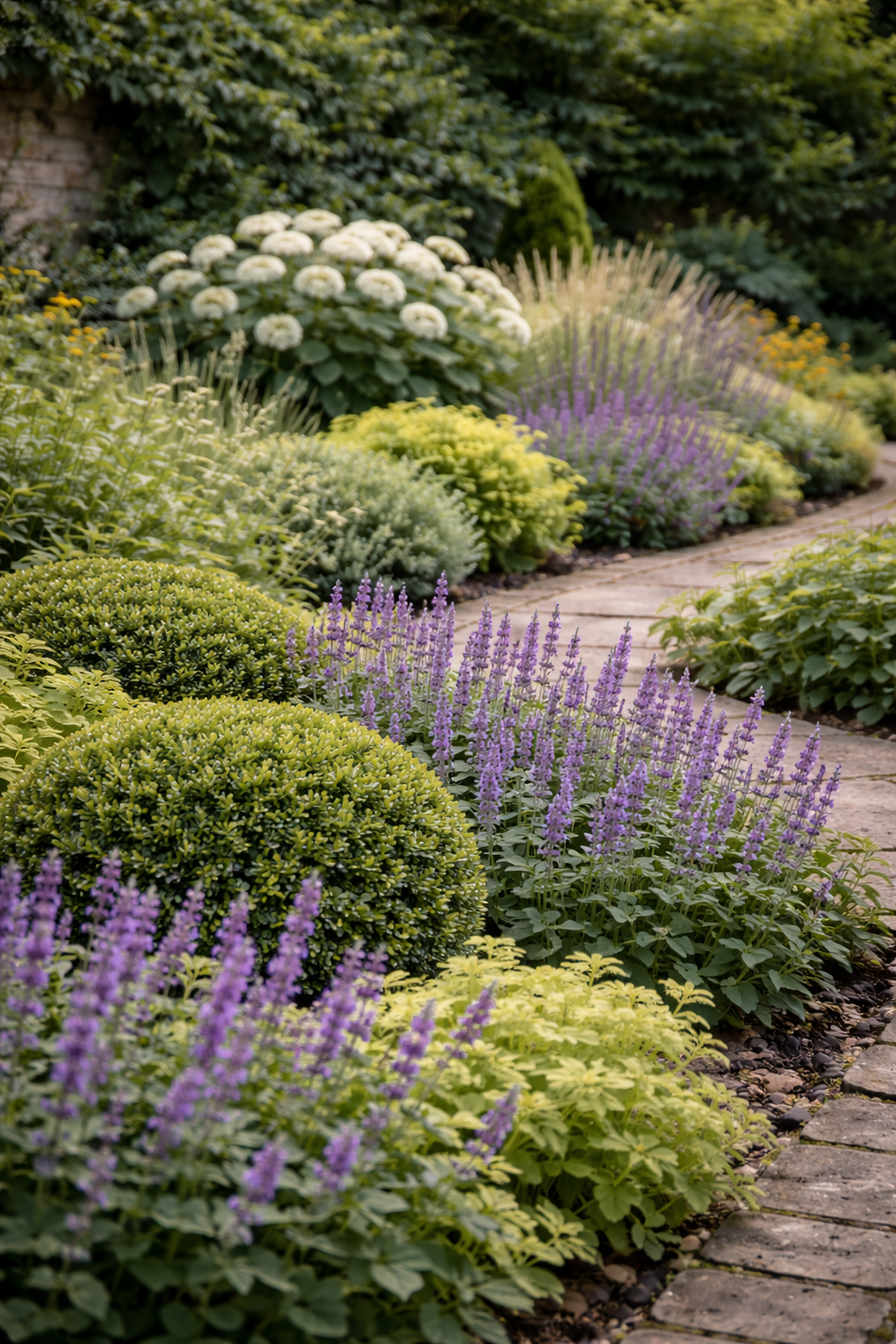
| Part 9 When Hard Surfaces Help, Not Harm Hard surfaces often get a bad reputation in gardening. They’re blamed for draining life from gardens, increasing heat, or replacing planting unnecessarily. In some cases, that criticism is deserved. But in small gardens, hard surfaces are not the enemy. Used thoughtfully, they are often what allow planting, wildlife, and maintenance to function properly. Hard surfaces provide clarity in tight spaces. In a small garden, ambiguity quickly becomes a problem. When it’s unclear where planting ends and movement begins, borders get trampled, soil compacts, and plants suffer. Paths blur into beds, and maintenance becomes awkward and disruptive. Hard surfaces — paths, stepping stones, small paved areas — create a sense of certainty. They tell the body where to walk and the eye how the space is organised. That clarity reduces wear, protects planting, and makes the garden easier to live with. Access is a form of care. One of the most overlooked benefits of hard surfaces is the access they provide. In small gardens, access determines how often and how gently maintenance can happen. When beds can be reached without stepping into them, jobs stay light. When access is poor, work becomes rushed, heavy-handed, or avoided altogether. A well-placed path or small paved area allows: Selective weeding instead of wholesale clearing Careful pruning rather than cutting back hard Regular attention without disturbance Access supports restraint — and restraint supports plant health. Hard surfaces protect soil as much as they replace it. Soil is fragile in small spaces. Repeated foot traffic compacts it quickly, reducing drainage and oxygen. Over time, plants struggle, weeds take hold, and the garden becomes harder to manage. Hard surfaces absorb that pressure. They take the wear, so the soil doesn’t have to. Used sparingly and purposefully, paving and paths preserve soil health rather than undermine it. Structure makes planting feel intentional. In small gardens, planting needs a framework. Without it, even well-chosen plants can feel loose or unfinished. Hard surfaces provide contrast — solid against soft — which helps planting read clearly and confidently. A curved path, a defined seating area, or a strong edge can make surrounding plants look more deliberate, even when the planting itself is relaxed. Structure allows softness to feel composed rather than accidental. Over-paving is the real problem. The issue is not hard surfaces themselves — it’s excess. Too much paving removes opportunity for planting, increases runoff, and can make a garden feel stark or overheated. In small spaces, especially, this imbalance shows quickly. The aim is not to maximise hard surfaces, but to place them where they do the most good: Where movement naturally happens Where maintenance requires access Where seating or pause points make sense When hard surfaces serve a purpose, they earn their place. Materials matter less than intention. There’s often anxiety around choosing the “right” material. In reality, consistency matters more than perfection. Simple materials, used sparingly and repeated, tend to work best in small gardens. They don’t compete with planting, and they age gracefully alongside it. What matters is not how expensive or fashionable a surface is, but whether it supports how the garden is used and maintained. Hard surfaces support longevity. Small gardens need to last. They need to cope with weather, changing mobility, fluctuating energy, and evolving priorities. Thoughtful hard surfaces make that possible by reducing strain on both the garden and the person caring for it. They make gardens usable across seasons and life stages — without requiring constant adjustment. In the next post, I’ll look at how small gardens can be maintained effectively through short, regular visits — and why steady rhythm matters more than big interventions. Because a small garden done properly isn’t built on softness alone. It’s built on balance. |
The Small Garden
 Earthly Comforts