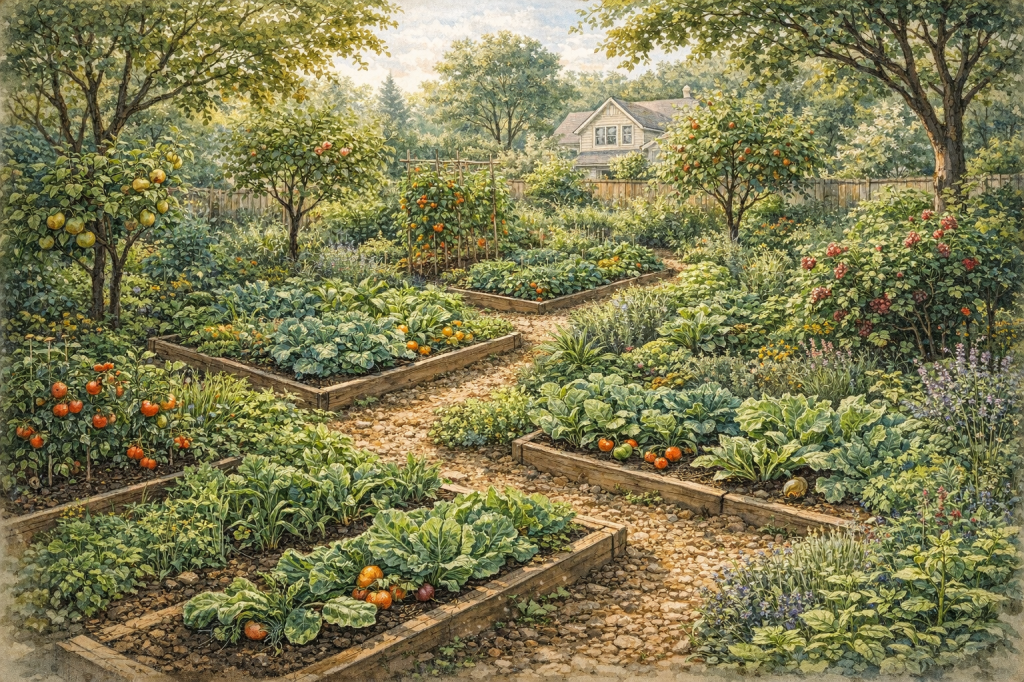
| Episode 11: James Prigioni From Vegetable Beds to Backyard Food Forests If MIgardener represents discipline and fundamentals, James Prigioni shows what can happen when those fundamentals are layered into something richer, denser, and more playful. Based in New Jersey, Prigioni is best known for transforming a conventional suburban garden into a thriving backyard food forest, where vegetables, fruit, and perennial plants overlap to create year-round abundance. His work blends curiosity with confidence, encouraging gardeners to think beyond straight rows and seasonal limits. A Suburban Beginning James Prigioni’s garden did not begin as an idealised homestead. It started as a typical suburban plot — lawn, borders, and familiar constraints. What followed was a gradual, intentional change. Rather than removing everything at once, Prigioni layered new elements into the existing space: Raised beds for vegetables Fruit trees and shrubs Perennial herbs and groundcovers Over time, these layers began to interact. Shade moderated temperatures. Fallen leaves improved the soil. Pollinators increased. Vegetables became part of a larger living system, rather than isolated crops. What Is a Backyard Food Forest? A food forest is often misunderstood as something complex or unmanageable. Prigioni’s work helps strip away that fear. At its simplest, a backyard food forest is about: Stacking plants vertically (trees, shrubs, groundcovers) Encouraging perennial food sources Allowing annual vegetables to fill gaps and edges Vegetables still play a central role, but they are supported by surrounding plants that improve soil, retain moisture, and reduce pest pressure. For many gardeners, this approach feels liberating — less about control, more about collaboration with nature. Abundance Without Intimidation One of Prigioni’s greatest strengths is his ability to make abundance feel attainable rather than overwhelming. His garden is productive, but it is also joyful. Harvests are shared enthusiastically. Experiments are celebrated. Failures are shrugged off and replanted. This tone matters. For gardeners used to rigid advice or perfection-driven imagery, Prigioni’s style restores a sense of play — without sacrificing results. Vegetables in a Perennial World Although often associated with fruit trees and perennials, Prigioni consistently demonstrates how vegetables thrive within these systems. Annual crops benefit from: Improved soil structure Reduced wind exposure Partial shade during heatwaves A more stable microclimate Leafy greens, brassicas, tomatoes, and squash all find places within the food forest framework, often outperforming their counterparts in exposed beds. Why James Prigioni Belongs in This Series James Prigioni is included because he represents a bridge: Between vegetables and perennials Between traditional gardening and permaculture Between structure and spontaneity In the USA section, he expands the conversation beyond productivity and fundamentals to resilience through diversity. Placed after Epic Gardening and MIgardener, his work shows what happens once skills are established and curiosity takes over. Influence Through Enthusiasm Prigioni’s influence lies not in formal teaching, but in infectious enthusiasm. His videos are energetic, encouraging, and grounded in real experience. This energy has inspired many gardeners to: Plant fruit trees sooner Experiment with perennial vegetables Reimagine lawns as food-producing spaces In a culture often driven by convenience, this shift in mindset is powerful. Where to Follow James Prigioni James Prigioni shares his work primarily through: A popular YouTube channel documenting his food forest and vegetable growing Social media platforms showcasing harvests, experiments, and garden updates Online discussions focused on permaculture-inspired home gardening. A Garden That Grows With Its Gardener As the eleventh episode in this series, James Prigioni’s story highlights an important phase in many gardeners’ journeys: the moment when growing food becomes less about instruction and more about expression. His garden continues to evolve, just as his approach does — shaped by observation, enthusiasm, and a willingness to try. |
 Earthly Comforts