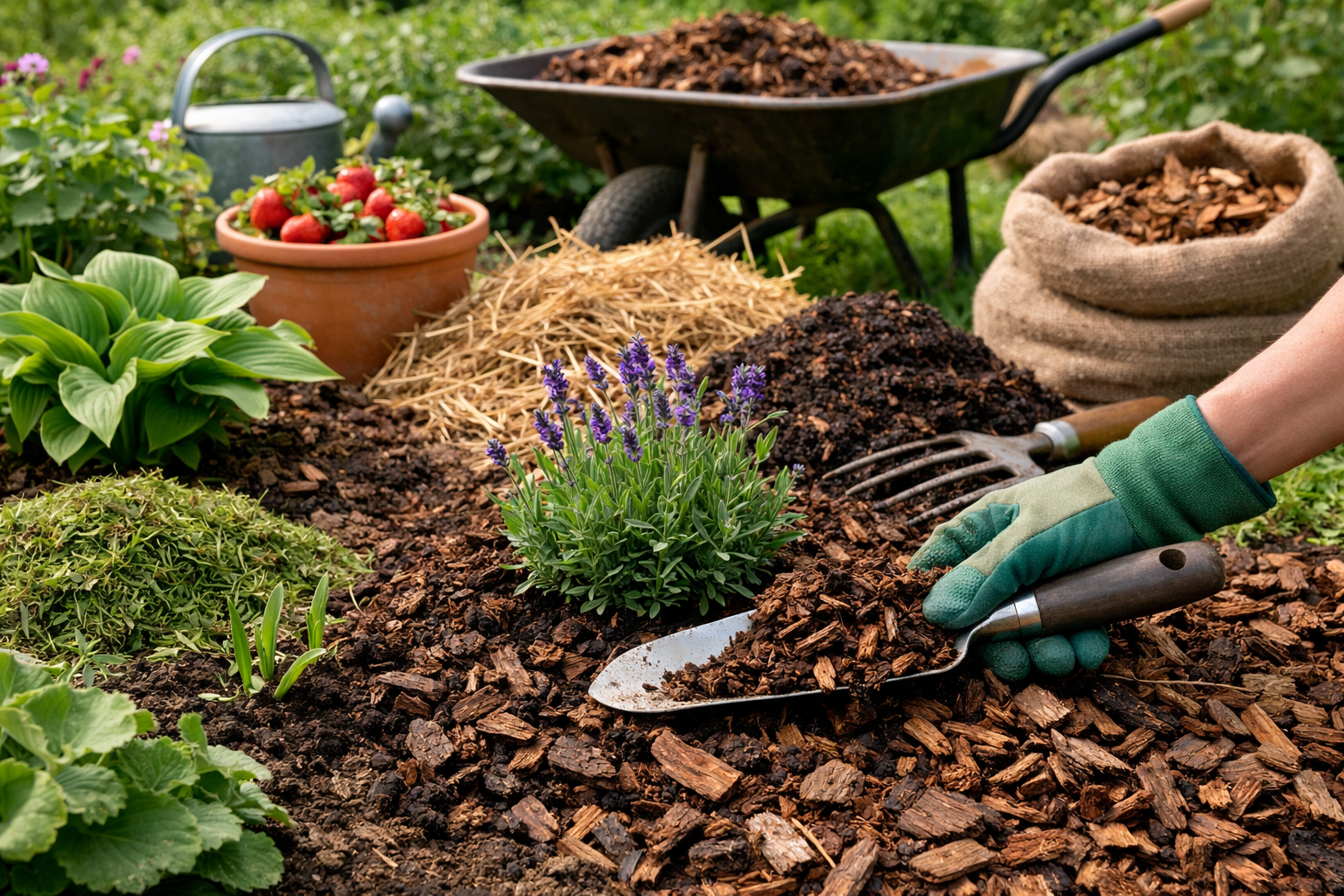
| Benefits + Best Materials Mulching is one of those gardening jobs that sounds optional until you’ve done it properly once. After that, it becomes a habit. Not because it’s trendy or clever, but because it quietly solves a lot of problems at once. If you’re new to gardening, or you’ve inherited a garden that always feels like hard work, mulching is one of the simplest ways to get control without overcomplicating things. At its most basic, mulch is a layer of material applied to the soil surface. That’s it. But what it does beneath the surface is where the real value lies. Mulch protects the soil, feeds it over time, reduces weeds, and helps plants cope with weather that’s becoming less predictable year by year. You don’t need specialist kit or perfect timing. You just need to understand what you’re putting down and why. This guide is written for beginners, but it’s grounded in real gardens — not ideal ones, not show gardens, and not ones that get constant attention. Mulching works best in ordinary gardens where time, money, and energy are limited. Why Mulching Matters More Than You Think Soil is a living system. It’s not just something plants sit in. When soil is left bare, it dries out faster, compacts more easily, loses nutrients, and becomes a welcoming surface for weeds. Mulch acts as a protective layer, much like leaf litter does in nature. Nothing in the wild leaves soil exposed for long. One of the biggest benefits of mulching is its ability to retain moisture. A good mulch slows evaporation, which means the water you add — whether from rain or a hose — stays where plants can actually use it. In practical terms, that means less watering and fewer stressed plants during dry spells. Mulch also moderates soil temperature. In summer, it keeps the roots cooler. In winter, it offers insulation against frost. This doesn’t make plants indestructible, but it does reduce shock and stress, which is often what finishes plants off rather than the cold or heat itself. Then there’s weed suppression. Mulch blocks light from reaching weed seeds in the soil, which dramatically reduces germination. It won’t eliminate weeds entirely, but it shifts the balance in your favour. Weeds that do appear are usually easier to remove because the soil underneath stays looser and more workable. Over time, organic mulches break down and feed the soil. This improves soil structure, encourages beneficial organisms like worms and fungi, and builds long-term fertility. You’re not just tidying the surface — you’re improving what’s underneath year after year. When to Mulch There’s a common belief that mulching has a narrow seasonal window. In reality, you can mulch at almost any time of year, as long as the soil isn’t frozen solid or waterlogged. Spring and autumn are the most popular times, but each season has its place. Spring mulching helps lock in moisture after winter and gives plants a steady start as temperatures rise. The key here is waiting until the soil has warmed slightly. Mulching cold soil too early can slow growth. Autumn mulching is about protection and preparation. It insulates roots, protects soil from winter rain compaction, and allows organic materials to break down slowly over the colder months. By spring, the soil underneath is often noticeably better. Summer mulching is underrated. During hot or dry periods, topping up mulch can make the difference between constant watering and manageable maintenance. Winter mulching is useful in exposed gardens, particularly for perennials and newly planted shrubs. How Much Mulch Is Enough? Too little mulch doesn’t do much. Too much can cause problems. As a general rule, organic mulch should be applied to a depth of 5–8 cm. That’s thick enough to suppress weeds and retain moisture without smothering the soil. Always leave a small gap around the base of plants, especially woody ones. Mulch piled directly against stems can trap moisture, leading to rot. Think of mulch as a blanket for the soil, not a collar for the plant. Before mulching, clear visible weeds and water the soil if it’s dry. Mulch locks in whatever conditions are present underneath — good or bad. Starting with damp, reasonably clean soil makes a big difference. Best Mulching Materials (and What They’re Good For) Not all mulch is the same. The “best” mulch depends on what you’re mulching, how much effort you want to put in, and how the garden is used. Bark and Wood Chips These are durable, tidy, and long-lasting. They’re ideal for shrubs, trees, and larger beds where you don’t want to top up constantly. Bark breaks down slowly, so it doesn’t feed the soil quickly, but it’s excellent for weed suppression and moisture control. It’s also practical in public-facing or low-maintenance gardens. Compost (Home-Made or Bought) Compost is both mulch and a soil improver. It feeds plants as it quickly breaks down and improves soil structure. It’s best used on borders, vegetable beds, and around perennials. The downside is that it doesn’t suppress weeds as effectively unless applied thickly, and it needs to be topped up more often. Well-Rotted Manure Manure is nutrient-rich and excellent for hungry plants, such as roses, fruit bushes, and vegetables. It must be well rotted — fresh manure can burn plants and cause problems. Used correctly, it’s one of the most effective mulches for long-term soil improvement. Leaf Mould Leaf mould is slow, gentle, and brilliant for soil health. It doesn’t add many nutrients, but it greatly improves structure and moisture retention. It’s ideal for woodland-style planting, shrubs, and perennial borders. It takes time to make, but if you have access to autumn leaves, it’s worth it. Straw or Hay Common in vegetable gardens, straw helps suppress weeds and keep soil cool. It’s particularly useful around potatoes, courgettes, and strawberries. It breaks down quickly and can look messy, but it functions well. Grass Clippings Grass clippings can be used as mulch, but only in thin layers. Thick layers clump together, smell, and exclude air. Used sparingly, they add nitrogen and help retain moisture, especially in vegetable beds. What to Avoid Not everything labelled ‘mulch’ is a good idea everywhere. Decorative stones and gravel can be useful in specific situations, but they don’t feed the soil and can trap heat. In sunny gardens, they often raise soil temperatures too much for plants underneath. Plastic sheeting and landscape fabric can suppress weeds short-term, but they also interfere with soil life and water movement. In most domestic gardens, organic mulches do a better job with fewer downsides. Mulching and Soil Health Go Hand in Hand Mulching isn’t a quick fix — it’s a long game. The real benefits show up over time. Soil becomes darker, looser, and easier to work with. Plants establish more quickly and require less intervention. Weeds reduce, watering becomes less frequent, and the garden starts to look after itself a little more. This is especially important in gardens that have been heavily disturbed, compacted, or stripped of organic matter over the years. Mulch is one of the simplest ways to rebuild soil without digging everything up. Common Beginner Mistakes One of the most common mistakes is mulching once and expecting permanent results. Organic mulches break down — that’s part of their value. Topping up once or twice a year is normal. Another mistake is using mulch to hide problems rather than address them. Mulch won’t fix drainage issues or revive plants that are already failing due to poor placement. It supports good gardening habits; it doesn’t replace them. Finally, don’t overthink it. Mulching doesn’t have to be perfect. Consistent, sensible application beats doing nothing because you’re unsure. A Final Word Mulching is quiet work. It doesn’t shout, and it doesn’t show immediate results the way planting does. But over time, it changes how a garden behaves. Less stress, less effort, fewer extremes. For beginners, especially, it’s one of the best habits you can form early on. If you get the soil right, everything else becomes easier. Mulch is one of the simplest ways to start doing that properly. |
Unless stated, featured images are my own work, created independently or with the assistance of AI.
 Earthly Comforts