
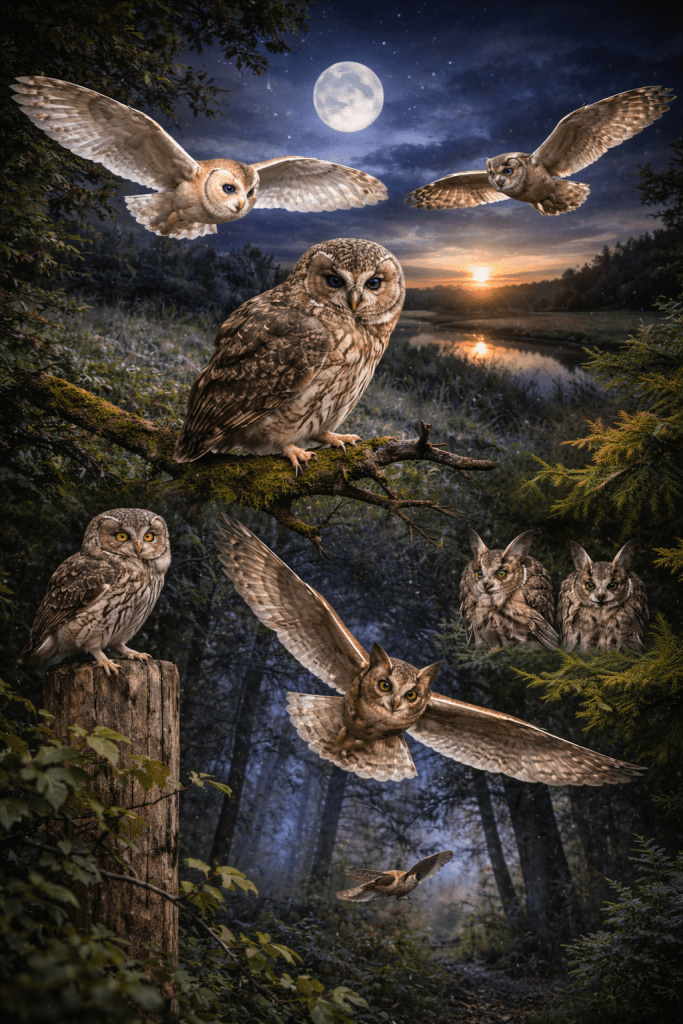
| AI Generated Images |
| The Silent Watchers of Dusk and Dark Owls occupy a special place in the UK’s natural and cultural landscape. Often heard more than seen, they move through dusk, darkness, and early dawn with a quiet authority that few other birds possess. Their calls echo through woodlands, across fields, and over moorland, marking territory, signalling presence, and reminding us that the night is alive. To understand owls in the UK is to understand stillness, patience, and precision. These are birds shaped not for spectacle, but for effectiveness—hunting in low light, listening rather than looking, and living largely out of sight. Each species has carved out its own role, habitat, and rhythm within the British landscape. |
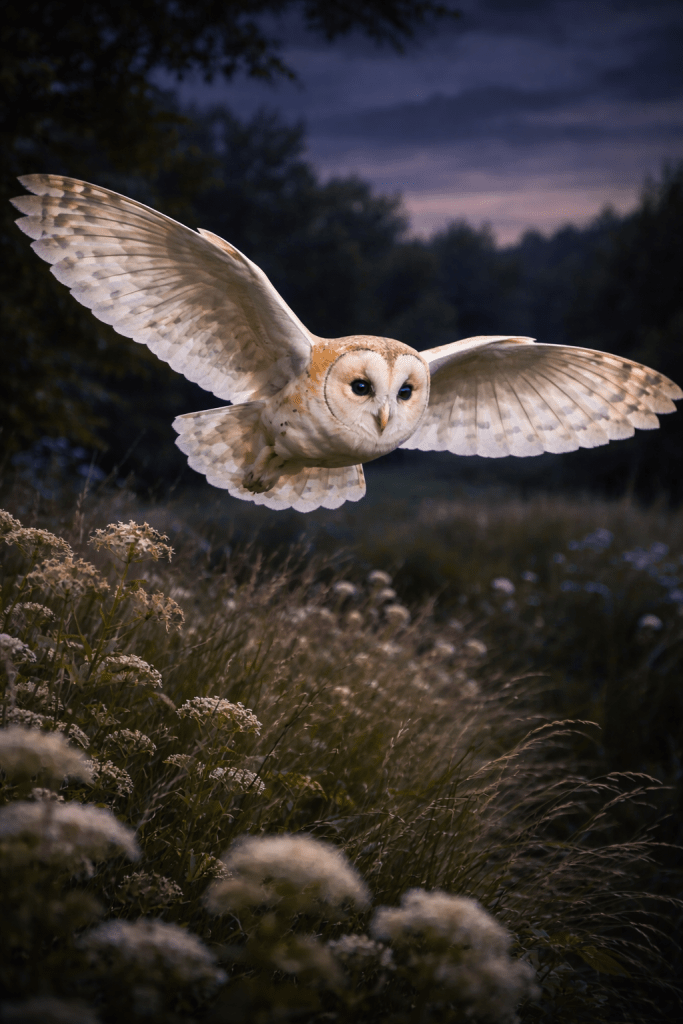
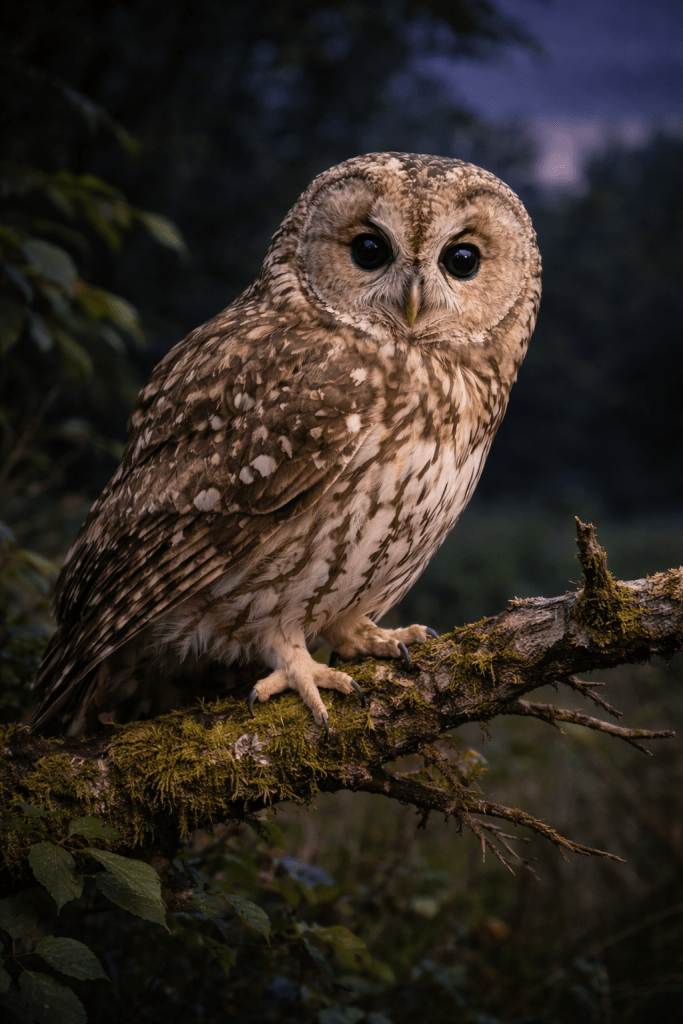
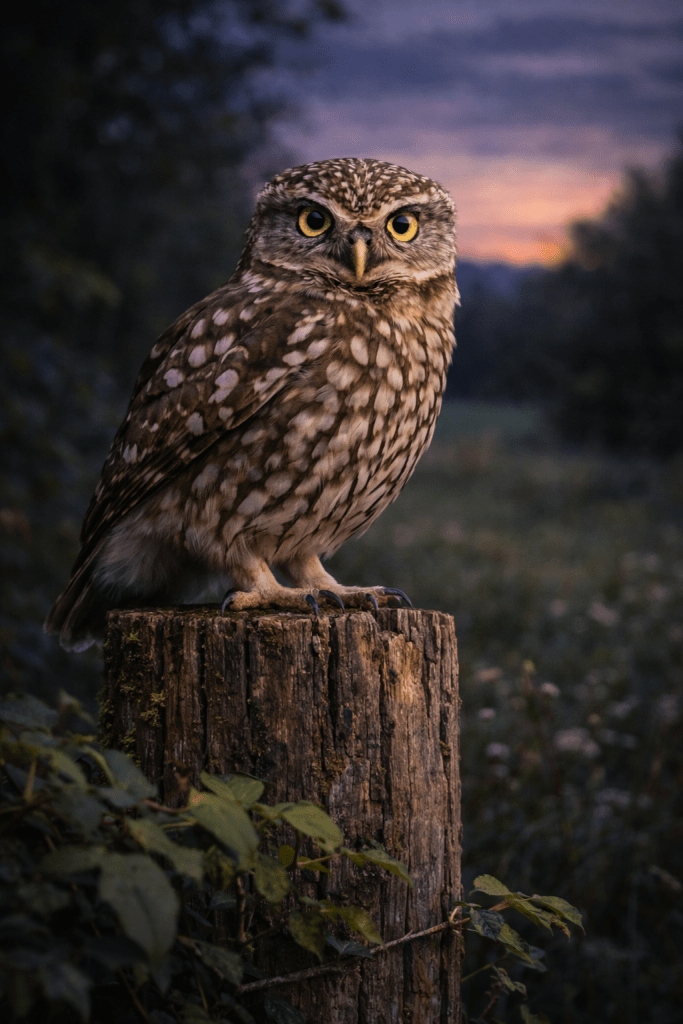
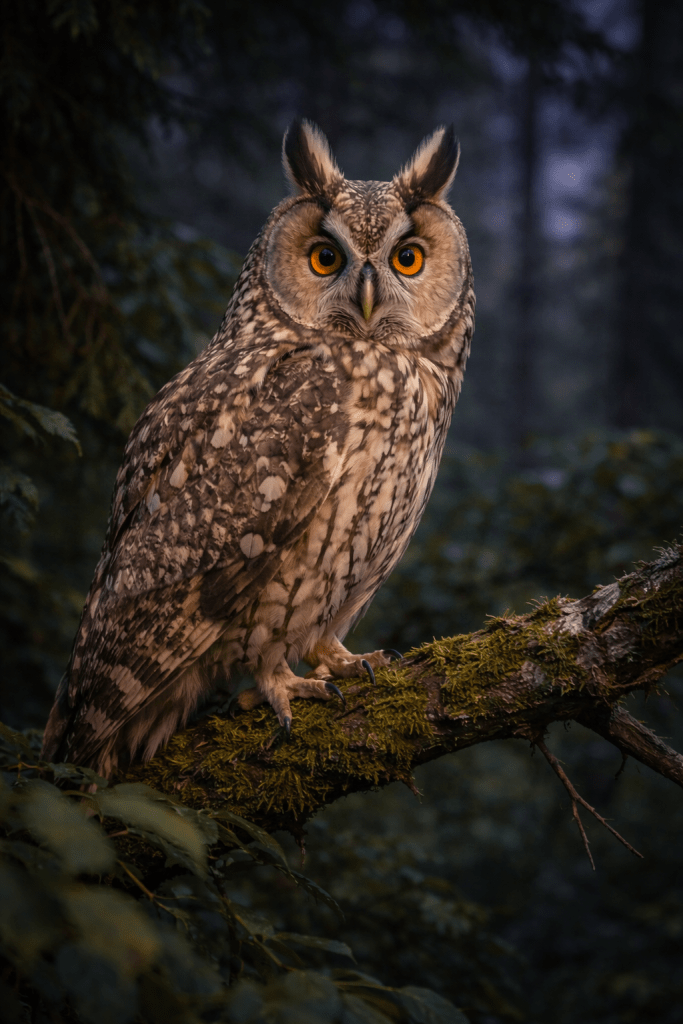
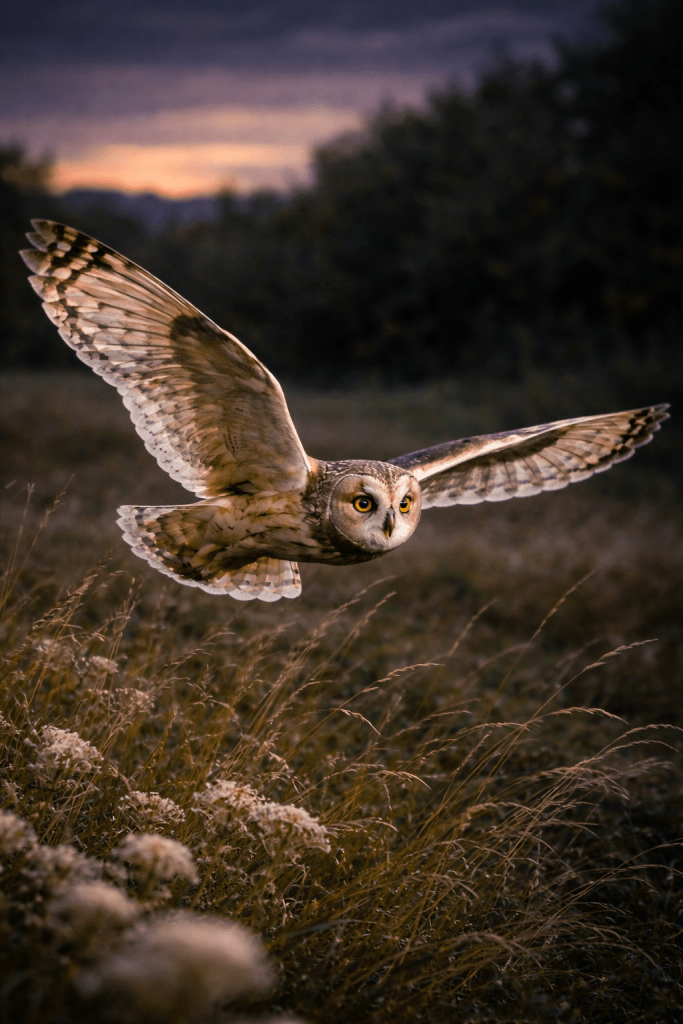
| Barn Owl, Tawny Owl, Little Owl, Long Eared Owl and the Short Eared Owl |
| The Main Owl Species Found in the UK Barn Owl The barn owl is perhaps the most instantly recognisable UK owl, with its pale, heart-shaped face and ghostly white underside. Often seen hunting over open fields at dusk, it flies low and slow, quartering the ground in search of small mammals. Barn owls rely heavily on rough grassland, field margins, and hedgerows that support vole populations. They nest in old buildings, barns, tree cavities, and specially designed nest boxes. Their presence is closely tied to traditional farming landscapes and low levels of disturbance. Tawny Owl The tawny owl is the UK’s most common owl species and the one most people hear but rarely see. Its familiar “twit-twoo” call is actually a duet between a male and a female, echoing through the woodland at night. Tawny owls are woodland specialists, favouring mature trees with cavities for nesting. They are stocky birds with rounded wings, perfectly suited to manoeuvring through trees rather than hunting open ground. Highly territorial, tawny owls often occupy the same area for many years. Little Owl Small, compact, and surprisingly bold, the little owl is active by day and night. It is often seen perched on fence posts, telegraph poles, or old trees, surveying its surroundings with a stern expression. Little owls favour farmland, orchards, parkland, and areas with scattered trees. They feed on a varied diet including insects, small mammals, worms, and occasionally small birds. Their adaptability has allowed them to live close to people, though changes in farming practices have affected numbers in some areas. Long-Eared Owl Long-eared owls are elusive and rarely seen, despite being widespread. Their name comes from the long ear tufts that sit upright on the head, though these are not ears at all, but feathers used for camouflage and communication. They roost quietly in dense trees during the day and hunt over open ground at night, particularly rough grassland. In winter, several may roost together, hidden deep within evergreen cover. Their secretive nature means many people live near long-eared owls without ever knowing. Short-Eared Owl Unlike most owls, short-eared owls are often active during daylight, especially at dawn and dusk. They are birds of open landscapes—moorland, marshes, coastal grassland, and upland areas. With buoyant, moth-like flight and pale underwings marked with dark patches, they are distinctive when seen hunting low over fields. Short-eared owls nest on the ground, making them vulnerable to disturbance. They are more nomadic than other UK owls, moving in response to prey availability. |
| What Makes an Owl an Owl? Owls are instantly recognisable once you know what to look for. Forward-facing eyes give them excellent binocular vision, essential for judging distance when hunting. A large facial disc funnels sound toward asymmetrically placed ears, allowing astonishingly accurate hearing—even pinpointing prey beneath grass or snow. Their feathers are specially adapted for silent flight. Soft, fringed edges break up airflow, allowing owls to approach prey without warning. Combined with powerful talons and a hooked beak, this makes them highly efficient predators. Despite their mystical reputation, owls are practical animals. Every feature serves a function. Hunting Styles and Diet All UK owls are predators, but their hunting styles vary. Barn owls rely heavily on sound, hovering briefly before dropping onto prey hidden in grass. Tawny owls use ambush tactics from perches, gliding silently through woodland. Owls feed mainly on small mammals such as voles, mice, and shrews. Some species also take birds, insects, frogs, or beetles. Indigestible parts—bones, fur, feathers—are compacted into pellets and regurgitated, offering valuable insight into diet and habitat use. A healthy owl population often reflects a healthy small-mammal population beneath it. Nesting, Breeding, and Raising Young Owls do not build traditional nests. Instead, they use existing structures—tree cavities, old nests of other birds, buildings, or ground scrapes —depending on the species. Breeding usually begins in spring. Eggs are laid at intervals, meaning chicks hatch at different times. This staggered hatching can act as a survival strategy in poor years, ensuring at least some young survive if food becomes scarce. Both parents are often involved in raising young, with feeding rates increasing dramatically during peak growth periods. Sound, Silence, and Communication Owls are known for their calls, but each species has its own voice. Some hoot, some bark, some screech. These calls establish territory, attract mates, and maintain contact. Silence is just as important. Owls rely on stillness—both their own and that of the landscape. Excessive noise, artificial lighting, and constant disturbance can disrupt hunting and breeding success. The presence of owls often indicates areas where night still exists. Owls and Seasonal Change Winter is a challenging time for owls. Cold weather increases energy demands, while prey availability can fluctuate. Species that rely on open grassland may struggle after prolonged frost or flooding. In autumn, young owls disperse, often travelling far in search of territory. This is when road mortality is highest, as inexperienced birds cross unfamiliar landscapes. Spring and summer bring renewal—new calls, nest activity, and fledglings learning to hunt. Owls in Human Landscapes Owls have learned to live alongside people in remarkable ways. Barn owls use agricultural buildings, little owls occupy parkland, and tawny owls nest near towns where mature trees remain. However, coexistence depends on tolerance. Loss of old trees, conversion of barns, intensive land management, and traffic all take a toll. Wildlife-friendly land—rough grass, hedgerows, dark corridors, and nesting opportunities—makes a measurable difference. Threats Facing UK Owls Owls face a combination of pressures: habitat loss, reduced prey due to intensive farming, rodenticide poisoning, road collisions, and disturbance. Secondary poisoning is a particular issue, as owls feeding on poisoned rodents can ingest lethal doses over time. Climate change adds further uncertainty, altering prey cycles and seasonal timing. Why Owls Matter Owls are not just charismatic birds—they are indicators. Their presence reflects healthy ecosystems, functioning food webs, and landscapes that still allow space for predators. They also hold deep cultural significance, inspiring stories, folklore, and fascination across centuries. This emotional connection can be a powerful driver for conservation. Protecting owls means protecting the night, the margins, and the unseen layers of the countryside. Learning to Listen for the Night Most encounters with owls begin with sound: a call drifting through darkness, a sudden silhouette crossing a headlight beam, a pale shape floating over a field at dusk. To notice owls, we must slow down and listen. The quieter we become, the more the night reveals. Owls do not demand attention—but they reward it. The Keepers of Balance Owls are hunters, parents, survivors, and sentinels of the dark. They keep rodent populations in check, shape food webs, and bring a sense of continuity to landscapes that are otherwise changing fast. Their silence is not emptiness. It is a purpose. A Shared Responsibility The future of UK owls depends on everyday choices: how land is managed, how buildings are renovated, and how dark nights are allowed to remain. By valuing hedgerows, field margins, old trees, and quiet spaces, we make room for owls—and for the wider web of life they represent. When an owl calls at night, it is not a mystery or omen. It is a sign that something is still working as it should. |
 Earthly Comforts