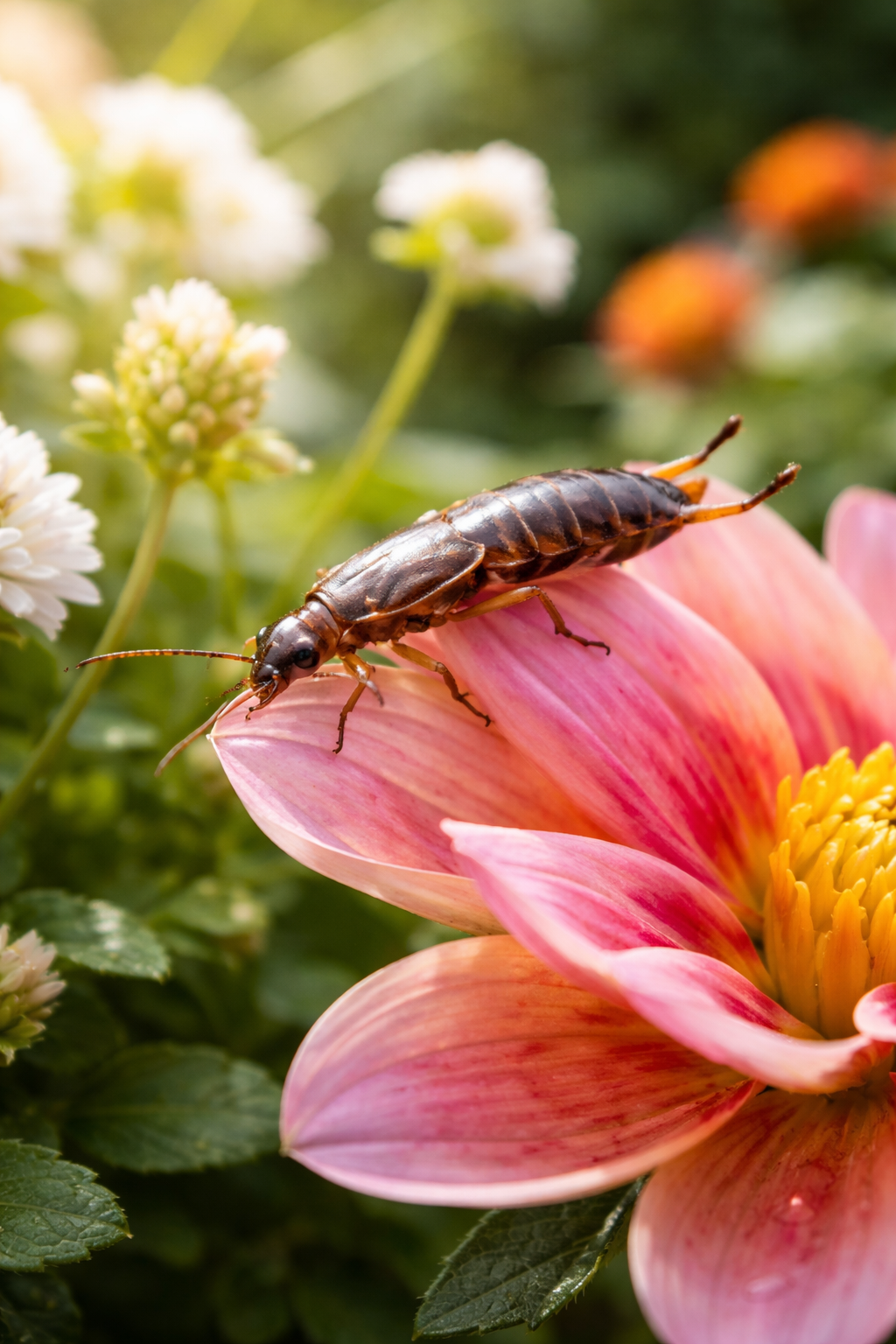
| Myths, truths, and their real garden role Earwigs are one of those garden creatures people seem to decide they dislike long before they’ve ever paid them much attention. Mention them, and you’ll often hear the same reactions: they’ll crawl in your ears, they ruin plants, they shouldn’t be there at all. Like many small, misunderstood insects, earwigs have picked up a reputation that doesn’t quite match reality. In truth, they’re neither heroes nor villains — just another part of the working garden. Let’s start with the myth that gives them their name. Earwigs do not crawl into ears. There’s no interest, instinct, or behaviour that supports this idea. It’s one of those old stories that stuck because it sounds unpleasant, not because it’s true. In a lifetime of gardening, lifting pots, clearing borders, and working at ground level, I’ve never known an earwig to show the slightest interest in anything other than shelter, food, or moisture. Another common belief is that earwigs exist purely to destroy plants. This one is closer to the truth, but still not quite right. Earwigs are omnivores. They’ll eat decaying plant matter, algae, moss, small insects, and yes — sometimes living plant tissue. The keyword there is sometimes. They tend to nibble soft growth, petals, or seedlings when other food sources are limited. That’s not malice; it’s survival. In a balanced garden, earwig damage is usually minor and often misattributed. In fact, earwigs spend a good deal of their time doing jobs gardeners claim to want done. They help break down organic matter, speeding up decomposition in soil and compost. They eat aphids, mites, and the eggs of other insects that can cause real harm if left unchecked. They’re part of the night shift — active after dark, quietly moving through the garden while most of us are indoors. You rarely see them at work, but that doesn’t mean nothing is happening. Where earwigs do become noticeable is when conditions suit them too well. Damp summers, dense planting, heavy mulching, stacked pots, and sheltered cracks all create ideal hiding places. A sudden population boom can cause visible damage, especially to dahlias, lettuces, strawberries, and young seedlings. That’s usually when frustration sets in and calls for eradication start. But wiping out one species rarely improves a garden in the long term. The real issue is balance. Earwigs thrive where there’s plenty of moisture and cover. If a garden is constantly damp, compacted, or cluttered, populations will rise. Improving airflow, spacing plants properly, lifting pots off bare soil, and avoiding waterlogged conditions does far more than any chemical control ever could. Healthy soil and thoughtful layout naturally reduce pressure. It’s also worth remembering that earwigs are opportunists. They’ll take advantage of weak plants first. Stressed, overfed, or poorly rooted plants are more attractive than strong, steady growers. Good soil health, slow feeding, and correct planting depth make a noticeable difference. A resilient garden doesn’t invite excessive damage — from earwigs or anything else. There’s a tendency in modern gardening to categorise insects as either “good” or “bad”. That’s neat, but it’s not how ecosystems work. Earwigs sit in the middle. They’re recyclers, predators, and occasional grazers. Remove them entirely, and something else will fill the gap — often something less helpful. Gardens don’t need perfection; they need function. If earwigs are causing real problems, there are gentle ways to manage them without going to war. Traps made from rolled damp newspaper or inverted pots filled with straw can be placed near vulnerable plants and emptied elsewhere. Reducing hiding spots during peak season helps. Most importantly, avoid reacting to a few chewed petals as though the whole garden is under attack. Over time, gardens teach patience. The longer you work with one, the clearer it becomes that most “problems” are signals, not failures. Earwigs are telling you something about moisture levels, shelter, and balance. Listen to that message, adjust the conditions, and the situation usually settles on its own. In the end, earwigs are neither pests nor pets. They’re just residents. Like all residents, they behave according to the environment they’re given. Build a garden that’s diverse, well-aired, and soil-focused, and earwigs will quietly take their place without causing much fuss at all. And once you stop seeing them as intruders, you may even find the garden runs a little more smoothly with them in it. |
Unless stated, featured images are my own work, created independently or with the assistance of AI.
 Earthly Comforts