
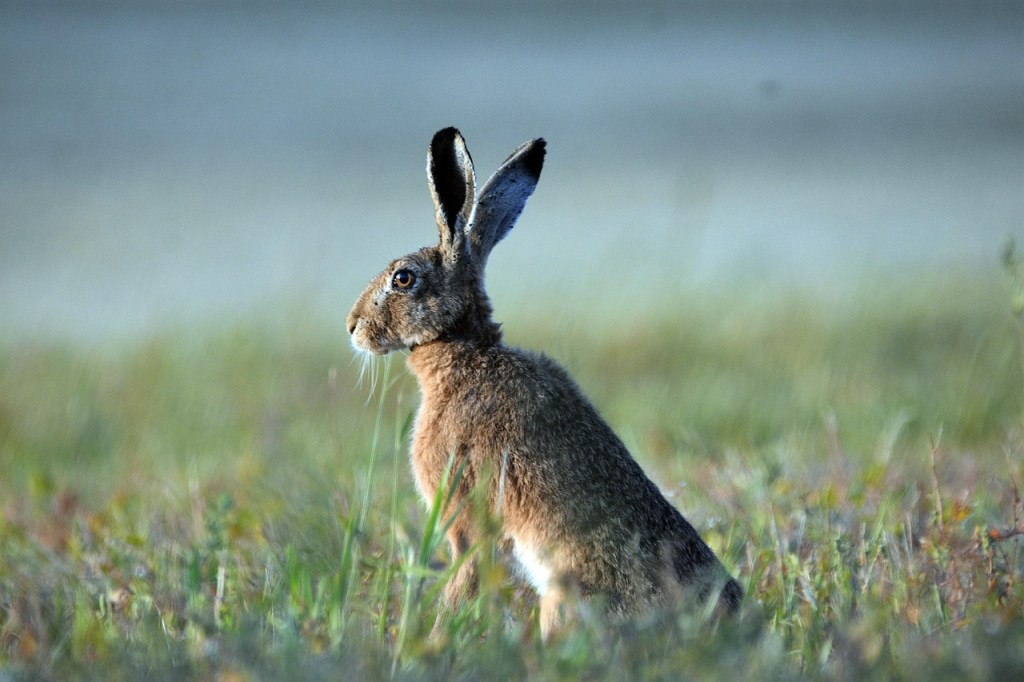
| The Long-Legged Spirit of Open Land Understanding the Brown Hare in the UK Few animals capture the feeling of the British countryside quite like the brown hare. Tall, long-limbed, and alert, it belongs to wide skies and open ground rather than woods or gardens. When seen properly—running flat-out across a field, ears swept back, body stretched into motion—it feels less like an animal passing through the land and more like the land itself coming briefly alive. Yet despite this powerful presence, brown hares live quiet, solitary lives and are far less secure than they appear. To understand the brown hare in the UK is to understand farmland, seasons, and how subtle changes in land management can ripple through wildlife populations. What Is a Brown Hare? The brown hare is a large, athletic mammal built entirely for speed and awareness. It is much larger than a rabbit, with long hind legs, an elongated body, and tall ears tipped with black. Its coat is a warm mix of browns and golds, providing excellent camouflage against soil and stubble. Unlike rabbits, hares do not live in burrows. They are surface dwellers, relying on open sightlines, early warning, and explosive speed to survive. Their eyes are positioned high and wide on the head, giving near-panoramic vision—an essential adaptation for life in exposed landscapes. A resting hare can look deceptively still and fragile. A moving hare is something else entirely. A Life in the Open Brown hares favour open farmland, arable fields, grassland, downland, and large meadows. They avoid dense woodland and rarely enter gardens or built-up areas. What they need is space—room to see, room to run, and a patchwork of crops or grasses that provides both food and cover. During the day, hares rest in shallow depressions known as forms. These are not nests or burrows, just scraped hollows in the ground where a hare can lie low, relying on camouflage rather than concealment. A hare may use several forms within its home range. At dusk and dawn, hares become more active, feeding and moving across the landscape with quiet purpose. Speed, Strength, and Survival The brown hare is one of the fastest land mammals in the UK. When threatened, it does not bolt immediately. Instead, it assesses, waits, and only runs when escape is necessary. When it does run, it can reach remarkable speeds, changing direction suddenly, doubling back, and using unpredictable zig-zag patterns to evade predators. This ability is supported by powerful hindquarters and a lightweight frame. This reliance on speed rather than shelter explains almost every aspect of hare behaviour—from habitat choice to solitary living. Diet: Grazers of the Fields Brown hares are herbivores. Their diet includes grasses, young shoots, herbs, crops, clover, and cereals. In winter, when fresh growth is scarce, they will eat bark, buds, and tougher plant material. They feed selectively, moving between areas to take advantage of seasonal growth. This grazing behaviour is usually light and dispersed, rarely causing significant damage in modern landscapes. Hares feed mostly at night or during twilight hours, minimising exposure during daylight. Solitary by Nature Unlike rabbits, brown hares are largely solitary. They do not live in groups or colonies; individuals maintain overlapping home ranges rather than defend territories. Outside of the breeding season, hares tend to avoid close contact with one another. This spacing reduces competition for food and limits the spread of disease. This solitary lifestyle makes hare populations particularly sensitive to landscape fragmentation. When suitable land is broken into isolated patches, movement and breeding become much harder. The Famous “Boxing” Behaviour One of the most iconic images of the brown hare is boxing—two hares standing upright and striking each other with their front paws. This behaviour is most commonly seen in spring and has often been misunderstood. While some boxing does occur between rival males, much of it involves females fending off over-persistent suitors. Female hares are selective, and mating is not automatic or gentle. This dramatic behaviour reflects the intensity of the breeding season and the strength of the animals involved—not aggression for its own sake. Breeding and Leverets Brown hares have a long breeding season, typically from late winter through summer. Females can give birth to several litters a year if conditions are favourable. Young hares, known as leverets, are born fully furred, eyes open, and able to move almost immediately. Unlike rabbits, hare young are left alone for much of the day, relying on camouflage rather than parental attendance. The mother returns briefly to feed them, usually once a day. This strategy reduces scent trails and predator attention, but it also makes leverets extremely vulnerable to disturbance. A leveret found alone is almost never abandoned—it is following a survival strategy honed over thousands of years. Growth and Early Challenges Despite being well developed at birth, leverets face high mortality. Predation, weather, farming operations, and disease all take a toll. Those that survive grow rapidly, becoming independent within weeks. Sexual maturity is reached quickly, allowing populations to respond to good years—but also making declines rapid when conditions worsen. Hares live relatively short lives, making consistent breeding success essential for population stability. Brown Hares and Farming Landscapes Historically, brown hares benefited from mixed farming—small fields, varied crops, fallow land, and rough margins. Modern intensive agriculture has reduced this diversity in many areas. Large monoculture fields, loss of hedgerows, reduced field margins, and changes in cropping patterns can leave hares with plenty of food at some times of year and none at others. Mechanical farming also increases risk to leverets, particularly during spring and summer operations. Where farming allows structural variety and breathing space, hare numbers tend to be stronger. Predators and Position in the Ecosystem Brown hares are prey for a range of predators, including foxes and birds of prey. Their role in the ecosystem is to convert plant growth into energy for higher trophic levels while shaping vegetation through grazing. Healthy hare populations indicate open landscapes with functional food webs and space for wildlife movement. Their decline is rarely due to a single cause—it reflects cumulative pressure across the landscape. Why Brown Hares Are Declining Brown hares have declined significantly in parts of the UK. The main drivers include habitat loss, agricultural intensification, road mortality, and loss of landscape connectivity. Because hares are still present in many places, declines often go unnoticed until numbers are already low. Their quiet nature and solitary habits mask a gradual loss. Recovery depends on long-term, landscape-scale thinking rather than quick fixes. Cultural Presence and Quiet Importance Brown hares have featured in British folklore, art, and seasonal traditions for centuries. They are symbols of fertility, speed, and wildness—often associated with spring and open land. Yet their true importance lies not in symbolism, but in what they tell us about land health. Where hares thrive, the land still has space to breathe. They are not adaptable to cluttered, fragmented environments. They need openness, continuity, and respect for natural rhythm. Seeing a Hare Properly A hare, seen sitting still, can be mistaken for a lump of earth. A hare running is unforgettable. Those brief encounters—early morning, late evening, fields washed with low light—stay with people because they reveal something elemental: wild movement in a managed world. The brown hare does not linger. It passes through, reminding us that some wildlife belongs not to edges or corners, but to the wide places. Why Brown Hares Matter Brown hares matter because they embody openness. They need large, connected landscapes and reward those landscapes with life, motion, and ecological balance. Protecting hares means protecting margins, crop diversity, uncultivated ground, and thoughtful land management. What helps hares helps skylarks, insects, and countless other species. They are not garden wildlife. They are countryside wildlife at its purest. The Pulse of the Fields The brown hare is not loud, not communal, and not easily noticed. But when it moves, it transforms the land around it. It is a pulse—brief, powerful, and honest. To lose the brown hare would be to lose something essential from the British countryside: the feeling that open land is still alive, still fast, still free. |
 Earthly Comforts