
| Charlock |


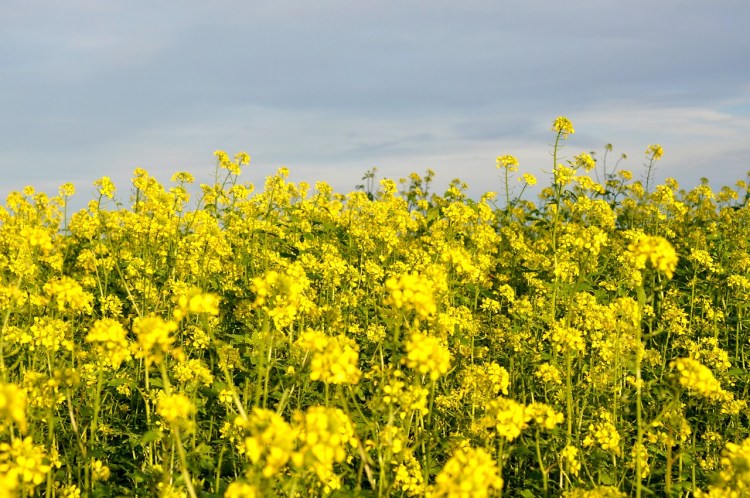
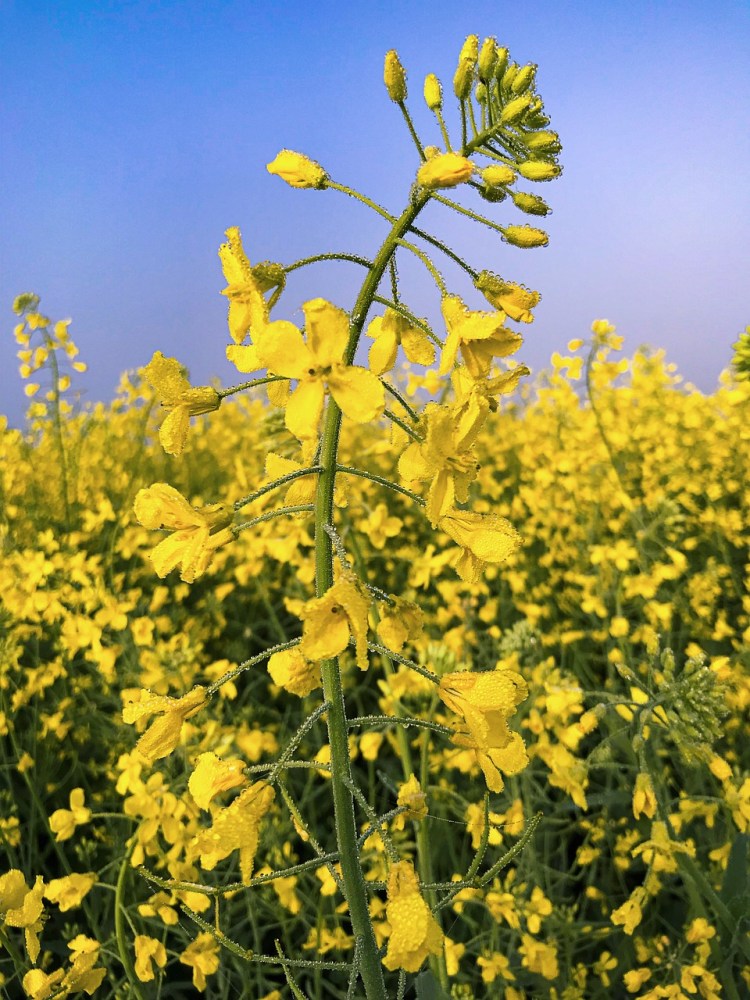
| Charlock Mustard – pronounced char-lock, alternatively better known as Field or Wild Mustard – Rhamphospermum arvense is a winter annual herb of the family Brassicaceae – brassica [cabbage, broccoli and turnips]. It is also known as karlock, kilk, shallock and yellows. It flowers throughout the UK between April to July. Due to the number of seeds it can freely deposit, some farmers see it as an invasive weed, as it is a pest resident in their fields. The seeds can remain dormant for up to 35 years. It is incredibly invasive in areas like California. Each plant is capable of producing between 2000 and 4000 separate seeds. The seeds themselves are mildly toxic, but you can eat the young leaves before the flowers emerge. On older plants, the leaves are slightly woody, harder to cook and chew, and extremely bitter to the taste. The plant favours growth in heavy clay soil. Charlock Mustard has a rich history. In the 18th century, it was sold on the streets of Dublin as a famine food known as Prushia. Despite its popularity, it led to stomach and gastrointestinal problems for the consumers. It was considered a ready source of forage food, and depending upon where you might be, it was also sometimes referred to as preshi. At the time, mustard was seen as a staple of everyday food. In Scotland, the leaves were not eaten, but the seeds were made into bread when regular grain supplies had run dry. There, it was known as reuthie bread. Today, Charlock Mustard is not just a weed, but a versatile ingredient in the kitchen. The leaves are included in salads, and the flowers can be used as a condiment garnish. The seeds can be ground to a paste, and you can create a hot sauce by adding vinegar and salt. Other uses of the seeds include grounding to produce oil, which is helpful for lubricating machinery. Charlock attains a height of around three feet, which can be exceeded if the conditions are optimal and the spread is about 12 inches. Solitary plants can be seen in fields but grow in large clusters due to birds dropping seeds. It grows in the UK, Europe, Asia, Australia, and North and South America, and it readily grows in many environments, including hillsides, fields, roadsides, hedges, waste, and broken and uneven grounds. Charlock Mustard can be grown as a green manure by allotmenteers and gardeners. Before the seeds are established, the plant can be tilled back into the grounds. This enriches the soil due to the complex deep root system, which allows for adding valuable benefits such as nitrogen and other nutrients. Additionally, it can be cultivated as a herb. Charlocks and other mustard varieties can be used as companion plants. They are a natural repellant to insects such as aphids, cabbage worms, and beetles. The heavy scent of mustard is offputting to many predating insects. Mustards, due to their excessive and invasive growth, can help suppress weeds. The mustard plant is a great companion for leafy and salad greens like rockets, spinach, kale, and lettuce. It has also been known to aid the growth of peppers, tomatoes, beans and squashes, onions, garlic, and some beets. The mustards will also greatly benefit from planting alongside other herbs, such as basil, thyme, marigold, and oregano. Mustards enjoy being watered weekly at least one to three inches deep, and whilst they enjoy full sun, they can be kept in dappled shade. |
 Earthly Comforts
Hi Rory! I have seen it so many times but I did not know its name. It is so pretty! 🌼
LikeLiked by 1 person
Hey Ribana, it is indeed a pretty flower/weed/herb 🙂
LikeLiked by 1 person
Hey Rory! I always enjoyed mustard greens when I could find them foraging. I haven’t had any in too many years to remember.
Hope you are doing well and the gardening business is thriving!
Thanks for sharing. 😊
LikeLiked by 1 person
Thanks Betty, the gardening business is extremely busy, which is good 🙂
LikeLiked by 1 person
Wishong you every success, Rory! 😊
LikeLiked by 1 person
🙂 Thanks Betty 🙂
LikeLiked by 1 person
😊
LikeLiked by 1 person
Younger just pulled some of this invader up from a public space committed to native plants 😂
The Big Move is happening this month, unless Murphy intervenes. Cuckoo is worse than ever. I’m still putting one foot in front of the other.
💌💌
LikeLiked by 1 person
Well at least you are still able to move grandma 🙂
Are you able to take Zeus?
LikeLike