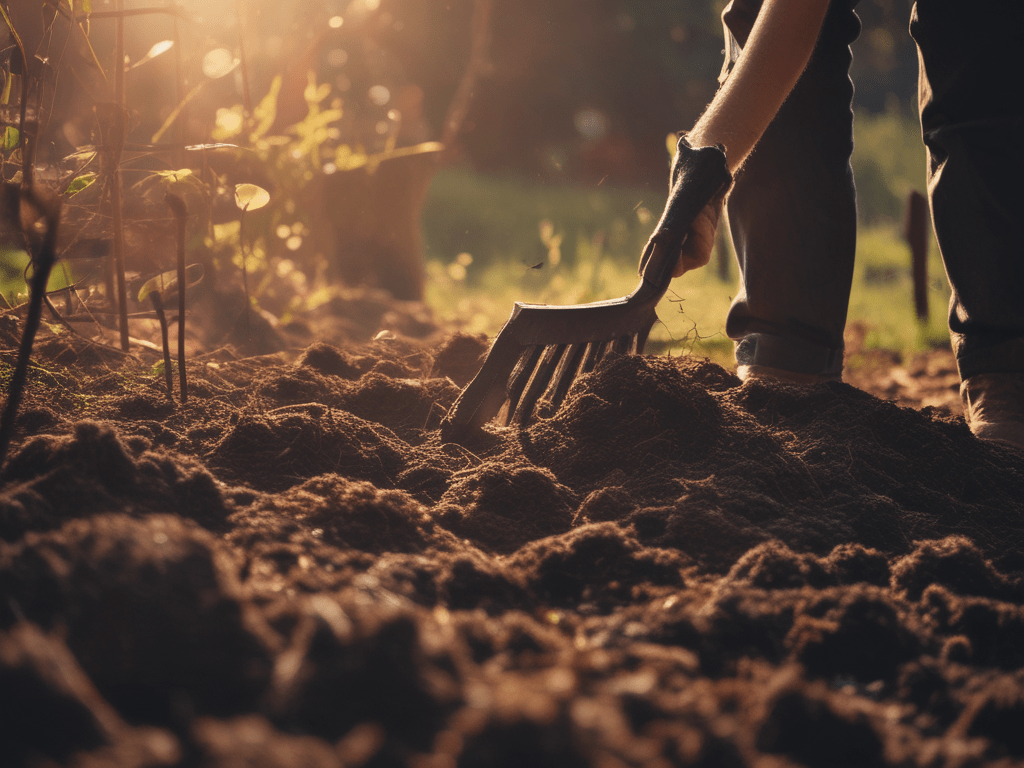
| A question l am often asked is how often compost piles should be turned. When it comes to the frequency of turning compost piles, opinions vary among composters and gardeners. However, the most important factors to consider are your desired readiness for the compost and the heat it generates. Your needs and preferences should always be the guiding factors in your composting journey. My experience with three compost styles – cold, warm and hot-has been extensive. I’ve worked with earth piles, pallet heaps, and New Zealand closed box composters, and can provide insights based on these experiences. However, I can’t comment on tumblers as I have no experience with them. There are benefits to each compost style, which I shall address another time. However, for this question, it comes down to what you want the compost for and how quickly you need it. Many people believe they can’t compost due to time constraints, but I always reassure them that everyone can find time to compost. It’s all about finding the right method that fits your schedule and lifestyle. Hot composting strategies are fast, and cold composting methods are considerably slower, whilst warm is a comfortable position between the previous two. Heated piles can attain extremely high temperatures, whilst warm compost heaps don’t, and cold composts never do. A cold heap will take the longest to decompose and break down between 9 and 12 months. A warm pile could easily be ready for use in 3 to 4 months, and a hot compost can be prepared in as little as 60 days, depending on your dedicated time. But when it comes to turning the heap over, the following generally works as the best guide. |
| Hot Compost | Warm Compost | Cold Compost |
| Requires a good quantity and healthy balance of greens and brown material | Requires a healthy quantity of mixed materials | Add materials as an when you have them |
| Fork over every 2 – 3 days | Fork over once every 7 days | Fork over once every 2-3 months |
| Can be ready in 25-60 days | Can be ready in 3 – 4 months | Could be ready in 9 – 12+ months |
| Needs dedicated attention | Needs to be maintained weekly | Requires very little attention. |
| The best size for the heap is a minimum 36″ x 36″ x 36″ | The best size for the heap is a minimum 30″ x 30″ x 30″ | A pile of any size is fine. Just keep dumping materials on top and keep covered. |
| Can attain incredibly high heats but ideal temperature is between 140 – 180 degrees. Heats kill off pathogens, weeds and seeds. Heat aids the decomposition | Hot Temperatures can be achieved pending the materials present but they are no where near those of the hot piles. | Cold compost heaps create a fermentation process which causes the decomposition.. |
| My ideal style is to have a pile start as hot, travel through to warm, and finish off as a cold and sievable mixture. I aim to take a fresh pile of basic green and brown mixed materials from nothing to high heat in the first three weeks when it has become a mixture l could easily use in any part of the garden. But I leave it for another couple of weeks with a turn once every couple of days and then leave it to flatten out as cold compost for a week or two before sieving it to a more refined material level. I use the content from either warm composting [for part of my worm farm bedding] or finely sieved cold compost for adding to raised beds or potting plants. I usually use bokashi to dig into the grounds of the raised beds. |
 Earthly Comforts
Great information! Thank you for sharing, Rory. 😊
LikeLiked by 1 person
🙂 Thanks for commenting Betty – keep smiling 🙂
LikeLiked by 1 person
😊
LikeLiked by 1 person
Thank you for sharing the different styles of composting, Rory!
LikeLiked by 1 person
Thanks Eugenia 🙂
LikeLiked by 1 person
You’re welcome, Rory.
LikeLiked by 1 person