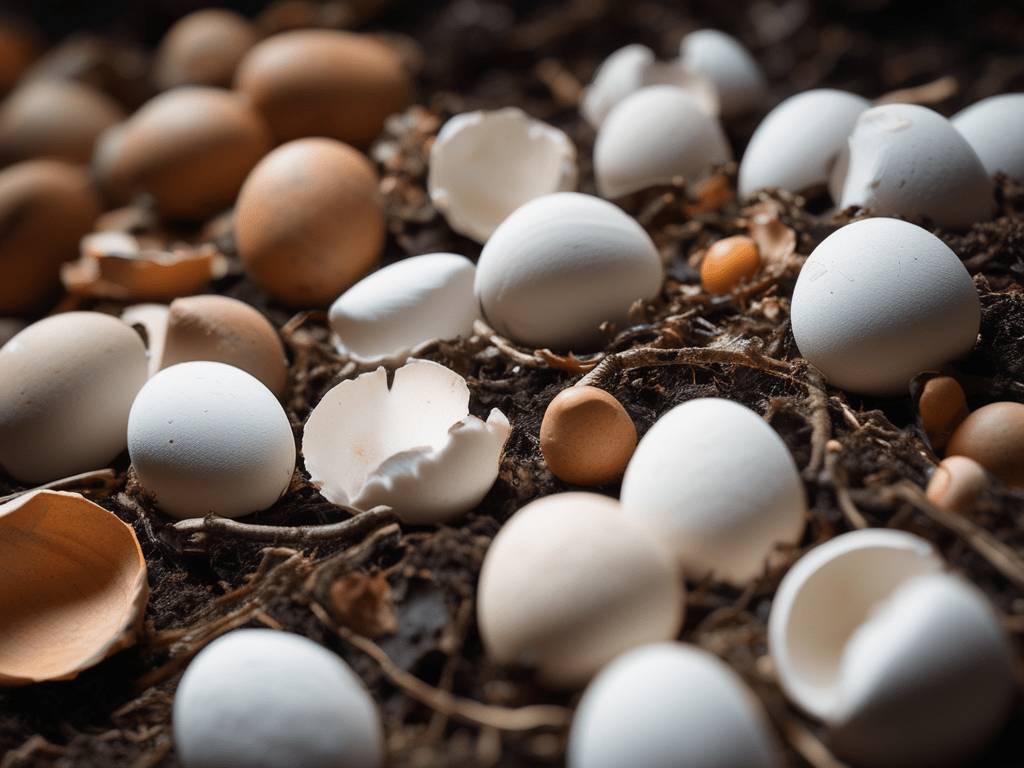
| I hear this question a lot – “Can l compost eggshells?” Yes, you can. Eggshells are incredibly versatile in composting. You can grind them down for use in worm food mixes, throw them into the compost heap directly, or add them to bokashi bins and then incorporate the fermented mixture into the pile later. The choice is yours, and the possibilities are endless. There are many debates about how they should be added. For me, I throw them into the compost pile or the bokashi bin as they are in their raw state. Still, when adding them to the worms, I make sure I wash all the shells inside and out and allow them to dry naturally for a day or two before grinding them down to add to the wormeries. Hot composting, with its ability to reach temperatures of around 160°F, is a powerful tool in your composting arsenal. It not only accelerates the decomposition process but also effectively eliminates any potential salmonella bacteria, making it a safe and efficient method for composting eggshells. Hot composting also further eliminates bad smells and mould possibilities. But if you do not and are cold composting or tumbling and are concerned about the smells of the eggs or even pests and vermin, you could, if you wish, wash and dry the eggs and then add them in ‘cleaner’. Eggshells add calcium and other valuable micronutrients to the compost as they do if you add them directly to your soils in the garden. Eggshells, while slow to break down, are a valuable addition to your compost. You can crush or grind them down to a finer particle or even mill them into a delicate powder. With hot composting, you can add them whole, cracked, or marginally crushed, and after ten turns or thirty days, they will have mostly disappeared, contributing their nutrients to your compost. I practice reversing continuous flow hot composting, which means that I am always adding green or brown materials with almost every turn from the base up. My pile’s heat is always hot, so eggshells tend not to stay around for too long. The pieces of shell that are left usually end up in the garden or pots. Any bits of eggshell that do end up in the garden soil help with increased aerations, but over time—and this can take a long time—they will break down or gradually be consumed by soil residents. |
How to Compost Eggshells for Your Garden: Complete Guide
 Earthly Comforts
Worthy information, Rory, and thank you for sharing.
LikeLiked by 1 person
Pleasure 🙂
LikeLiked by 1 person