
| Black Lovage |
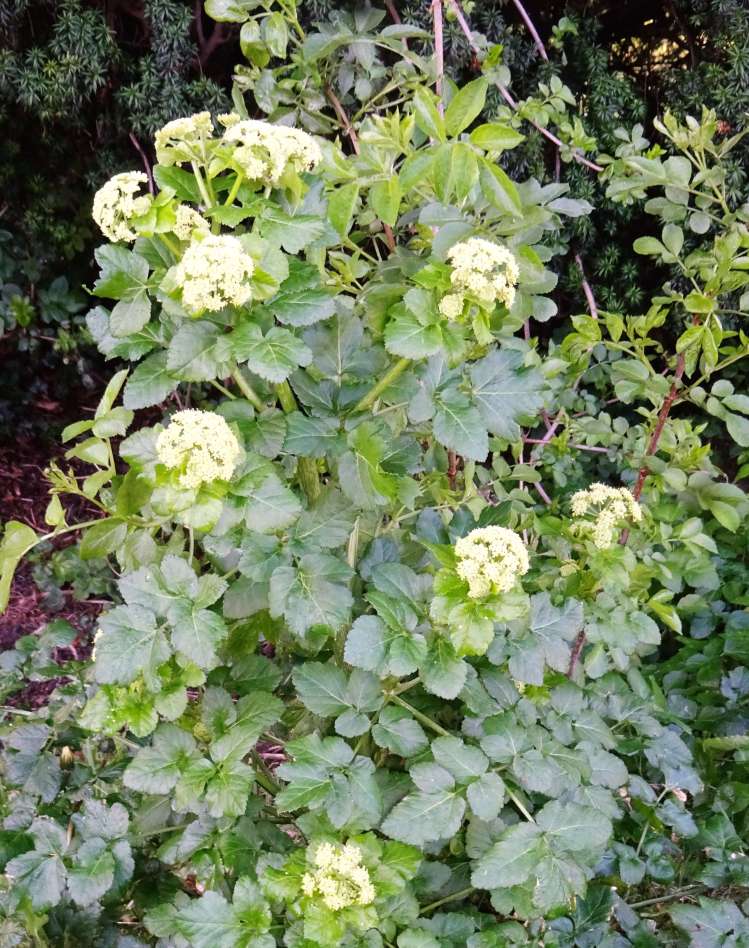

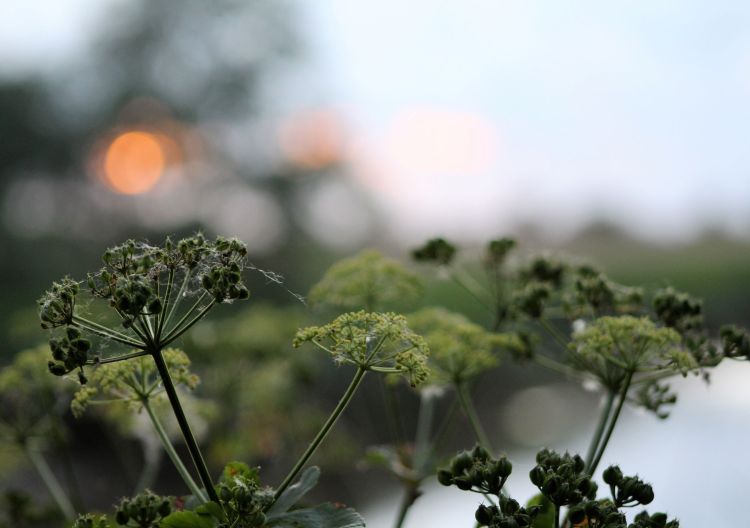
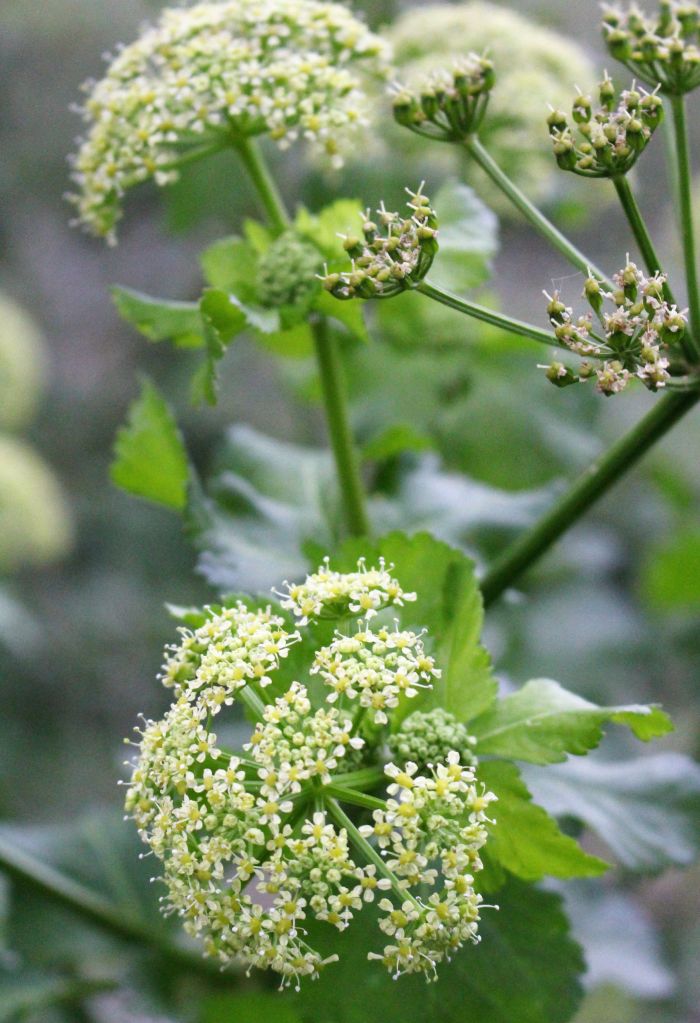
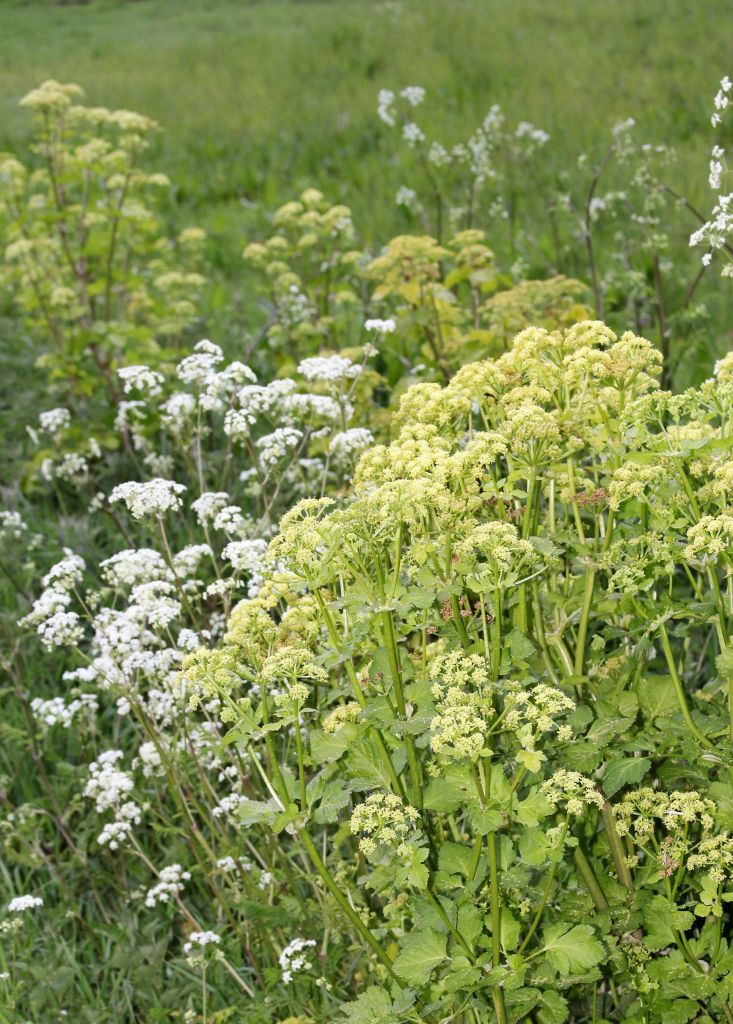

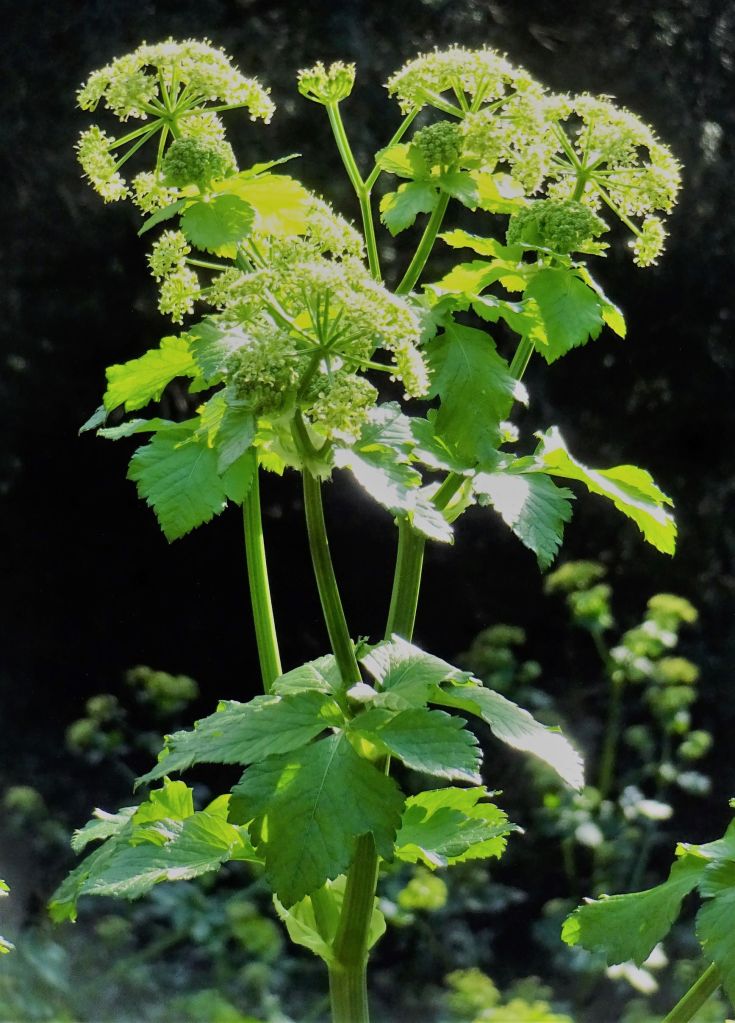


| I know this best in this part of Kent as Alexanders. Still, I know it under alternative names such as Allsanders, Roman Parsley, Horse Parsley, Wild Celery, Thanet Celery, Black Pot Herb, Stanmarch, Hellroot and Healroot, and Skit. To some, it is a vegetable; to others, it is an herb with medicinal properties, and others still see it as an invasive weed. The Romans brought it to England from the Mediterranean, originally from Macedonia, where the garrisons grew it. Alexanders, or Black Lovage, has been used in traditional medicine for its diuretic, anti-inflammatory, and digestive properties. It was believed to be a remedy for various ailments, including arthritis and digestive issues. Black Lovage, also known as Smyrnium olusatrum, was once a cultivated garden herb and vegetable in Britain. Like Charlock, it was eventually discarded to the hedgerows, but it still holds a special place in the hearts of wild foragers. This versatile plant is a great companion in today’s vegetable garden or allotment. As a member of the carrot family, its taste and texture, reminiscent of celeriac, parsnip, and carrot, have won over many, especially foragers. For me, it’s a celery-like delight. This plant can grow three to four feet high with a spread of around half a metre. It grows in abundance and is found in tightly packed clusters. The plant’s colour is lime green or yellowy green, depending on what time in the season you see it. The leaf foliage is bushy, and the leaves are bright and glossy and grouped in threes at the end of stalky stems. The base stems are thick and sometimes up to an inch wide. The flowers are a creamy yellow. They are in large umbrella-styled clusters at the top of the plant. Down at the allotment in the hedgerow along our fence line, we have Alexanders growing, and they have a particular scent to them that Suze found quite distinctive and, to a degree, offputting. I need help accurately pinpointing the precise smell as it smells differently to other people. It reminded me of almost a mild decomposition, but not unpleasant or remarkable. For Suze, it was more myrrh or mouldy. To us both, it is very ancient earth-like. Yet when picked, l smelled celery in the air. While the foraging of Alexanders can be a rewarding experience, it’s not without its risks. I always advise collecting this plant under the guidance of the correct knowledge. It closely resembles hemlock plant varieties, which have caused many fatalities in the UK. There is a distinct difference between hemlock and hemlock water dropwort and Alexanders, but it’s crucial for foragers and those associated with the study of plants to be aware of these differences. I have found Alexanders in many places, but most usually on the coastlines of Kent and a little distance inland, too. Having said this, I have found them along the roadsides in Lincolnshire, many miles from the sea. I suspect that our ever-changing climate may have something to do with this plant becoming more widespread. Foragers enjoy the collection of this plant because everything can be consumed – flowers, leaves, stalks and roots. The flowers and the leaves can be used for salads, and the Romans utilised them as condiments and seasoning herbs. The roots can be eaten and cooked like parsnips. The stalks are like that of celery. Cut near the base of the plant just above the ground. Peel away the outer layers in strips of the stalk, and hey presto, it is just like eating celery. I have even had the pleasure of having the plant as soup. The leaves are like that of parsley, hence the connection to the name. One of the main reasons behind Alexanders’ decline in British gardens was the arrival of celery, which by the 18th century was beginning to be grown commercially. With the arrival of the 19th century, Alexanders was mostly seen as a coastal weed. However, its historical significance as a plant brought to England by the Romans from the Mediterranean, originally from Macedonia, where the garrisons grew it, is a testament to its enduring legacy. Alexanders/Black Lovage, flowers in the summer, have dense foliage in the spring and start to die back by the onset of autumn. It is today found primarily in wildlife gardens, nature reserves, cottage gardens, lost grounds, and meadows. It can proliferate in many soils—clay, sand, chalk, and loam—and prefers full sun but can tolerate dappled shade, too. It is a perennial, meaning it dies in late autumn and reappears in early spring days, making it a reliable and low-maintenance addition to any garden. It can be a companion plant to other vegetables like asparagus, cucumber, leeks, onions, peas and potatoes, squash, courgette and tomatoes, but it could do better alongside celery or rhubarb. Pollinators – bees and butterflies – love this plant as it provides food and nectar. Birds love to forage on the seeds, and small insects will take refuge within the root system. This makes Alexanders a valuable addition to any garden, contributing to the biodiversity and health of the ecosystem. |
 Earthly Comforts
One thought on “Alexanders/Black Lovage: Historical Significance and Cultural Legacy”