

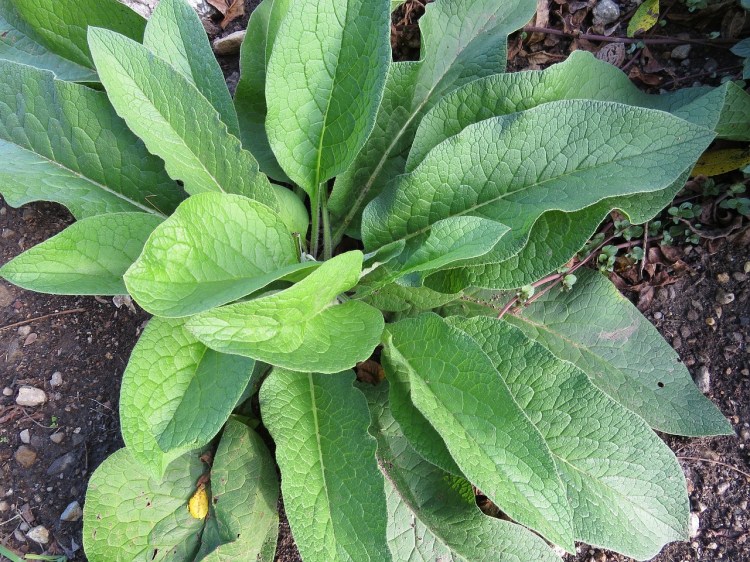
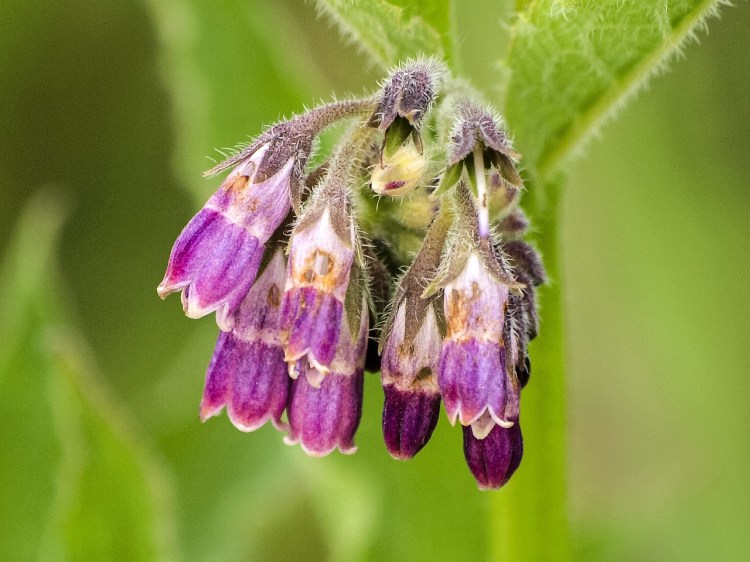
| Common Comfrey [ Symphytum officinale] is one plant l enjoy having in the garden, although it is admittedly better served down at the allotment and with the composting especially. There are over thirty types of comfrey varieties available to the grower. For 2023, Plot 17 had no comfrey, although l did have borage [same family] and quite large plants, so much so that they had to be dug out from their companionship with the sweet potatoes due to the competition of the potato vines. However, I had access to comfrey from the plot next door to me, which has a large patch. Next year, I’m excited to experiment with growing Borage and Comfrey in containers and in the orchard strip with the fruit trees. Comfrey, with its nitrogen, potassium, and phosphorous-rich leaves, is not just a beautiful plant, but also a versatile one. Its uses range from serving as a liquid plant feeder to providing shade and suppressing weeds. The fact that it’s a favorite among pollinators and predatory insects only adds to its allure. It makes fertiliser tea work as a liquid plant feeder; it provides marvellous shade to certain plants and can serve well as ground cover and weed suppression; pollinators adore it, as do predatory insects which are needed to keep pests away from your crops; it can serve both as a garden mulch and green manure, brilliant for the compost as a heating element, benefits vegetables in companionship, the comfrey roots are fantastic as breaking soil down. The leaves can even serve those familiar with wildlife survival skills as a first aid poultice. Comfrey’s rich history adds to its mystique. Herbalists and alchemists have long used its leaves and roots for various treatments. In fact, the leaves were once known as ‘knit bone’ for their ability to heal broken bones. Today, they are used in survival techniques to dress broken bones as bandages, a testament to the enduring value of this plant. Comfrey should never be taken orally or used on an open wound, and this can lead to poisoning or even a fatality. It can be used on burns, inflammations, sprains and pains, and closed wounds. Other alternative names for comfrey include true comfrey, Quaker comfrey, consound, slippery root, boneset, cultivated comfrey, healing herb, prickly comfrey, blackwort and bruisewort. Comfrey in some parts of the world and pending the species is seen as invasive and aggressive for some soils. It can grow as a plant in Europe, North America, and Asia. It can reach a height of five feet with a spread sometimes of the exact measurements but most often around three feet. When planting, make sure to keep a distance between plants of between two to three feet. It boasts clusters of blue, purple or white flowers; depending on the growing variety, the leaves are either long and slender or long and large-bodied and can feel feathery, prickly and coarse. Borage and comfrey are different plants but come from the same family and look the same when not blossoming. Also, sometimes Foxglove is mistaken for comfrey. Comfrey can live twenty-plus years, so pick your site well when planting. It can be grown in containers or planters, but once established, it is a vigorous grower, so always be mindful of that. It tolerates most soil types but struggles with chalky or shallow grounds and enjoys full sun. While comfrey is a low-maintenance plant, regular cutting and harvesting during the growing seasons are crucial for a successful yield. If you’re aiming for a bountiful harvest with plenty of leaves, it’s essential to feed your plants with either compost teas or aged manures. This commitment to care will ensure your comfrey plants thrive and continue to benefit your garden. If you want to make a comfrey tea – the most straightforward way [albeit smelly] is to harvest leaves to 5cm above ground level and place them into a bucket crushed or bruised [wear gloves when crunching them as the fine hairs on the leaves can irritate the skin] or a bin with a lid and fill it with water until all the leaves are covered. Place a brick onto the leaves to submerge them for even better results. Once lidded, leave them undisturbed for three weeks, then remove the lid, stir the water, cover again, and repeat the process for two more three-week periods. Once your nine weeks are up, you will have a brown, sludgey slurry of noxious, stinky material. This is your tea. There is no need to dilute it, but you can cut it slightly with water to ease the stench. Tomatoes, peppers and cucumbers will love the application. Use this liquid on your plants at the base near the roots. The slurry that is left can be thrown into your compost heap. If you want to add comfrey leaves to your compost heap to act as an accelerant, this is a straightforward case of layering them into one of the layers of your pile, or if you have many, then alternate the layers – so comfrey, brown, comfrey, brown and so on. As they break down, they encourage bacteria into the heap, further encouraging the heating process, which speeds up the breakdown process. Mulching with comfrey is also straightforward. Tear or shred the leaves and place them around the plants. As they break down, rot down, and decompose, they release valuable nutrients into the soil. Like other mulches, they also help maintain moisture levels and suppress weeds. Comfrey works wonders in the companion planting role and provides many benefits, especially if planted under or alongside fruit trees. Young-growing trees and shrubs require many nutrients in their early years, and comfrey can feed the soil around the trees and award the roots these nutrients. As pollinators love comfrey blossoms, your fruit trees will always remain healthy due to the honeybee’s particular need for pollen. |



 Earthly Comforts
It is a pretty plant, Rory, and seems to provide many benefits. You know, something I noticed a while back is after reading your posts, the ‘like’ button is already liked by me, yet I haven’t clicked on it. Strange, huh? Have a great day, Rory! 😉
LikeLiked by 1 person
Hi Eugenia, well it’s because you may recall, that with the reboot of the blog, there was a total of 454 posts and l deleted all bar 112. The 112 were then rewritten on the original format, whilst l could remove comments l was unable to remove likes.
So you have indeed liked this post before 🙂
LikeLiked by 1 person
Thank you for reminding me, Rory. I thought I was losing it! 😕
LikeLiked by 1 person
Great article, Rory! Such a wealth of information. Thank you so much for sharing.
LikeLiked by 1 person
Many thanks Betty, it’s a great plant.
LikeLiked by 1 person
😊
LikeLiked by 1 person