
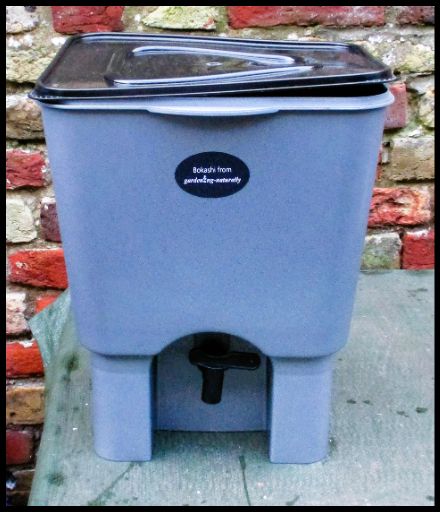
| One of the seven 35 litre Bokashi bins l have. |
| These shots are from 2022, when I was still using Bokashi bran, unlike now, when I use spent coffee grounds as my filler. The bin begins empty; food is layered until it reaches the top. The bran [coffee grounds] is sprinkled on top, and the bin has the lid closed once all air has been squeezed out. Then, it will sit fermenting for ten to twenty days, pending the time of the year. |
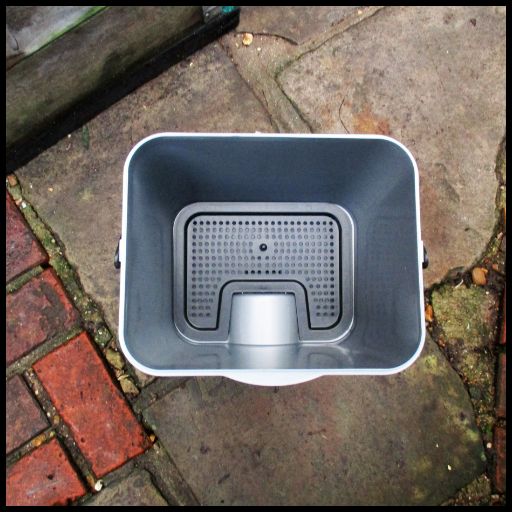
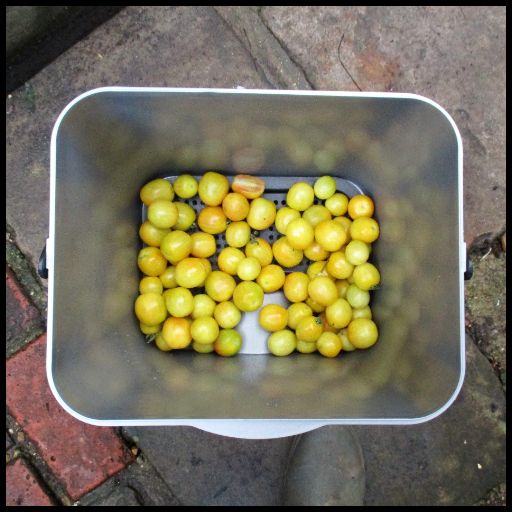

| Whilst there are several ways to create compost for your garden or allotment plot, l tend to work with only three, these being anaerobic – deep growing compost towers, tumbler composting and Bokashi. I have tried various other methods over the years but found that the previous techniques produce the best results for my requirements. What are my specific requirements, and what do l need compost for? I produce compost primarily for the allotment, and while I have occasionally used some in the garden at home, I mainly use it to grow vegetables. Compost improves soil structure and encourages growth and health by introducing nutrients, microorganisms, and microbes. It has many uses, and each gardener, grower, and allotmenteer will have a list of benefits. Bokashi, in straightforward terms, is a Japanese composting method. It means ‘fermented organic matter’. Bokashi is all about taking your kitchen waste and turning it into a nutrient-rich material that can be used in your garden. In addition to a food waste resource, it can produce a liquid fertiliser supplement. Unlike the conventional hot, warm, or cold composting methods, Bokashi is a refreshingly different approach. Its success is rooted in the pickling process, which is further enhanced with the use of a Bokashi bran. This bran, typically made from wheat germ or bran, acts as an inoculant, simplifying the entire waste process. The beauty of Bokashi lies in its simplicity and flexibility, making it a great choice for any gardener or composter. Usually, this bran is either wheat germ or bran, but some variants are made from sawdust with molasses [sugar and water] and effective microorganisms mixed in. [bacteria, yeasts and fungi, which all work together to speed the breakdown process up] Since 2019, I’ve been using the Bokashi composting system with great success. I’ve made some adjustments to fit my needs, such as using seven 35-litre Bokashi Buckets to accommodate not only my food waste but also that of two of my neighbors. It takes about a week to fill a bucket, and I’ve been pleased with the results. I bought all my buckets online, although many make their systems. However, your bucket should have an airtight lid and a tap at the bottom, enabling the user to drain off excess liquid. This liquid, known as Bokashi Tea, when mixed as 1 part liquid to 10 parts water, makes for a terrific energiser or fertiliser boost to your plants. The liquid also has many alternative uses. The Bokashi bin is a simple and effective system that can handle all food types. I appreciate its no-rules approach to composting. You simply toss your food waste in, sprinkle some bran on top, seal the lid, and continue filling it until it’s full. The bin is only opened when adding food waste, ensuring it remains sealed most of the time. I have found even better results by pressing down on the waste products and squeezing out all air pockets. Bokashi works on a closed composting system [anaerobic, meaning that no oxygen helps to generate the end product. Then, once the bin is filled to the top with waste and bran, you put it to one side outside to sit idle for ten to twenty days, pending the season and allow it to get on with the fermenting process. I mention the season because the hotter the weather, the faster the process occurs, whereas in colder climates, the pickling/fermentation will take longer. Initially, I used the inoculated bran, but found it to be a bit costly due to the amount of food waste I generated weekly. In my quest for alternatives, I stumbled upon spent coffee grounds, which I have in surplus at no cost. This discovery not only made my Bokashi system more cost-effective but also added a resourceful twist to my composting journey. As a hot composter, I primarily use the Bokashi system to store food waste, which also ferments. However, others may choose to pickle with the correct materials. It’s a matter of personal preference and what works best for your composting needs. While there are methods for making your own deliberate coffee bran mixture, I prefer to keep things simple. Every time I open a fresh and empty Bokashi bin, I sprinkle spent coffee grounds on the bottom, add food waste, and sprinkle more coffee grounds when done. This process allows for a creative and imaginative approach to composting, inspiring me to experiment with different materials and methods. I let each bin sit for three weeks, and then once that is done, I siphon off the surplus liquid into an empty water bottle and store it in a dry place until I need to add water for use. However, I tend to use most of my liquids now as compost accelerators and heaters, and I no longer bother to add water. But that is just me. The pickled wastes l add directly to my hot compost piles, and the foods break down much quicker after going through the anaerobic Bokashi method. If you choose to drain off the liquid, it is best used within 72 hours because it doesn’t store fresh that well. However, I have used the aged liquids as heaters in new compost piles. You can add both the liquid and the end food products to your compost piles as l do, or you might wish to drain off the liquid and store it and then dig a hole or a trench in your garden and spread the pickled waste into the hole/trench then backfill. Bokashi waste will eventually wholly break into the soil, and valuable nutrients will leach into and feed the grounds during the breakdown. Unlike the more conventional composting methods, which can have some restrictions pending the heat you are working with, Bokashi composting is a no-rules system with very few limits – meaning that you can dispose of all organic bio-waste materials – but not ashes, large bones or human or animal faeces. Exercise caution with food sizes as well, and where you can avoid placing large chunks of food; instead, make the pieces smaller. This is a standard rule about any composting method: small means it breaks down quicker. Some say also avoid liquids like milk, water, vinegar, oils, and juices. I tend not to add liquids deliberately, but I have occasionally added spoiled milk and surplus oils. If I am doing this, I mix in additional coffee grounds. To give an idea of waste ingredients, l have added to the bin – all fruit, including citrus, vegetables, raw or cooked fish, raw or cooked meat products, small bones, tea bags, coffee grounds, dead house flowers, cheese, yoghurt and dairy products, old herbs, banana peels, eggshells, kitchen towels, napkins, mouldy bread, mealtime leftovers and scraps, peelings, hair, nail clippings, pasta raw or cooked, rice, grains and old cake products. It is a monster eater when it comes to organic waste goods. Finally, clean it out once you have emptied your Bokashi bin. However, in saying this, don’t use chemicals to clean the bin out. Just wash it out using water, even a bit of a jet wash from the hose; give it a bit of scrub using a brush if there are marks or stubborn traces, rinse out and allow it to dry. The cleaner the bin is, the better the fermentation is. Always check that the tap is working correctly, and allow water to run through when cleaning. Always remember to ensure the tap is closed after each clean. Bokashi fermenting has a unique smell, so be mindful not to spill any pickled liquid onto areas where you do not wish to have what might appear to some as skunk spraying. Having spilt this liquid on trousers and shoes in the past, trust me on this. Be careful. If you purchase two Bokashi bins, one of which is fermenting, you will be able to continue saving all your kitchen waste in the second. |
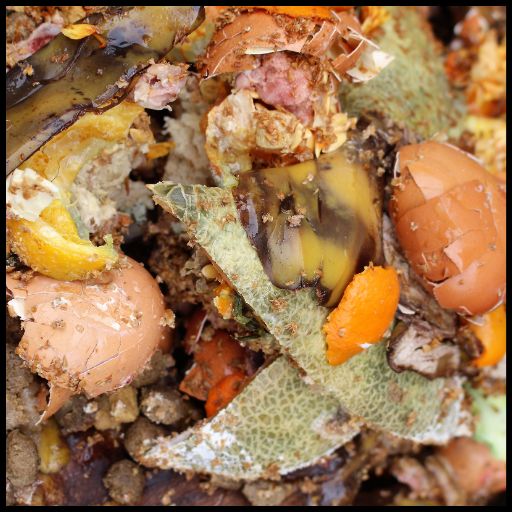
| Fermented Bokashi kitchen waste ingredients after twenty-one days sitting and emptied into the hot compost heap ready for turning. To state that it has a rich smell would be the understatement of the year. Make sure you never spill any of this on your clothing. |


This is a good idea for kitchen waste, how bad is that smell though?
LikeLiked by 1 person
Hey Jaye, as long as the lid is sealed on the unit, there is no offending smell 🙂
LikeLiked by 1 person
That’s okay then!
LikeLiked by 1 person