
| Alexanders Smyrnium olusatrum |



Images my own
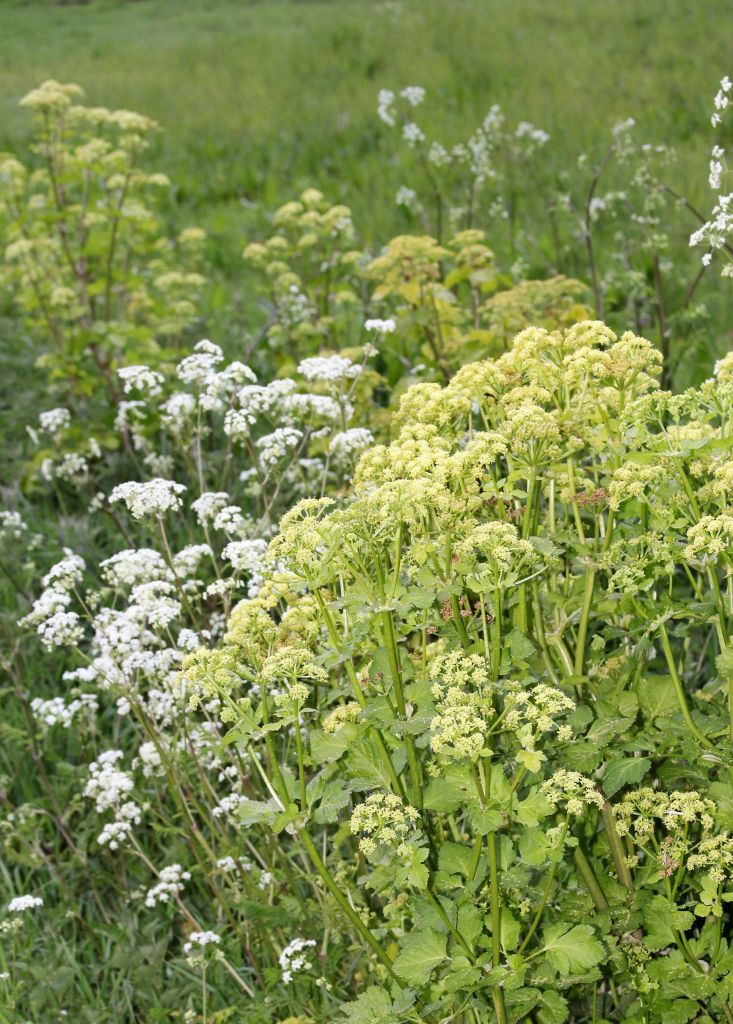
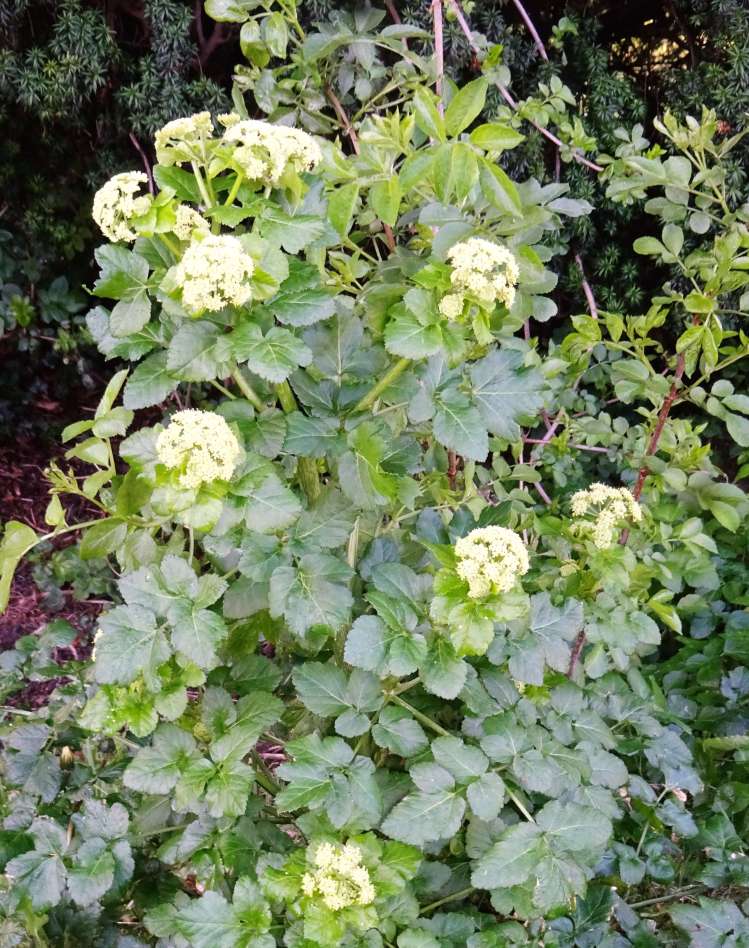
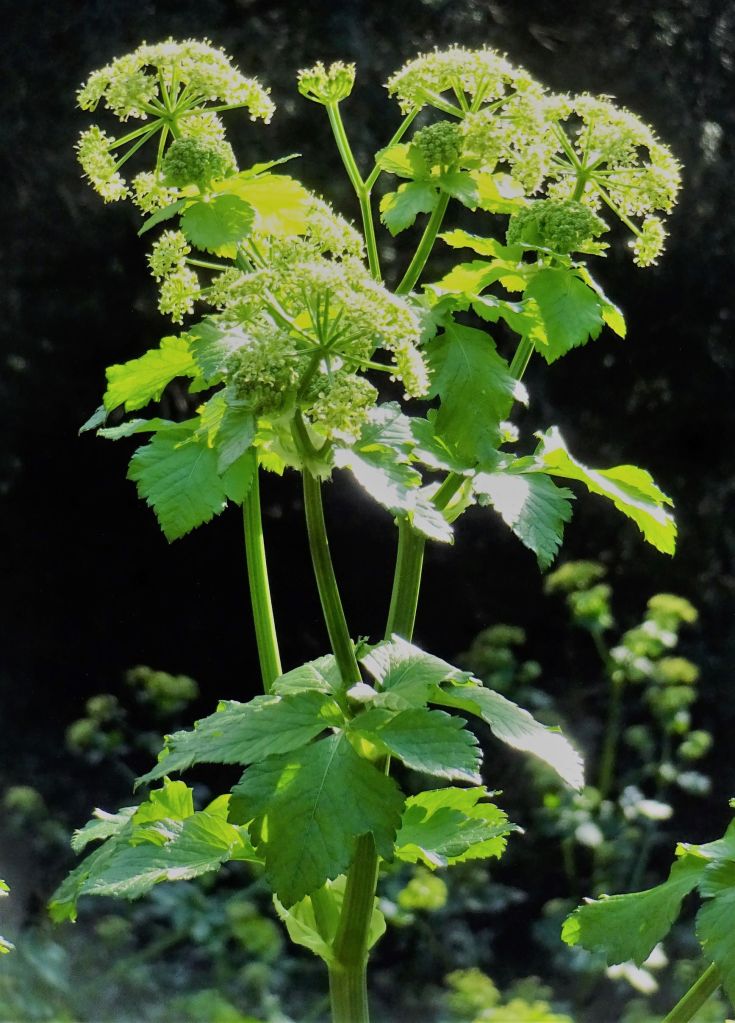
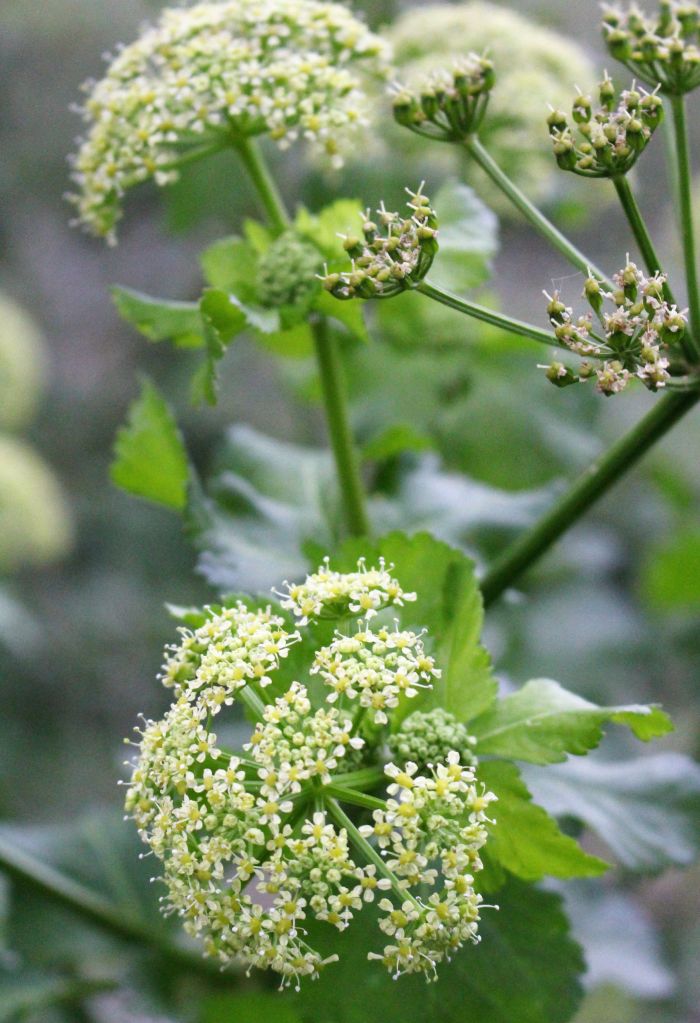
| Alexanders (Smyrnium olusatrum): A Coastal Forager’s Delight Alexanders (Smyrnium olusatrum) is a robust, wild edible plant commonly found in the coastal regions of Kent and across southern Britain. Often growing in abundance—sometimes even invasively—this vigorous biennial herb thrives in hedgerows, roadside verges, field margins, and cliff-top scrublands, especially near the sea. It’s sometimes called Black Lovage, Horse Parsley, or Wild Celery, reflecting its various historical uses and distinctive characteristics. From early spring through midsummer (April to June), Alexanders puts on a dramatic display. It can grow up to five feet tall, forming a dense, architectural presence in the landscape. The shiny, dark green, finely toothed leaves are divided into three parts, often confusing the untrained eye—but unmistakable when combined with the plant’s celery-like scent, which intensifies when the stems or leaves are crushed. Its flowers—domed umbels of yellow-green blooms—appear in early to mid-spring, often before other umbellifers have emerged, giving foragers a helpful seasonal clue. These flowers are not only striking, but also valuable: bees, hoverflies, and other early pollinators flock to Alexanders, making it a great asset for wildlife as well as a kitchen curiosity. The plant has deep culinary roots. Its Latin name, Smyrnium olusatrum, translates roughly to “the Alexandrian parsley used in cooking,” suggesting that Roman settlers likely introduced it to Britain as a garden vegetable. For centuries, it was used in a similar way to modern celery—the stalks, leaves, flowers, seeds, and even roots are all edible, though care must be taken to prepare it properly to offset its somewhat bitter edge. Foraging Notes: While Alexanders is a generous wild food, it demands caution. It belongs to the Apiaceae (carrot) family, which includes both delicious edibles and deadly toxic lookalikes. In particular, novice foragers must take care to distinguish it from Keck (Cow Parsley), Hemlock, and Hogweed, all of which share similar leaf shapes or flowering structures. Key ID tips: Shiny leaves arranged in triplets Solid green stems, unlike the purple-spotted stems of Hemlock Distinct aroma—pungently savoury, almost spicy-celery-like Flowers bloom earlier than most similar species Only harvest plants you can confidently identify—and always forage responsibly, taking only what you need and leaving plenty for wildlife and regrowth. Alexanders bridges the wild and cultivated, offering a glimpse into Britain’s edible past while feeding pollinators and curious cooks alike. Whether you’re observing its early spring blossoms or experimenting with its peppery stalks in the kitchen, this resilient plant invites a deeper connection with the seasonal landscape. |
 Earthly Comforts
No wonder bees love it, is so pretty and delicate!
LikeLiked by 1 person
Hey Ribana, oh yes very much so.
LikeLike