
| Burdock Arctium lappa |
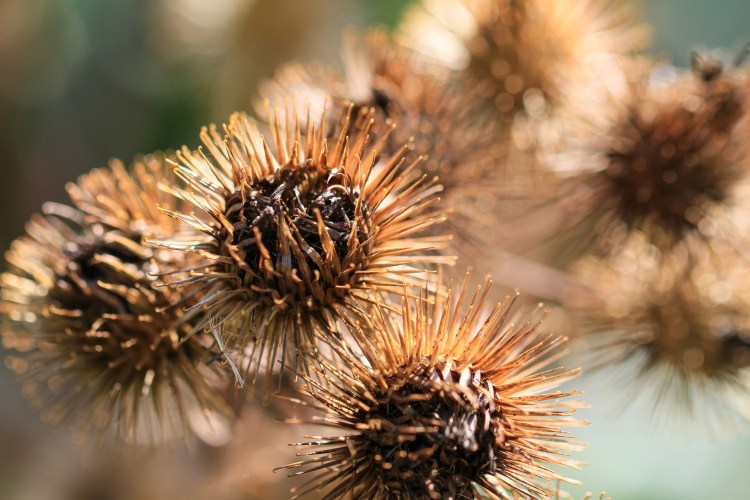
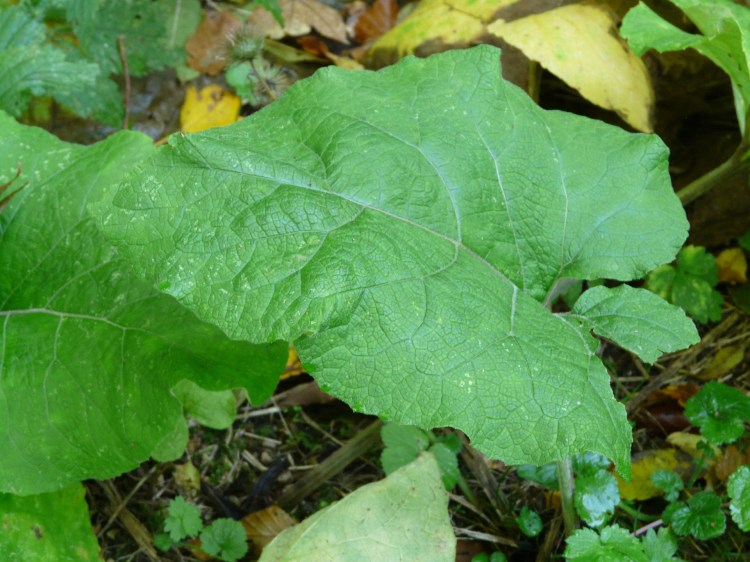
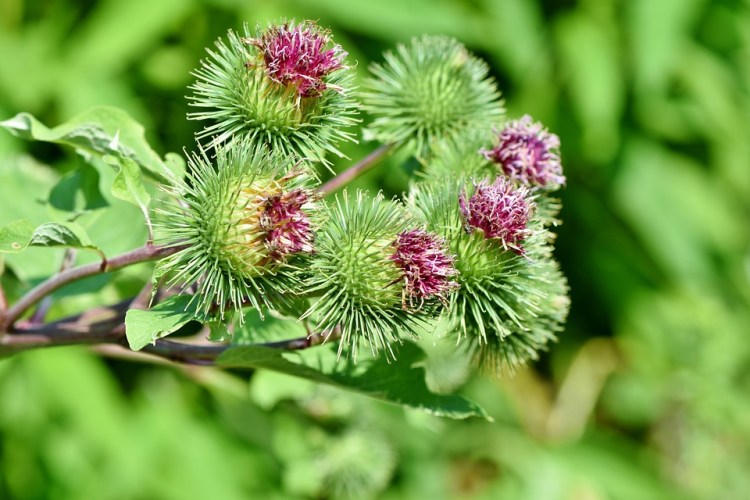


| More people are familiar with the burdock that sticks to your clothing as you walk through the undergrowth than they might be with the culprit itself. It’s the small burrs of burdock that do all the sticking to you, or as l like to joke, ‘It’s the burrsdock that sticks to your sock! Burdock was originally from Japan, although it is now a plant found worldwide. In medieval times, it was used medicinally by many apothecaries. The roots and stalks of this plant are edible, but the younger, more tender leaves are more pleasing than the older, more complex leaves. Eaten as a root vegetable, it is known for its high nutritional value and fibrous content. I have never eaten it, but those who have informed me it tastes a bit like chicken … no, that’s wrong, more like parsnip. It is a popular root that is often added to many dishes. However, unless you are entirely aware of the burdock plant and know it to be a true burdock, then it might be best to either grow your own or buy from a seller directly, as it can sometimes be confused with other harmful plants that only look like it but can lead to fatalities. The plant or weed, I should say because that is what it is, can be found on waste grounds, in meadows, in woodland areas and wild brush zones, and in set-aside fields. The plant’s leaves can grow very large indeed. The overall plant can easily attain a height of between 4 and 6 feet and can dwarf many plants. This causes significant concern with gardeners and planters alike. The weeds’ seed pods are determined to stay put! The plant’s roots can grow very deep into the soil, making it hard to dig out. But wild foragers who consume it are eager to aid those who don’t wish to have it present. The taproot can grow upwards of two feet in length, which means it can barge its way through the soil, which, in turn, aids other aspects of life beneath the soil. The burdock is pretty good, but not really, and it does have a few redeeming features for the understanding grower. It’s great for reducing soil corrosion and improving soil health. The leaves, too, have benefits due to their size and can be used as realistic shaders for other smaller plants. Pollinators love the flowers of the burdock and other insects, too, and l have known a few wildlife gardeners who deliberately planted and grew on the burdock for the benefits it offers to the soil and the wildlife. |
 Earthly Comforts
One thought on “Discover the Versatility of Burdock: Medicinal Uses and Culinary Delights”