
| Starling |
| Sturnidae |
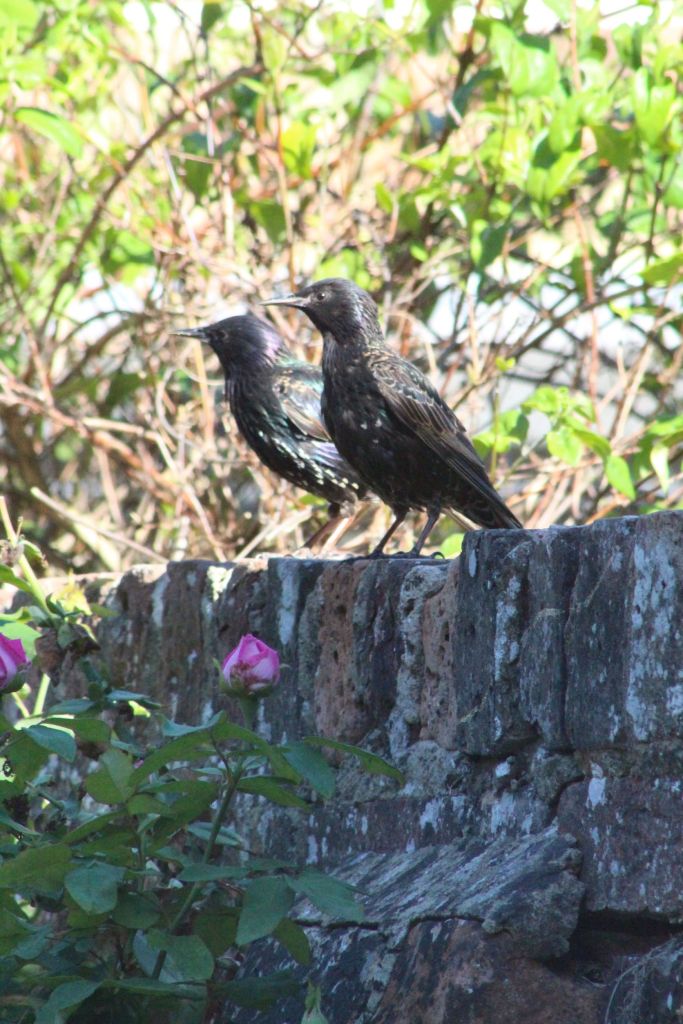
| Starlings on the Willow Garden Wall May 2022 |
| Starling Common or European Sturnus vulgaris Sturnidae (starlings) |
| I thoroughly enjoy it when the starlings come to visit the garden. They stay for a couple of reasons, primarily the bird bath and the suet. They were frequent visitors during the spring and summer, although I have only occasionally seen them in my winter garden. During winter, l tend to feed more suet pellets over suet balls, although the latter is still out. However, they are essential suet recipes compared to previous suet blocks l have had in the garden. The starlings were big fans of the suet blocks. They certainly made a significant mess with them. I feed the birds all year round and always have fresh water available in the bird bath and the watering bath when possible. I say ‘when’ mainly because the water can freeze even with a ball during winter, especially when it is icy and freezing. When the water is frozen, none of the birds can access it. So every morning, I go out with a kettle of hot water and a hammer and break the ice. I see more starlings in the gardens during the warmer climate. They are a resident species in the UK, although some species migrate from northern Europe to the UK, arriving in September and October and staying until mid-February to mid-March. Due to these migrations, the population of starlings grows considerably during the winter months. Starlings are extraordinarily gregarious, social, and noisy bird species. They are frequent garden visitors and famed for their remarkable murmuration behaviour. The starling’s colouring is principally glossy black, with shimmering speckled markings in green and blue that look like a deep mauve at times. In winter, their coat changes marginally, and they display more white specks. Juveniles are more light brown. The adult’s beak is orange-yellow, while the juvenile’s is darker. Size-wise, they are very similar to thrushes but smaller than the blackbird. They are roughly nine inches long with a wingspan of around fifteen to eighteen inches and a weight mass of about 90 grams. Starlings have an essential diet that includes fruit and insects, such as spiders, moths, ants, beetles, bees, grasshoppers, and earthworms. They are often seen in large flocks, foraging for invertebrates in lawns and parklands. Their diet also includes larger prey like lizards, frogs, and newts, making them a crucial part of the ecosystem. It is a very adaptive omnivorous species, and it must be considered when you consider the advancement of urbanisation and the ecological damage to natural feeding and roosting grounds. In addition to the invertebrate diet, it will feast upon fruits, nectars, seeds, and human food wastes. Starlings are mainly ground foragers, and they display three distinct feeding styles that are both fascinating and efficient. These styles include probing, which involves poking the beak into the ground to capture an insect, lunging, a run-forward striking motion to catch an insect in flight or on the move on the ground, and hawking, which is the same movement but for flight. Their diverse feeding styles make them a captivating species to observe in the wild. Starlings prefer habitats such as farmland, open fields, gardens, and parks. They are widespread across the UK, with the exception of the Scottish Highlands, making them a common sight in many areas. The breeding season is between March and April. The males are the primary nest builders and craft the materials into nooks beneath the tiles of rooves or holes in trees. They will also use nest boxes. A typical nest is made from feathers, leaves, dry grasses, and moss. A clutch is between 4 and 5 eggs laid mid- to late April and will hatch a couple of weeks later. While they are a common species in the UK, their numbers have been in critical decline since the 1980s. They are a bird species of conservation concern with a Red listing and are protected under the Wildlife & Countryside Act 1981. Large flocks can number well over a million birds, and this can cause concern, especially with the droppings. A smaller roost of birds can be seen as beneficial, as droppings act as a fertiliser to the ground, while a much larger flock is seen as a menace and harmful to woodland flora. Although large flocks are great for controlling pests, the downside is that they also cause significant damage to young crops, especially fruit trees. The primary predator of the species, aside from the destruction of natural habitats by urbanisation projects, is usually larger bird species—sparrowhawks, falcons, and kestrels. Owls have also been known to hunt starlings. Domestic cats and managed culling schedules in agricultural zones are additional predators of the species. |
 Earthly Comforts
One thought on “Discovering the Charms of Starlings: A Guide to Sturnidae Garden Visits”