| Slow Worm |
| Anguis fragilis |
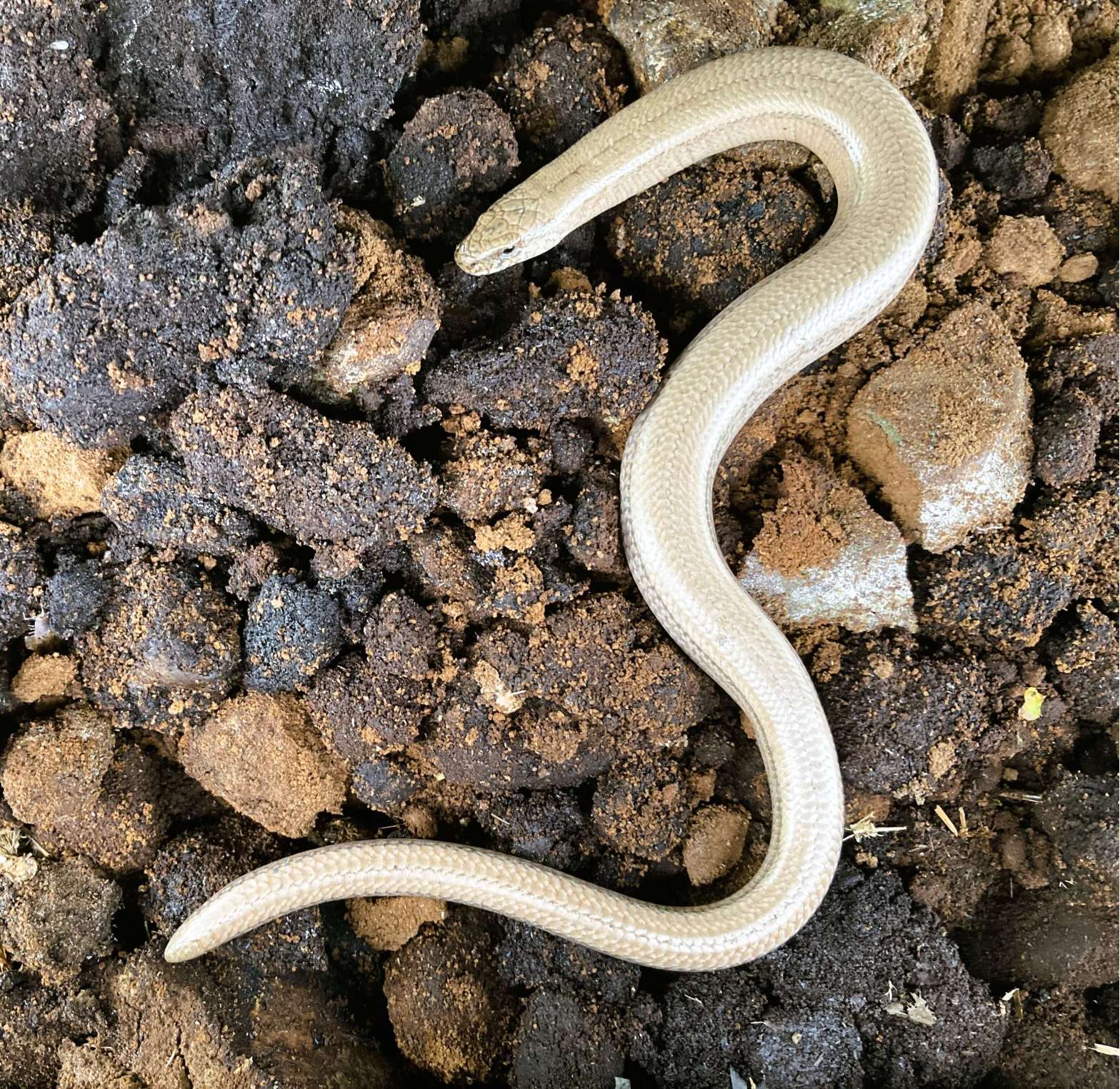
| Last summer, I saw many slow worms on our plot down on the allotment. They also congregated in our compost bins, which my camera and I appreciated. I also suspect that slow worms are seemingly addicted to coffee grounds like earthworms! The slow worm is one of the UK’s most often overlooked reptile species. Despite the terms’ slow’ and ‘worm’, it is neither; it is, however, a legless lizard. Found across Britain, although they are somewhat socially reclusive and secretive, they do perform a valuable role in maintaining an ecological balance. Slow worms have smooth, shiny scales and can grow up to 50 cm long. Their colouration varies, with males typically exhibiting a uniform grey or brown hue, while females often have darker sides and a distinct line running down their backs. Unlike snakes, slow worms possess eyelids, which they use to blink. Like the Gekko, they can lose their tail if threatened or attacked. While they can regrow it, it is an expensive defence as it’ll take many resources to grow it back, and depending on the worm’s age, quite often, this can kill them if they have to face a long winter in hibernation. Slow worms thrive in various habitats, including gardens, grasslands, heathlands, and woodlands. They are commonly found in compost heaps and under logs, seeking shelter and warmth. The species is not found in Ireland but in England, Scotland and Wales. These reptiles are primarily nocturnal and crepuscular, emerging in the evening or after rainfall to hunt for food. Their diet consists mainly of slugs, snails, and insects, making them a gardener’s best ally. By controlling the population of these pests, slow worms can help protect your garden plants and reduce the need for chemical pesticides. Despite their serpentine appearance, slow worms are harmless to humans and pets. Despite being found and photographed in groups, slow worms are not particularly social or gregarious like some other species; they seem to be together often. However, during the breeding season, the boys, being typical boys, can become a bit aggressive with other males. Slow worms face several threats, including habitat destruction, predation by domestic cats, and road mortality. They are a legally protected species in the UK and fall under the jurisdiction of the Wildlife and Countryside Act 1981, meaning it is unlawful to injure or kill them deliberately and to keep them as pets. Conservation efforts include habitat preservation and reducing risks from human activities—the latter being one of the species’ biggest enemies. We can however all support slow worms by creating suitable habitats in our homes, community gardens, allotment plots, and even school gardens. For example, we can leave compost heaps undisturbed, provide log piles, dead walls, hedges, and even living walls, and avoid using pesticides and other harmful chemicals in our gardens. You don’t need to have a 100% wildlife garden to do your part for nature, our wild creatures, and vibrant biodiversities as even a small set aside patch of ground suitably dressed for wild species can do wonders. Slow worms are an incredible species and hugely beneficial to our environment. By learning more about these legless lizards and taking simple conservation measures, we can help ensure their survival for generations. If you are lucky enough to spot a slow worm in your garden or the wild, take a moment to appreciate its quiet contribution to our ecosystem. |




Interesting article, Rory. Thank you for sharing. ☺️
LikeLiked by 1 person
Thanks Betty 🙂
LikeLike