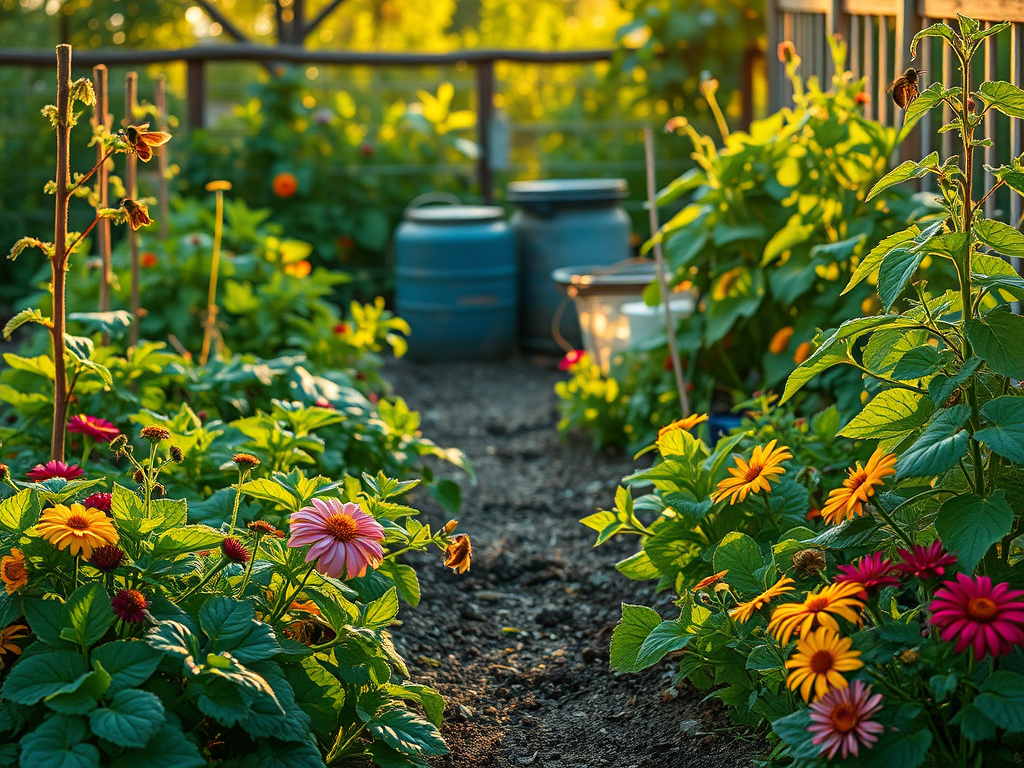
| One of the other principles that we are introducing to Plot 17 this year is permaculture. But what is permaculture? In basic language, it introduces sustainable and self-sufficient gardening practices to growers, and its primary purpose is to encourage and develop friendlier ecosystems in gardens. If you look at permaculture as two words, you have perma—for permanent and culture from agriculture—and together, you have long-term growing management of land. When applying permaculture to allotmenteering, you can create inspiration for productive sustainability and efficient growing space that develops resilience. Gardeners who adopt permaculture principles into their growing strategies further introduce a form of harmony and oneness with nature. You are then working towards minimising waste, encouraging a circular economy and reducing your labour intensity through minimal effort. While the principle of permaculture is universally observed, each individual interprets it differently—it is a case of what works for you, your style, your time, and your garden. This adaptability empowers you to make permaculture your own, fitting it to your unique circumstances and preferences. |
| Of the core fundamentals of permaculture, there are a few significant areas – such as: Harvesting and storing energy when abundant—like rainwater catchment and harvesting, composting, and utilising natural mulches like grass clippings and fallen leaves. With allotmenteering, how you work on your planting schedules is vital. As you are always looking to procure a yield, you think of succession, intercropping growing, and introducing more perennial vegetables and fruits with long-term production harvests. Through hands-on experience, you learn what works plant-wise and what doesn’t, and you are not afraid to drop the conventionality of growing to adapt to different strategies. This learning process keeps you engaged and constantly improving your gardening skills. One of the significant core principles of permaculture is dropping conventional growing schedules. It encourages and stresses the absolute need to utilise and prioritise renewable resources over singular resources or artificial or synthetics. Using compost manures, organic mulches and fertilisers as opposed to chemicals. Permaculture methodologies heavily encourage pollinators and beneficial insects to visit and not use chemical luring approaches. The importance of a circular economy is integral to permaculture as it encourages us to turn all waste products into renewable resources—we turn to using kitchen waste for compost or bokashi, grass clippings or winter leaves as leaf mulch, and, where possible, repurposing old materials like wood. The focus is on not wasting waste. Companion planting and using every inch of growing space in the most efficient way possible to support healthy plant life and mixing plants up to attract pollinators, deter pests naturally and create a balanced ecosystem. Everything is about improvement and, to a degree, baby-stepping improvements—starting small, scaling up, and taking time to work towards achievements and accomplishments. Emphasis is also found in diversity – different crops, growing styles, soil types, depths, and growing systems. Sometimes, it is as simple as having the same vegetable but different varieties. This emphasis on diversity inspires you to explore new possibilities and expand your gardening horizons. Permaculture is about the efficient use of available growing space; it is also about growing in spaces more conventional farmers might not consider valuable. Look at vertical and upright growing, review trellising, consider sowing crops along forgotten edges like fences and pathways, and always remember to incorporate wildlife borders. It is about inspiration, creativity and experimentation – a case of suck it and see. It is about introducing other elements like no-dig gardening and maximising biodiversity to increase harvest yields. |
| Above all, permaculture is about not being afraid to drop more traditional and acceptable modes of agricultural farming and being open to organic creativity. Sue and I are excited about introducing these new principles to the allotment plot. |
 Earthly Comforts
I wish I had a plot of land to grow things too
LikeLiked by 1 person