
| Green Alkanet |
| Pentaglottis sempervirens |
| I see a lot of alkanet when I am gardening. Many of my clients like to have it in their gardens, as it is, although invasive, an excellent ground cover, especially for wilder or wildlife gardens. Many gardeners instantly pull this weed/country flower out, insisting that as it is a weed, it should not be present, and many a time, they forget to ask the client if they want it removed – quite often, the clients want it to stay because it is prettier than some of the other country weeds. |
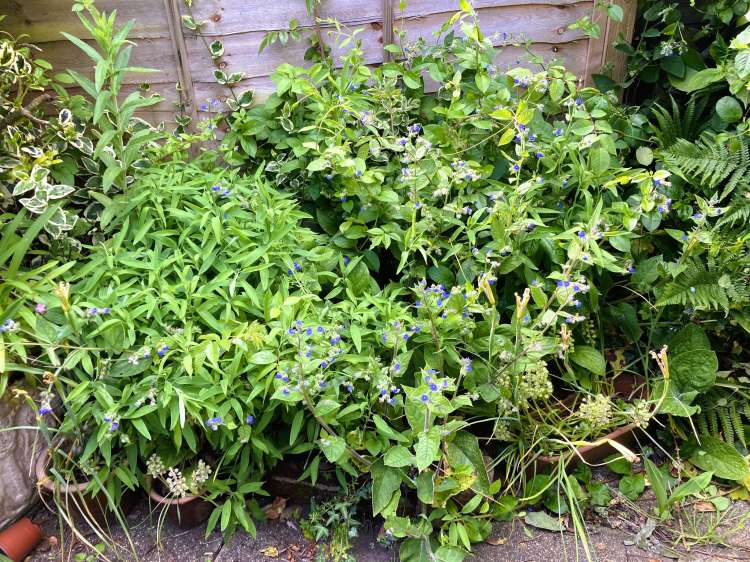
| Green Alkanet (Pentaglottis sempervirens) is a perennial plant in the borage family (Boraginaceae). Its striking blue flowers and hairy leaves, often mistaken for comfrey or forget-me-nots, add a unique charm to the European landscape, especially in the UK. |
| Key Features: Leaves: Rough, hairy, ovate (egg-shaped), and dark green. Flowers: Small, bright blue with a white centre, resembling forget-me-nots; bloom from spring to early summer. Height: Can grow up to 1 meter (3 feet). Roots: Deep taproots, making it difficult to remove once established. Habitat: Prefers damp, shady places like woodland edges, hedgerows, and gardens. Ecological Importance: Pollinators: Attracts bees and butterflies due to its nectar-rich flowers. Wildlife: Provides shelter for insects and small invertebrates. Concerns in Gardens: Invasiveness: Spreads rapidly via seed and deep roots, making it challenging to control. Difficult Removal: Requires persistent digging to remove all root fragments. Uses: Traditional Dye: The roots contain red dye, similar to other alkanets. Ornamental: Some gardeners appreciate its long-lasting flowers and use it as ground cover. Management: Manual Removal: Best done in early spring before it seeds. Mulching: Can suppress new growth. Herbicide: Some gardeners use systemic herbicides, though this may impact other plants. |
 Earthly Comforts
so pretty!
LikeLiked by 1 person
The are indeed Jaye 🙂
LikeLiked by 1 person
It’s very pretty, Rory!
LikeLiked by 1 person
Indeed it is Eugenia 🙂
LikeLike