
| Raspberry Bush Rubus idaeus |
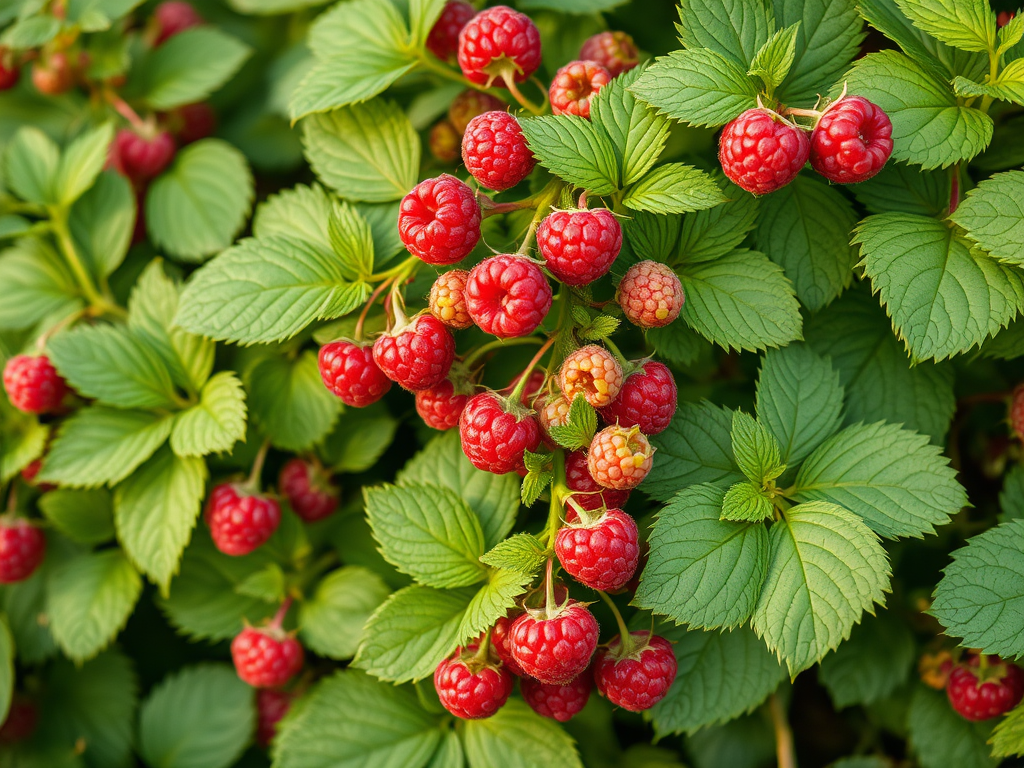
| Raspberry Bushes: A Guide Raspberry bushes (Rubus idaeus), with their remarkable resilience, are perennial plants that produce delicious and nutritious berries. They belong to the Rosaceae family and are commonly grown in gardens and farms. Raspberries come in various colours, including red, black, purple, and yellow. Their ability to withstand various conditions makes them a reliable addition to any garden, instilling confidence in even the most novice gardener. |
| Types of Raspberries Raspberry plants are classified based on their fruiting patterns: Summer-Bearing Raspberries Produce fruit once per season, typically in early to mid-summer. Only bear fruit on second-year canes (floricanes). Ever-Bearing (Fall-Bearing) Raspberries Produce two crops in late summer/fall and a smaller crop in early summer. It can bear fruit on first-year canes (primocanes) and second-year canes. Black and Purple Raspberries Typically summer-bearing, with a different growth habit from red raspberries. Black raspberries tend to be sweeter and are often used for preserves. |
| Growing Conditions Sunlight: Raspberries thrive in full sun (at least 6-8 hours per day). Soil: Well-drained, rich, slightly acidic (pH 5.5–6.5). Watering: Require consistent moisture but do not tolerate waterlogged soil. Spacing: Typically planted 2-3 feet apart in rows 6-8 feet apart for air circulation. Support: Many varieties benefit from trellising to keep canes upright and improve air circulation. |
| Pruning & Maintenance For summer-bearing Raspberries, it’s essential to prune after fruiting. This involves cutting the floricanes (second-year canes) to the ground, encouraging new growth and a healthy crop the following season. Ever-Bearing Raspberries: These can be pruned selectively for two crops or cut back entirely for a more significant fall harvest. |
| A practice called tipping is beneficial for black and purple raspberries. This involves removing the tops of the canes, which encourages branching and results in a bushier, more productive plant. To do this, simply trim the top 2-3 inches of the canes when they reach a height of 24-30 inches. Regular mulching helps retain moisture and suppress weeds. Keep the area weed-free to prevent competition for nutrients. |
| Common Pests & Diseases Pests: Japanese beetles, aphids, raspberry cane borers, spider mites. Diseases: Powdery mildew, raspberry cane blight, root rot, and mosaic virus. |
| Good air circulation, crop rotation, and using disease-resistant varieties help prevent issues. |
| Harvesting & Storage Harvest Time: When berries are fully ripe and easily detach from the plant. Storage: Fresh raspberries last 2-3 days in the refrigerator but can be frozen for long-term storage. |
| Fun Facts They’re Hollow Inside – Unlike blackberries, which keep their core when picked, raspberries detach from their core, leaving them hollow in the middle. Raspberries are packed with antioxidants, fibre, and vitamins. They Belong to the Rose Family – Raspberries are part of the Rosaceae family, which also includes strawberries, apples, and, of course, roses. They are self-pollinating, but bees improve yield and quality. They Spread Like Crazy – Raspberry plants send out underground stems called suckers, which means they can spread rapidly if not controlled. The name “raspberry” comes from the Old English word “raspise”, meaning a sweet, pink-colored wine. Not Actually a Berry! – Botanically, raspberries are considered an aggregate fruit, not a true berry. Each raspberry is made up of multiple tiny drupelets, each containing its own seed. |
 Earthly Comforts
Plus, of course, they are yummy!
LikeLiked by 1 person
Absolutely, and yet l failed to mention that simplest but most truthful of facts, hahaha – well done Grace 🙂
LikeLiked by 1 person