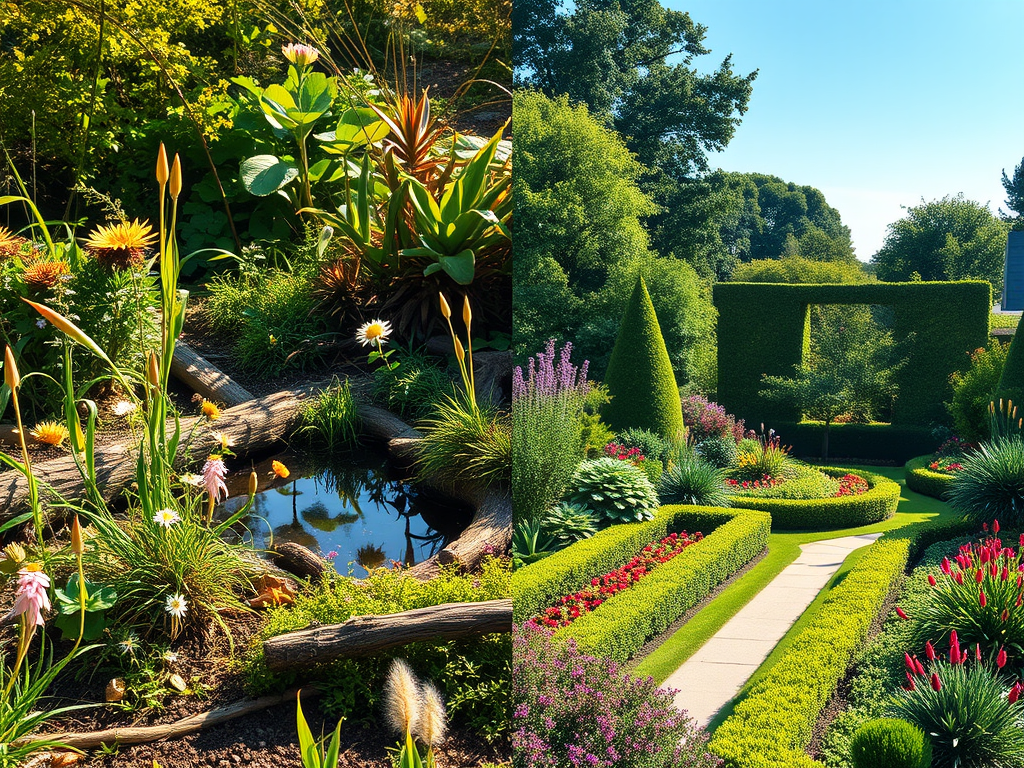
| What’s the difference between a wildlife garden and an ornamental garden? In my books, I currently have 46 clients, and all of them have different garden styles, which break into three main categories: ornamental, semi-wild/ornamental, and wildlife/natural. Wildlife gardens are the most challenging gardens to achieve success with due to the delicate balance between natural and defined layouts. The balance between maintaining a wildlife garden and an ornamental garden is delicate. Both involve aesthetics and plant care but have fundamentally different priorities. Understanding their core differences can help in blending the two effectively. |
| Main Differences: Design Philosophy Wildlife Garden: This type of garden prioritizes ecological balance, biodiversity, and sustainability over structured design. Plants are selected to attract and support wildlife, often embracing a more naturalistic, less manicured look. Ornamental Garden: This garden focuses on aesthetics, symmetry, and human enjoyment. Plants are chosen for visual appeal, with controlled layouts, defined edges, and possibly exotic species that may not support local wildlife. Plant Selection Wildlife Garden: Native species are favoured as they provide food and shelter for insects, birds, and other animals. Pollinator-friendly plants, berry-producing shrubs, and diverse ground covers are standard. Ornamental Garden: This often features a mix of native and non-native plants chosen for their colours, blooms, or foliage. Some hybrids and cultivated varieties may lack nectar or seeds that support wildlife. |
| Maintenance & Management Wildlife Garden: This garden tends to be lower maintenance, allowing for natural cycles like leaf litter decomposition, seed dispersal, and self-seeding plants. Deadwood and water features may be left to encourage habitats. Ornamental Garden: This requires regular pruning, weeding, deadheading, and perhaps the use of fertilizers and pesticides to maintain a polished look. |
| Wildlife Interaction Wildlife Garden: This garden encourages a habitat-friendly approach by integrating log piles, wildflower meadows, ponds, and hedgerows to attract insects, birds, and mammals. Ornamental Garden: Certain wildlife may be discouraged from protecting plants (e.g., pest control methods, fencing off areas, or choosing deer—or rabbit-resistant). |
| Finding the Balance: Use structured wildness—create tidy edges or pathways but make inner areas more natural. Incorporate pollinator-friendly plants into formal beds. Blend native plants with some visually striking exotics. Maintain wildlife-friendly features like ponds or bird feeders while refining seating areas. Reduce pesticides and synthetic fertilizers while still managing weeds carefully. |
| The key is intentional design—ensuring a garden looks cared for without stripping it of its ecological function. |
 Earthly Comforts
One thought on “Wildlife vs Ornamental Gardens: Key Differences Explained”