| A Little More Life Among the Flowers |
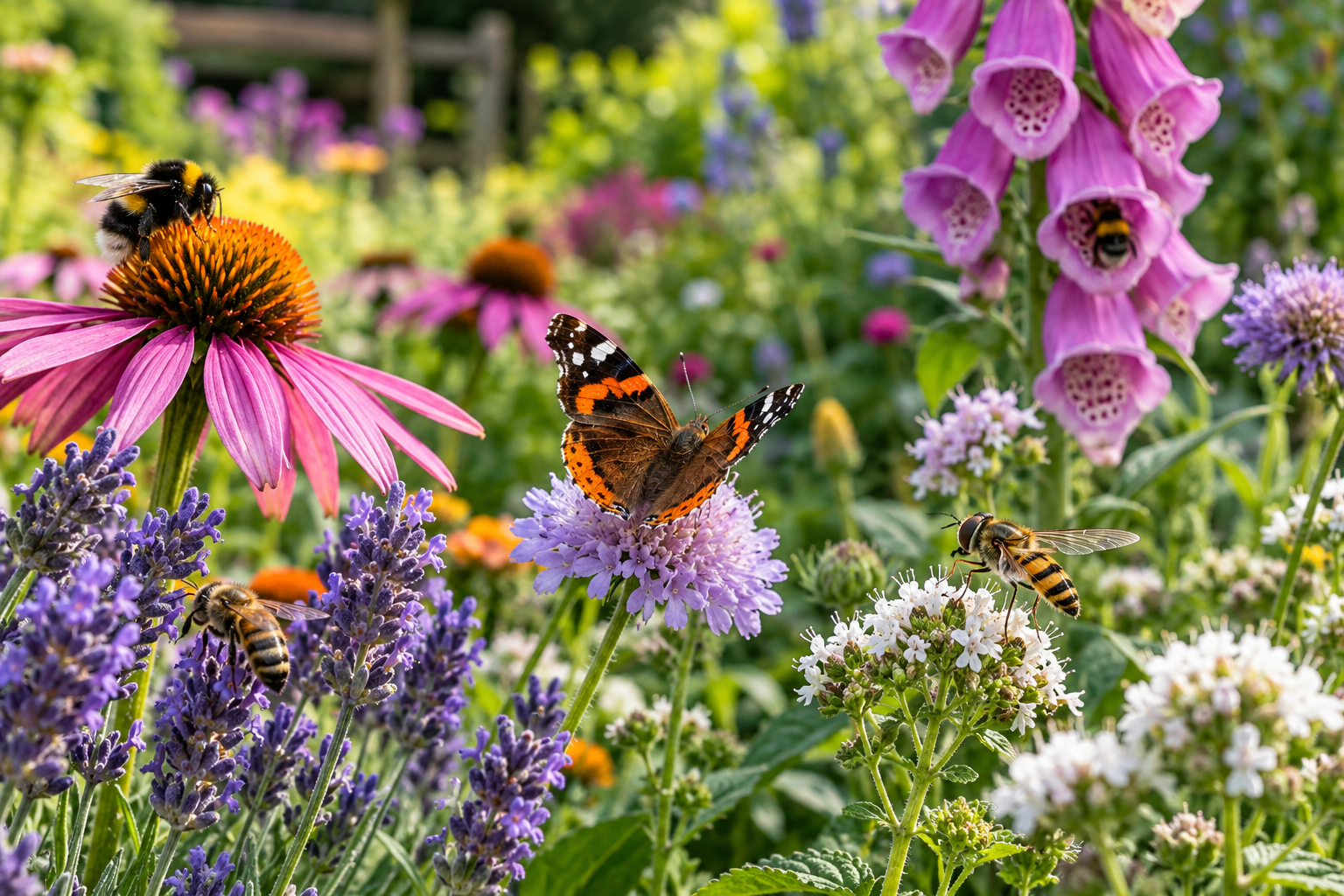
| There is something rather satisfying about watching a garden come alive with insects. A bumblebee disappearing into the flowers of a foxglove, a hoverfly suspended almost motionless above a patch of marigolds, or a butterfly settling on a sun-warmed flowerhead. These small, easily overlooked moments tell us something important about the health of the garden around us. Pollinators are essential to the reproduction of many flowering plants, including numerous fruits and vegetables. Yet attracting them to our gardens takes more than planting a few brightly coloured flowers and hoping for the best. A genuinely welcoming garden provides food, shelter, breeding opportunities, and somewhere for insects to survive when the flowering season ends. Fortunately, you can achieve much of this without turning the garden into an untidy wilderness. |
| Flowers Throughout the Seasons One of the simplest improvements is to ensure something useful is flowering for as much of the year as possible. A garden bursting with colour in June might look magnificent, but it offers little assistance to insects emerging in early spring or searching for their final meals during autumn. Early-flowering crocuses, pulmonarias and flowering currants can provide valuable resources when relatively little else is available. As spring progresses, plants such as hardy geraniums, alliums and fruit blossom extend the supply. Summer brings lavender, thyme, oregano, scabious and many other nectar-rich flowers, while autumn-flowering asters, sedums and ivy help sustain insects later in the season. Ivy is particularly worth mentioning. It is frequently regarded as an inconvenience, especially when allowed to climb somewhere unsuitable, yet mature flowering ivy can be an exceptionally valuable autumn resource. On a warm September afternoon, a flowering specimen may be positively humming with activity. Native wildflowers matter, especially for insects with specialised relationships with particular plants, but there is no reason to exclude suitable ornamental garden varieties. A thoughtful mix of native and non-native flowering plants can provide a long, varied season of interest. Not Every Flower Is Equally Useful A flower that appeals to the gardener does not necessarily appeal to a pollinator. Some highly cultivated double-flowered varieties have so many additional petals that their reproductive structures become difficult to reach. Others produce little accessible nectar or pollen. Single-flowered varieties are often a better choice, although flower shape matters just as much as appearance. Different insects possess different feeding structures, and a flower perfectly suited to a long-tongued bumblebee may be inaccessible to a smaller bee or hoverfly. This is why variety matters. Open, daisy-like flowers provide convenient feeding platforms, while tubular flowers serve insects equipped to reach deeper nectar supplies. Planting several examples of the same species together can also make a useful feeding area easier for visiting insects to locate. You don’t need to become obsessive about the arrangement. A garden should still be a garden, and there is considerable pleasure in choosing plants for their appearance as well as their ecological value. The Pollinators We Rarely Notice Bees tend to receive most of the attention, and understandably so, but they are far from the only creatures performing this work. Hoverflies are particularly interesting garden visitors. Many resemble small bees or wasps, although they are harmless flies, and their larvae can be valuable predators of aphids. Butterflies and moths also transfer pollen between flowers, while various beetles and other flies contribute to pollination. Moths deserve more recognition than they generally receive. We tend to associate garden pollination with sunshine and daytime activity, forgetting that some flowers continue attracting visitors after dark. Evening-scented plants, including honeysuckle and certain forms of tobacco plant (Nicotiana), can provide nectar for night-flying moths. A garden that supports different insects is usually more ecologically interesting than one designed exclusively around honeybees. A Little Less Tidying Can Make a Difference Gardeners are often encouraged to keep everything immaculate, but excessive tidying can remove the very materials wildlife needs. Many solitary bees nest in the ground, while others use hollow stems or existing cavities in dead wood. Bumblebees may establish colonies in sheltered places, including abandoned small-mammal nests. Butterflies and moths can spend part of their lives concealed among vegetation, fallen leaves or plant debris. Leaving a few perennial stems standing through winter, retaining some leaf litter beneath shrubs and allowing a quiet corner to develop naturally can provide useful shelter without compromising the appearance of the entire garden. Bee hotels can help certain cavity-nesting species, provided they are properly designed, kept dry, and maintained. They are not, however, a substitute for suitable natural habitat, and many British solitary bees will never use them. Sometimes the most useful gardening decision is knowing when to leave something alone. Rethinking Chemicals and Garden Pests A healthy garden will always contain insects that gardeners might regard as pests. Aphids, caterpillars and other plant-feeding creatures are part of a much larger food web, supporting predators and, in some cases, eventually becoming pollinators themselves. That does not mean allowing every infestation to destroy a treasured plant. It means considering whether intervention is genuinely necessary. Encouraging natural predators, removing small infestations by hand and maintaining healthy growing conditions can reduce the need for chemical treatments. Never apply pesticides casually, especially where flowering plants attract visiting insects. If treatment is unavoidable, the product must be suitable for the intended use, and you must follow its label instructions and pollinator precautions carefully. Remember that a completely insect-free garden would be a rather lifeless place. Water, Shelter and the Wider Garden Flowers are only part of the picture. A shallow water source with safe landing places can benefit visiting insects, particularly during dry weather, although it should be kept clean and refreshed regularly. Hedges, shrubs, small trees, flowering lawns and even modest areas of longer grass can contribute to a more varied habitat. Bare, well-drained patches of ground may provide nesting opportunities for ground-nesting bees, while undisturbed vegetation offers refuge for other species. Herbs and vegetables can also help. Letting a little thyme, oregano, chive, or dill flower provides extra forage, and leaving the occasional vegetable to run to seed can produce flowers that attract a surprising number of visitors. You don’t need to abandon conventional gardening practices. You can still mow lawns, maintain borders, and trim hedges at appropriate times. The goal is to think a little more about how you manage these spaces. A Garden Worth Visiting Attracting pollinators isn’t really about following a complicated set of rules. It is about creating a garden where flowers are available over a long season, where insects can find suitable shelter, and where every unfamiliar creature isn’t automatically treated as an enemy. Even a relatively small garden can contribute. A few well-chosen flowering plants, a sheltered corner and a slightly more relaxed approach to tidying may be enough to encourage additional visitors. And there is a reward beyond the ecological benefits. Once you begin paying attention to the insects visiting your flowers, gardening becomes a rather different experience. You start noticing which plants attract which species, how activity changes with the weather and how much life exists in places you previously walked past without a second glance. A garden filled with pollinators is not simply a garden doing something useful. It is a garden with considerably more going on. |
| Explore More Gardening Articles Enjoyed this article? Discover more plants, practical gardening advice and observations from a working gardener in our growing horticultural collection. Browse the A–Z Article Directory |
| About our writing & imagery Most articles reflect our real gardening experience and reflection. Some use AI in drafting or research, but never for voice or authority. Featured images may show our photos, original AI-generated visuals or, where stated, credited images shared by others. All content is shaped and edited by Earthly Comforts, expressing our own views. |


An excellent post and thank you for sharing this helpful information, Rory.
LikeLiked by 1 person
Morning Eugenia, many thanks – l hope you are keeping well 🙂
LikeLiked by 1 person
Most welcome, Rory! Spring has sprung and all is well! 😊
LikeLiked by 1 person
Excellent 🙂
LikeLiked by 1 person