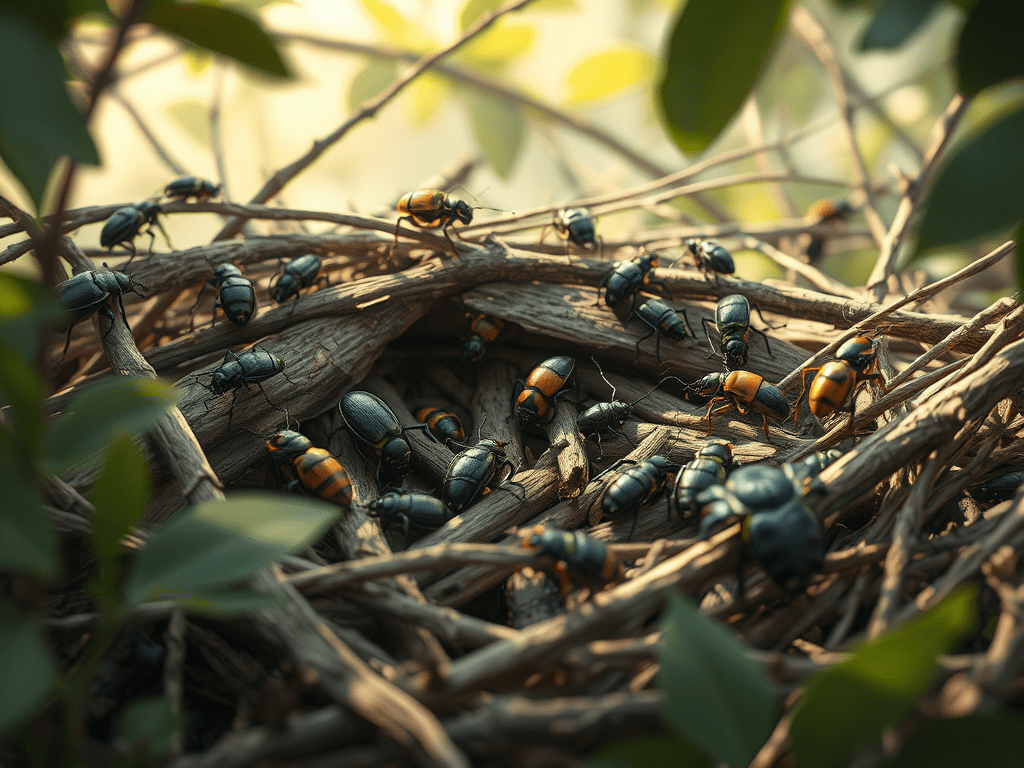
| What wildlife can be found living in Dead Hedges/Walls? A dead hedge (a barrier made of piled-up dead branches and twigs) and a dead wall (a structure made from stacked logs, stones, or other organic materials) are not just structures, but living canvases that provide excellent habitats for a stunning array of wildlife. These structures create shelter, nesting sites, and food sources for numerous species, each adding a unique touch to the biodiversity of your garden. |
| Here’s a breakdown of the types of wildlife that might inhabit them: Insects & Other Invertebrates Beetles – Many species, including stag beetles, rely on rotting wood for their larvae. Woodlice – Help break down the dead wood, contributing to decomposition. Spiders – Build webs within the gaps to catch prey. Solitary Bees & Wasps – Some species, like mason bees, use crevices for nesting. Butterflies & Moths – Some species overwinter in the cracks or lay eggs on the dead wood. Millipedes & Centipedes – Live within damp sections, feeding on decaying matter or other small invertebrates. Amphibians & Reptiles Frogs & Toads – Use the cool, damp conditions of the hedge base for shelter. Newts – Hide in the crevices of a dead hedge or under logs. Slow Worms & Lizards – Benefit from the warmth retained by deadwood and use it as a hiding spot. Birds Wrens, Robins, & Blackbirds – Nest within the hedge’s dense cover. Tits & Finches – Forage among the branches for insects. Owls & Woodpeckers – Larger deadwood structures may attract them for nesting or feeding on insects. Mammals Hedgehogs – Use dead hedges for hibernation sites. Mice & Voles – Nest within the structure, taking advantage of its protection. Bats – May roost in crevices, especially if there are hollow sections. Fungi & Mosses Bracket Fungi & Lichens – Grow on decaying wood, contributing to nutrient cycling. Mosses & Liverworts – Thrive in the damp, shaded sections. Dead hedges and walls play a crucial role in biodiversity by providing shelter, breeding grounds, and food sources for numerous species. They are not just features in a garden, but lifelines that support the intricate life cycles of the creatures that inhabit them. They are a valuable feature in any wildlife-friendly garden or landscape. |
 Earthly Comforts
I don’t consider them hedges or walls, but we have many, what we call brush piles, on the farm. They are great habitat for wildlife. I would add rabbits to your list.
LikeLiked by 1 person
Hey Ruth, oh yes, brushpiles are wonderful habitats here too 🙂
Rabbits build warrens beneath them on the Gazen Salts reserve.
LikeLiked by 1 person