
| We have a stone bird bath in the garden here in Willow, and the birds love it. I have trialled various bird baths over the last few years for down on the allotment, from metal stands with stained glass bowls to hardy plastic variations, and all have failed to impress; however, our one here at home l have seen achieve great success for many years, not just here in Sandwich but also Kingsdown and also when we used to live in Canterbury, the bath was always welcome by the local avian populations. It made me wonder, what does make for a good bird bath? So, l did some research … Creating the perfect bird bath for a UK garden involves more than just placing a shallow dish of water outside. To attract birds, support their health, and keep your garden lively year-round, it’s essential to design the bird bath with care and maintain it thoughtfully. Here’s a comprehensive guide based on practical experience, bird behaviour, and garden aesthetics: |
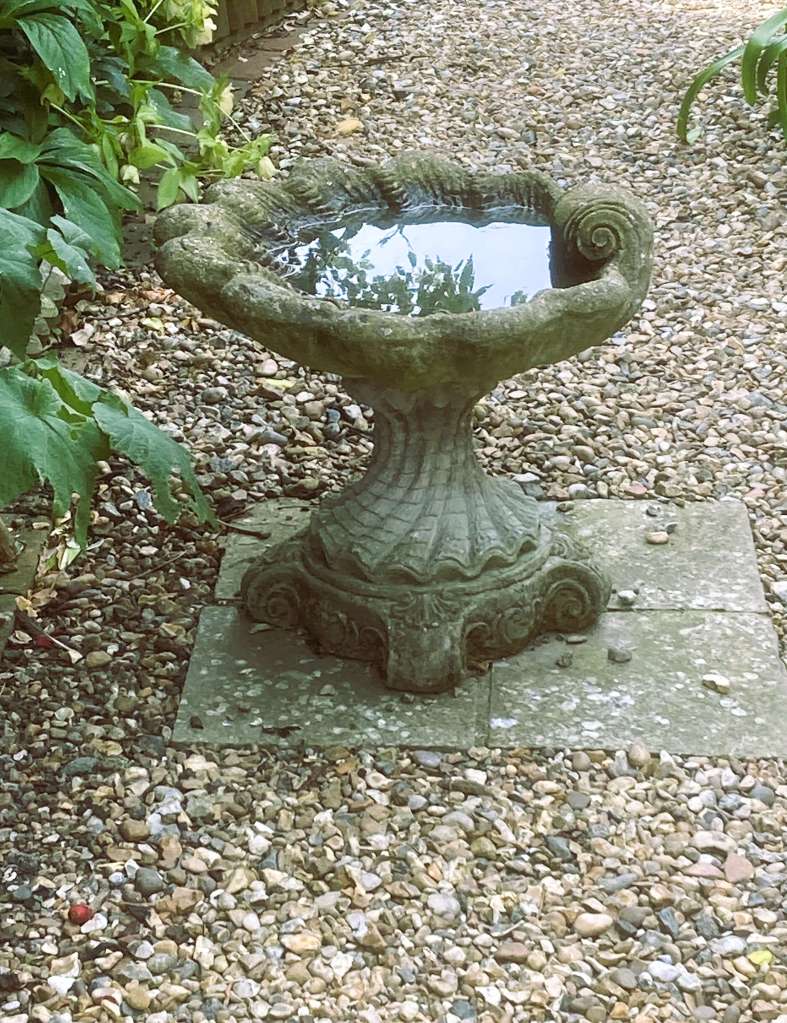
Our bird bath at Willow
| Essentials of a Perfect Bird Bath 1. Shallow, Gently Sloped Basin Depth: Birds like water that’s no deeper than 2.5–5 cm (1–2 inches) at the edges, sloping slightly toward the middle. This allows small birds to wade in and out easily, while larger birds can still splash and preen. Avoid steep-sided bowls—they can be hazardous and uninviting. 2. Textured Surface A rough or matte finish provides birds with a grip, which is vital when they’re wet and trying to stay upright. Stone, concrete, or rough ceramic work well; plastic and glazed surfaces can be slippery. 3. Safe and Stable Position Place the bath on a pedestal, raised brick base, or solid tree stump. Ensure it’s level so water doesn’t spill and birds don’t slip. Elevating it 2–3 feet off the ground helps deter cats and provides a better view for birds to spot danger. 4. Good Visibility + Cover Nearby Birds prefer baths with nearby shelter, such as shrubs, trees, or hedges, to which they can dash if startled. But don’t put it too close—sparrowhawks or cats could use dense cover for ambush. 5. Clean, Fresh Water Clean water is critical, especially during hot spells or freezing winters. Change the water daily or every other day. Use a stiff brush to scrub out algae, bird droppings, and slime every week (more frequently in warm weather). Avoid soaps or detergents—hot water and elbow grease are often the best options. |
| Design Choices Gardens Material Options Stone or Concrete: Durable, stable, naturally insulating (doesn’t overheat or freeze as quickly). Ceramic or Glazed Terracotta: Pretty but can be fragile and slippery. Metal: Not ideal—can overheat in the sun and freeze hard in winter. Recycled or Handmade: Old terracotta saucers, upcycled basins, or carved wood can all work with the right shape and safety features. Aesthetic Integration Choose a bird bath that complements your garden style:Cottage gardens: rustic stone or mossy look. Modern gardens: minimalist concrete or sculptural metal. Wildlife gardens: naturalistic basins on logs or hollowed stones. Winter-Proofing Tips Use frost-resistant materials. Place a ball (like a ping-pong ball) in the bath to help keep a small area ice-free. Don’t use antifreeze—it’s toxic. You can pour warm (not hot) water in on frosty mornings. |
| Enhancing the Bird Bath Experience Add Movement Birds are drawn to the sound and sparkle of moving water. Try a small solar fountain pump or a dripper attachment. Keep the flow gentle—birds dislike jets or splashes. Add Stones or Pebbles Place a few smooth stones or flat pebbles inside for perching. This is especially beneficial for bees and butterflies as well. Protect from Predators Don’t put the bath where cats can easily hide. You can add prickly plants (like holly or berberis) around the base to deter stalking. |
| Best Locations Morning sun + afternoon shade keeps the water clean and cool. Near shrubs or hedges—but with good sightlines. Avoid underfeeders (droppings, seed mess) or trees that shed heavily. |
| Bonus Touches Combine with a small wildlife corner, such as a log pile, pollinator plants, or a wildflower patch. Monitor visitors: blackbirds love to bathe, robins and tits may dip quickly, and even starlings enjoy group splashes. Consider seasonal planting nearby to draw birds year-round (berry bushes, nectar-rich flowers, seedheads). |
Perfect Bird Bath Checklist
| Feature | Ideal Specification |
|---|---|
| Depth | 2.5–5 cm, gently sloped |
| Surface | Rough/unglazed for grip |
| Material | Stone, concrete, or textured ceramic |
| Location | Safe, visible, partial sun, near cover |
| Water | Fresh, clean, changed regularly |
| Extras | Pebbles, solar dripper, anti-cat placement |
 Earthly Comforts
One thought on “Essential Features of an Ideal Bird Bath”