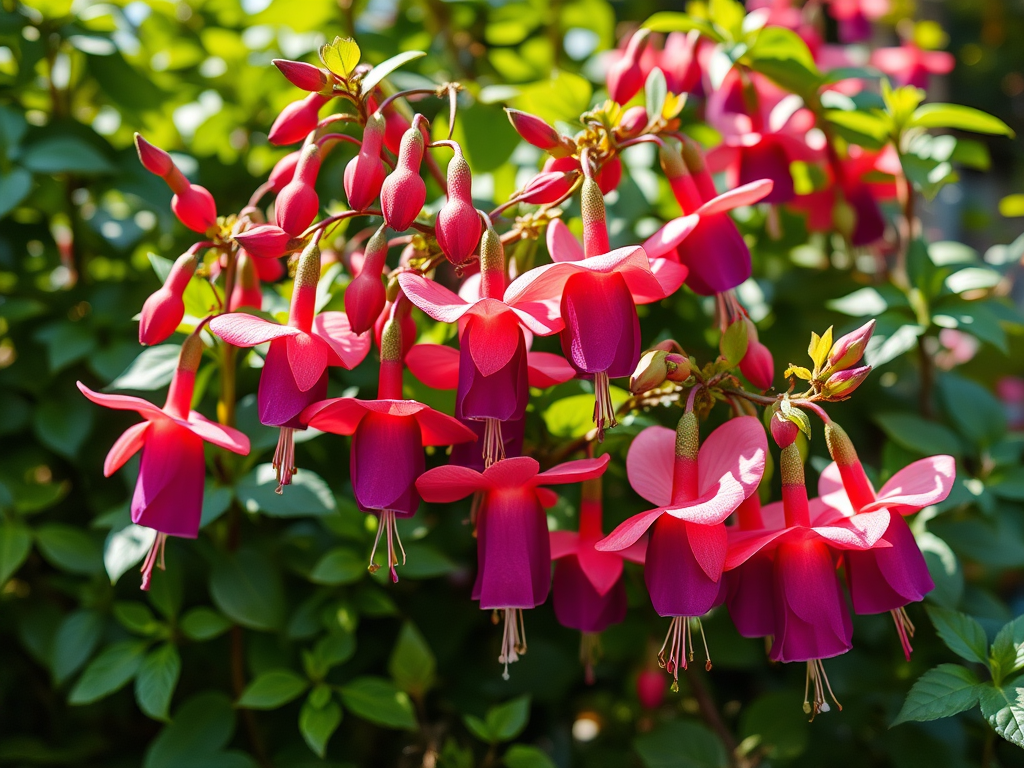
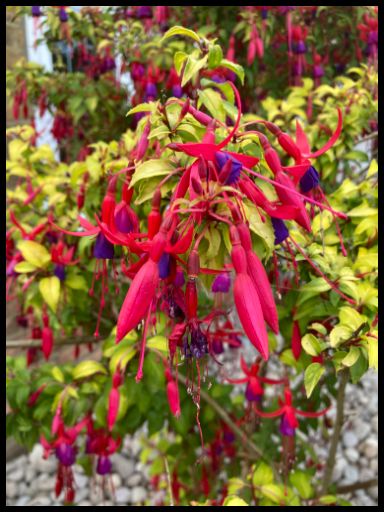

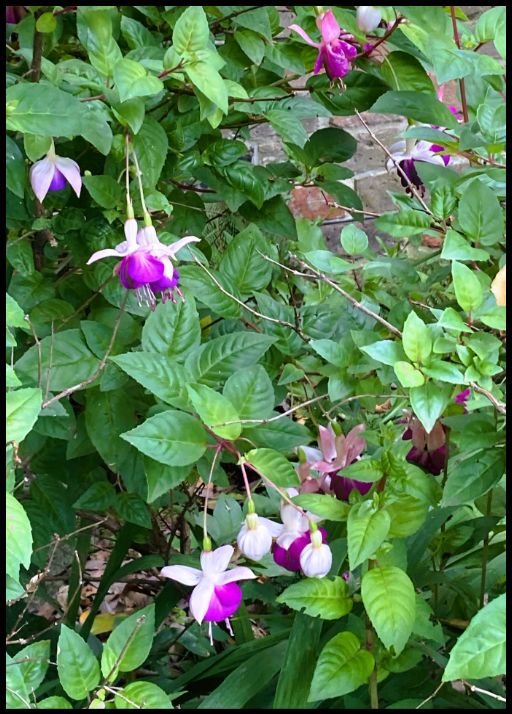


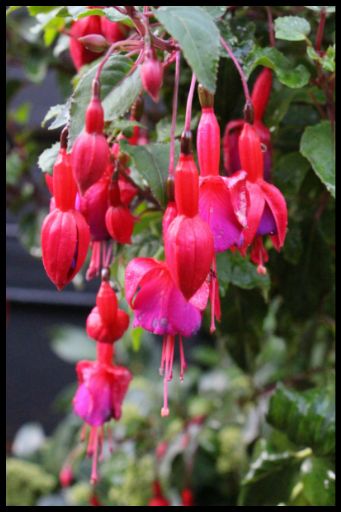


| Fuchsias are a genus of flowering plants known for their vibrant, pendulous blooms and elegant, drooping growth habit. They belong to the Onagraceae family and are popular in gardens, hanging baskets, and containers due to their striking flowers and long blooming season. |
| Key Features of Fuchsias: Flowers: Fuchsia flowers are typically tubular or bell-shaped, featuring a combination of bright colours, including shades of pink, red, purple, white, and orange. They often have contrasting sepals and petals. Growth Habit: Most fuchsias have a trailing or bushy growth form, making them ideal for hanging baskets, borders, and even small trees in some varieties. Hardiness: Some fuchsias are hardy perennials, while others are tender and grown as annuals in colder climates. Hardy fuchsias, such as Fuchsia magellanica, can survive mild winters with proper mulching. Foliage: Their leaves are generally oval or lance-shaped, often with a deep green or slightly reddish tint. |
| Growing & Care Tips: Light: They prefer partial shade to dappled sunlight, though some varieties can tolerate more sun if kept well-watered. Soil: Well-draining, fertile soil with good moisture retention is ideal. Watering: Keep the soil consistently moist but not soggy. Regular watering is essential, especially in hot weather. Feeding: Apply a balanced liquid fertiliser every two weeks during the growing season to promote flowering. Pruning: Regular deadheading and pruning help maintain shape and encourage more blooms. Overwintering: Tender fuchsias should be brought indoors or protected from frost in colder climates. |
| Types of Fuchsias: Hardy Fuchsias Such as Fuchsia magellanica, these can withstand colder temperatures. Trailing Fuchsias Perfect for hanging baskets with long, cascading blooms. Upright (Bush) Fuchsias Compact and ideal for garden beds or containers. |
| Fun Facts: Fuchsia plants are named after the German botanist Leonhart Fuchs. The colour “fuchsia” is derived from the vivid pink and purple hues of the flowers. They attract hummingbirds, bees, and butterflies due to their nectar-rich flowers. |
 Earthly Comforts