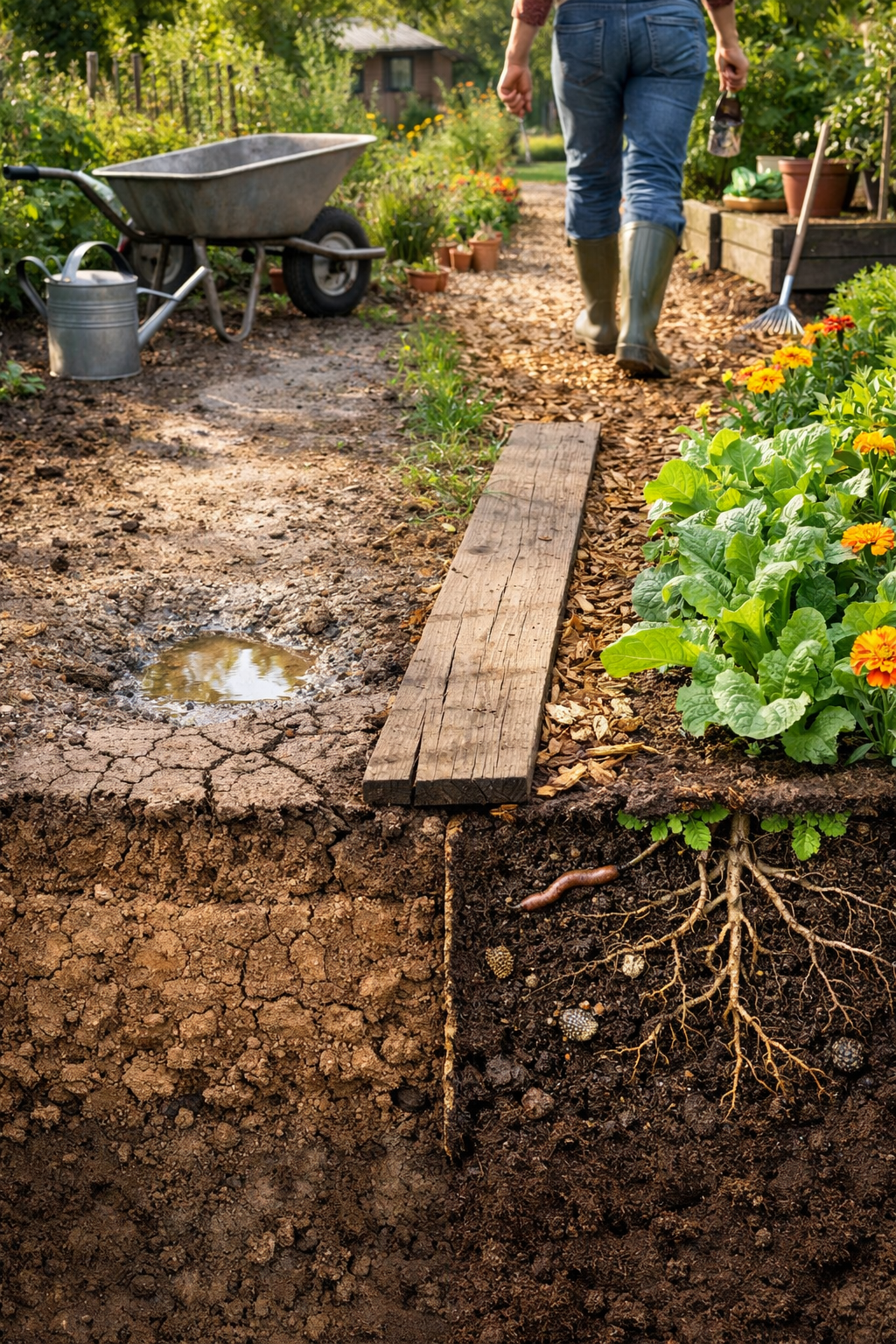
| How Movement Shapes the Health of Your Garden In most gardens, soil compaction happens quietly. It is not dramatic or sudden, yet over time it can limit plant growth, increase water problems, and reduce soil life. One of the most common and overlooked causes is how we move through a garden. Pathways, both intentional and accidental, play a central role in either protecting soil or slowly damaging it. Understanding how pathways interact with soil structure allows gardeners to work with the land rather than against it. Good pathway planning reduces compaction where plants grow, improves drainage, and makes maintenance easier without sacrificing soil health. What Soil Compaction Actually Is Soil compaction occurs when soil particles are pressed tightly together, reducing the air spaces between them. Healthy soil contains a balance of solids, water, and air. When those air pockets are squeezed out, roots struggle to breathe, water cannot move freely, and beneficial organisms decline. Compaction is most common in clay-heavy soils but can affect any soil type. It is intensified by repeated foot traffic, wheelbarrows, mowers, pets, and working soil when it is wet. Once compacted, soil does not easily recover on its own. Why Compacted Soil Is a Problem Plants grown in compacted soil often show subtle signs of stress before visible decline. Roots remain shallow, growth slows, and plants become more vulnerable to drought despite regular watering. Rainwater tends to pool or run off rather than soak in, increasing erosion and nutrient loss. Below the surface, soil life suffers. Earthworms, fungi, and microbes depend on oxygen and pore space. Compaction reduces biological activity, thereby limiting nutrient cycling and the breakdown of organic matter. Over time, soil becomes harder to work and less responsive to improvement. The Hidden Role of Pathways Every garden has pathways, whether designed or accidental. The route you naturally walk to reach a shed, compost heap, washing line, or favourite plant becomes compacted through repetition. Without clear pathways, gardeners often compact soil in planting areas without realising it. Purpose-built pathways concentrate pressure where compaction does the least harm. This allows growing areas to remain loose, aerated, and biologically active. In this sense, pathways are not wasted space; they are protective infrastructure for the soil. Designing Pathways With Soil in Mind Effective pathways follow how the garden is actually used, not how it looks on paper. The most soil-friendly designs are practical first, aesthetic second. A narrow path in the wrong place will be ignored, while an intuitive route will be used consistently. Paths should connect key working areas directly. Long detours encourage shortcutting across beds, undoing their purpose. Width matters too. A path should be wide enough for comfortable walking, kneeling, or wheelbarrow use without spilling pressure onto planting areas. Permanent vs Flexible Pathways Permanent pathways, such as paving, gravel, or brick, offer long-term protection against compaction in high-traffic zones. They are ideal for main routes and work areas. However, they also seal the soil below, which can affect drainage if poorly designed. Flexible pathways, such as woodchip, bark, straw, or stepping stones, allow water and air movement while still absorbing pressure. These are well-suited to productive gardens, wildlife areas, and informal spaces. They can be adjusted over time as garden use changes. Soil Compaction From Maintenance Equipment Compaction is not caused only by feet. Lawn mowers, strimmers, wheelbarrows, and even repeated kneeling can compress soil, especially when ground conditions are wet. Creating designated equipment routes reduces random compression and protects root zones. In smaller gardens, even short-term access routes matter. Repeated seasonal tasks performed in the same spot, such as hedge cutting or pruning, can compact soil into narrow strips. Rotating working positions or laying temporary boards helps spread the weight more evenly. Timing Matters More Than Force Soil moisture plays a major role in how easily compaction occurs. Working soil when it is wet causes far more damage than the same pressure applied when the soil is dry. Wet soil particles slide together and lock into dense layers as they dry. Pathways reduce the need to step on beds during vulnerable periods. This is especially important in winter and early spring when soil structure is most at risk. Good access allows work to continue without long-term damage. Repairing Compacted Areas Once soil is compacted, recovery takes time. Mechanical loosening can help, but it should be done carefully. Forking or broadforking lifts soil without turning it, preserving layers and soil life. This is more effective than rotavating, which can further weaken the structure. Organic matter is essential for long-term improvement. Compost, leaf mould, and mulches encourage biological activity that naturally loosens soil. Worms and fungi create channels that restore air and water movement over time. Prevention Is Easier Than a Cure The simplest way to manage compaction is to avoid it in the first place. Clear pathways, consistent access routes, and thoughtful movement habits protect soil with minimal effort. Once a system is in place, the garden becomes easier to manage and more resilient. Pathways also improve efficiency. Less soil damage means fewer problems with drainage, weeds, and struggling plants. Over time, the garden responds with healthier growth and greater stability. Pathways as Part of Garden Care Philosophy Thinking about pathways is a shift in mindset. Instead of reacting to compacted soil, gardeners plan for movement as part of soil care. This approach aligns maintenance with ecological processes rather than fighting against them. A well-used path is not a failure of design; it is information. Observing how a garden is walked through offers valuable insight into protecting its soil. When pathways support both people and plants, the entire garden benefits. |
Pathways & Soil Compaction in Gardening
 Earthly Comforts