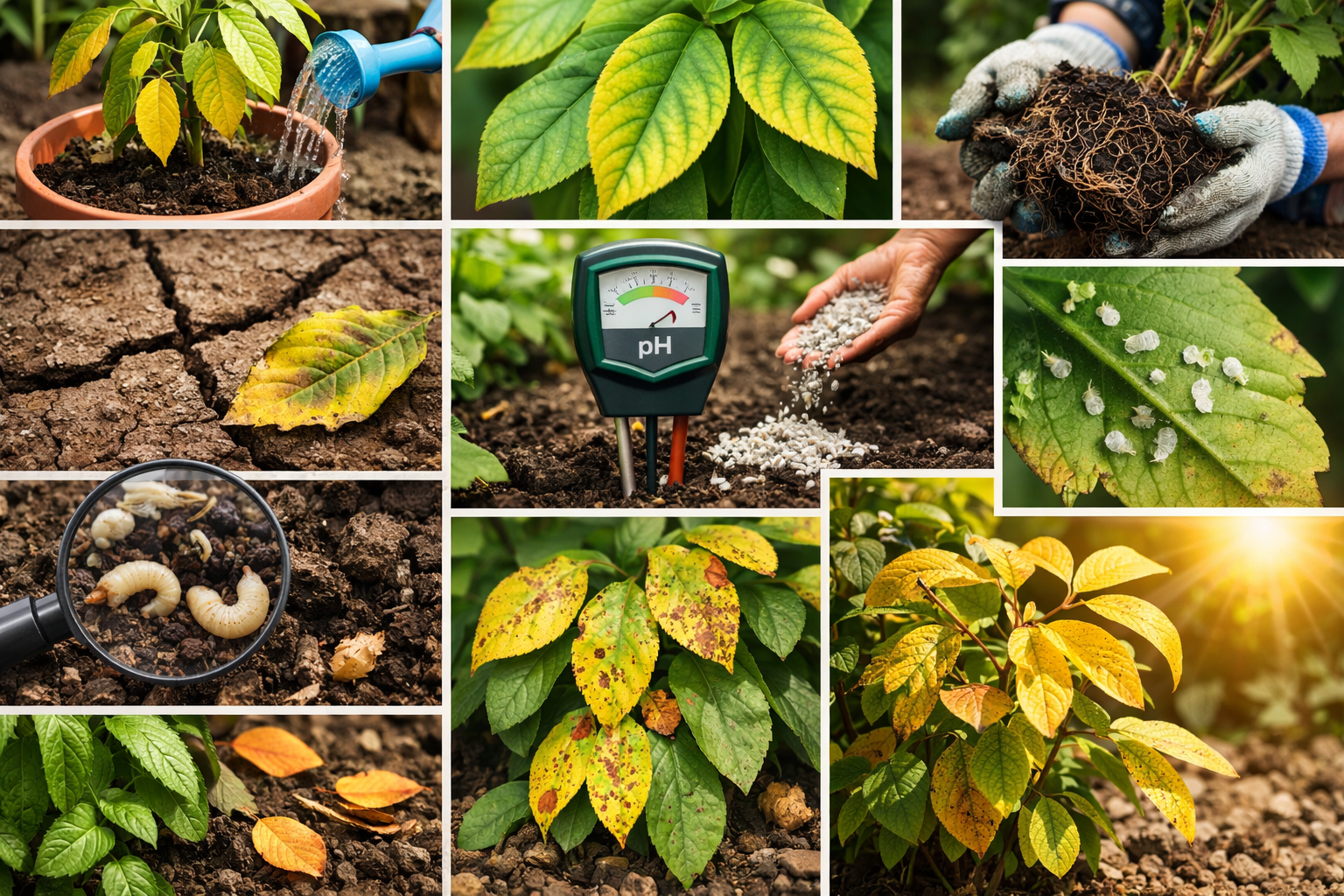
| What Your Plant Is Really Telling You Yellowing leaves are one of the most common signals a plant gives when something isn’t right. They’re also one of the most misunderstood. A yellow leaf is not a diagnosis in itself; it’s a symptom. The real skill lies in understanding why the plant is responding this way and what it needs next. This guide is logically organised, so you can diagnose with confidence and act decisively. Start With the Pattern, Not the Colour Before assuming anything, look at where the yellowing is occurring. Are older leaves turning yellow while new growth remains green? Are the newest leaves affected first? Is the yellowing uniform, patchy, or limited to the edges? Patterns matter because plants move nutrients internally. Some deficiencies appear first in older leaves, while others affect new growth. Random yellowing often points to environmental stress rather than a feeding issue. Overwatering: The Most Common Culprit Consistent yellowing across multiple leaves is often associated with overwatering. Roots need oxygen as much as they need moisture. When soil stays wet for too long, roots struggle to breathe, begin to weaken, and can no longer absorb nutrients properly. Signs include limp or soft yellow leaves, slow growth, and soil that feels damp well below the surface. The fix is not feeding; it’s improving drainage, reducing watering frequency, and allowing the root zone to recover. Underwatering: Stress Yellowing Underwatered plants can also yellow, though the texture tells the story. Leaves often turn pale, then crisp or brittle, especially around the edges. The plant is conserving resources, sacrificing older leaves to protect new growth. This usually occurs during warm, windy periods or in containers that dry out faster than expected. A deep, thorough watering that reaches the full root zone is more effective than frequent light watering. Nutrient Deficiency: Know Which One Not all yellowing means “feed the plant.” Identifying which nutrient is missing is essential. Nitrogen deficiency causes older leaves to yellow first, while new growth remains smaller but green. This is common in fast-growing plants or lawns that haven’t been fed regularly. Iron deficiency shows up in young leaves, which turn yellow while veins remain green. This is often linked to alkaline soil rather than a lack of iron itself. Magnesium deficiency appears as yellowing between the veins of older leaves, often on roses, tomatoes, and fruiting plants. Blindly adding fertiliser can worsen the problem if the soil chemistry is already out of balance. Soil pH: The Hidden Blocker Sometimes nutrients are present but unavailable. Soil pH controls whether roots can access what’s already there. If the pH is too high or too low, plants can behave as though they’re starving even in nutrient-rich soil. Persistent yellowing despite feeding is a strong clue. Adjusting soil pH takes time but often solves long-term leaf colour issues far more effectively than repeated feeding. Seasonal Yellowing Is Normal Not all yellowing is a problem. Deciduous plants naturally shed older leaves as seasons change. Evergreen plants also replace foliage gradually, often yellowing inner or lower leaves first. If growth is healthy, new leaves are green, and the plant looks balanced overall, this is usually natural turnover rather than stress. Light Stress: Too Much or Too Little Light levels affect leaf colour more than many realise. Plants grown in insufficient light often develop pale or yellow leaves because they cannot photosynthesise effectively. Growth becomes leggy, and leaves may drop. Too much light, particularly strong sun on shade-loving plants, can bleach leaves yellow before scorching them brown. The solution is repositioning, not changes to feeding or watering. Root Bound Plants and Compacted Soil When roots run out of space or struggle through compacted soil, nutrient uptake suffers. Container plants that haven’t been repotted in years often yellow despite proper watering and feeding. In garden beds, heavy foot traffic or machinery can compact soil, limiting oxygen and root expansion. Aeration, organic matter, or repotting restores balance. Pests and Disease Signals Some pests cause yellowing by damaging roots or sap flow. Vine weevil larvae, root aphids, and nematodes all disrupt nutrient uptake below ground. Leaf colour changes often appear before pests are spotted. Diseases may cause uneven yellowing, spotting, or leaf drop. These cases tend to spread rather than remain isolated and usually coincide with weakened plants or poor airflow. Diagnosis Before Action The most important rule is this: yellow leaves are information, not failure. Reacting too quickly with fertiliser, water, or pruning often compounds the problem. Pause, observe patterns, check soil moisture, review recent weather, and consider the plant’s natural growth cycle. Correct diagnosis saves time, money, and plant health. Final Thought Healthy plants don’t need constant correction; they need consistency and understanding. Yellowing leaves are a conversation starter, not a verdict. When you learn to read them properly, your garden becomes far easier to manage and far more resilient. |
Yellowing Leaf Diagnosis


Very interesting.
LikeLiked by 1 person
Thanks Michael.
LikeLiked by 1 person
You’re welcome.
LikeLiked by 1 person
Extremely helpful, and thank you, Rory.
LikeLiked by 1 person