| The Emotional Weight of February |
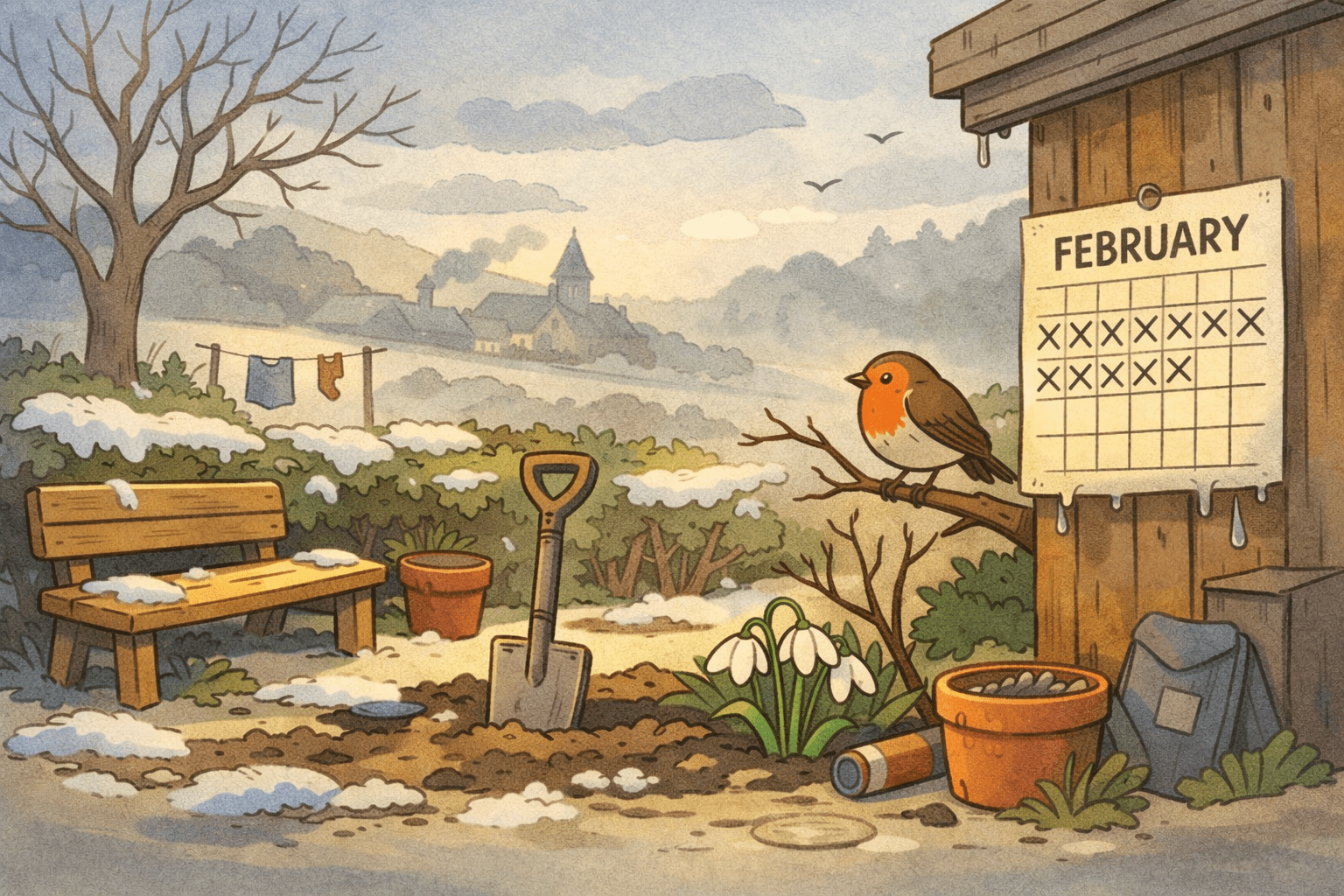
| February carries a particular kind of heaviness. It isn’t dramatic. It doesn’t announce itself with storms or spectacle. It simply lingers. Cold has lost its novelty, but warmth still feels hypothetical. The days are longer on paper, yet the light doesn’t seem to do much with the time it’s been given. As a gardener, February is not the depth of winter, but it often feels harder than January. January still has permission to be quiet. February pretends to be moving on while asking you to wait a little longer. There’s a common assumption that seasonal difficulty is solely about weather. In practice, it’s about a mismatch. Our expectations begin to outpace reality. We want signs of progress — lengthening days, small lifts in temperature — but the landscape resists hurry. Soil remains cold. Growth pauses. The world feels stalled, even as the calendar insists otherwise. Work continues, but without reward. Tasks are maintenance-heavy and outcome-light. Clearing, checking, resetting. Little that looks like change. This is not failure; it’s preparation. But preparation without visible payoff can feel emotionally thin. February is when deferred tiredness shows up. The energy you borrowed to get through winter quietly comes due. People often describe this as laziness or a lack of motivation. It isn’t. It’s the body noticing that it has been in holding mode for some time. Gardening sharpens this awareness. You can’t force activity into cold ground without consequences. Plant too early, and you weaken it. Cut too soon, and you invite damage. February teaches restraint, whether you want the lesson or not. There is also a subtle social layer. February lacks narrative. December has endings. January has beginnings. February has neither. It is simply a continuation, which makes it harder to explain how you’re feeling without sounding ungrateful or dramatic. Nothing is “wrong,” yet nothing quite lifts. This is where a quiet myth deserves to be challenged: that productivity should rise as soon as daylight returns. In reality, recovery lags behind light. Energy is not a switch. It’s a curve. Expecting sudden momentum in February ignores the cost of what came before. One of the practical insights years of outdoor work have taught me is to judge progress by readiness, not speed. In February, you check tools, sharpen blades, and repair what failed last season. It’s when you notice which systems held up and which didn’t. This work matters, even if it doesn’t feel satisfying in the moment. Emotionally, the same approach helps. February is not the month to reinvent yourself. It’s the month to stabilise. To maintain. To avoid making harsh judgments about your own output. Quiet continuity counts here. There are small permissions you can grant yourself. Noticing light without demanding warmth. Appreciating stillness without calling it stagnation. Accepting that some seasons exist purely to be endured, not optimised. By the end of February, things begin to shift. Buds swell almost imperceptibly. Birds change their tone. The soil loosens its grip. But this happens because the pause was respected, not because it was rushed. The emotional weight of February is not a personal failing. It’s a seasonal truth. A reminder that cycles don’t exist for our convenience. They exist on their own terms, and learning to move with them — rather than against them — is a form of quiet competence. When spring finally does arrive, it feels earned. Not because you pushed through, but because you waited well. |
| About our writing & imagery Most articles reflect our real gardening experience and reflection. Some use AI in drafting or research, but never for voice or authority. Featured images may show our photos, original AI-generated visuals, or, where stated, credited images shared by others. All content is shaped and edited by Earthly Comforts, expressing our own views. |


Here we are in early spring. Lot of difference between our seasons
LikeLiked by 1 person