
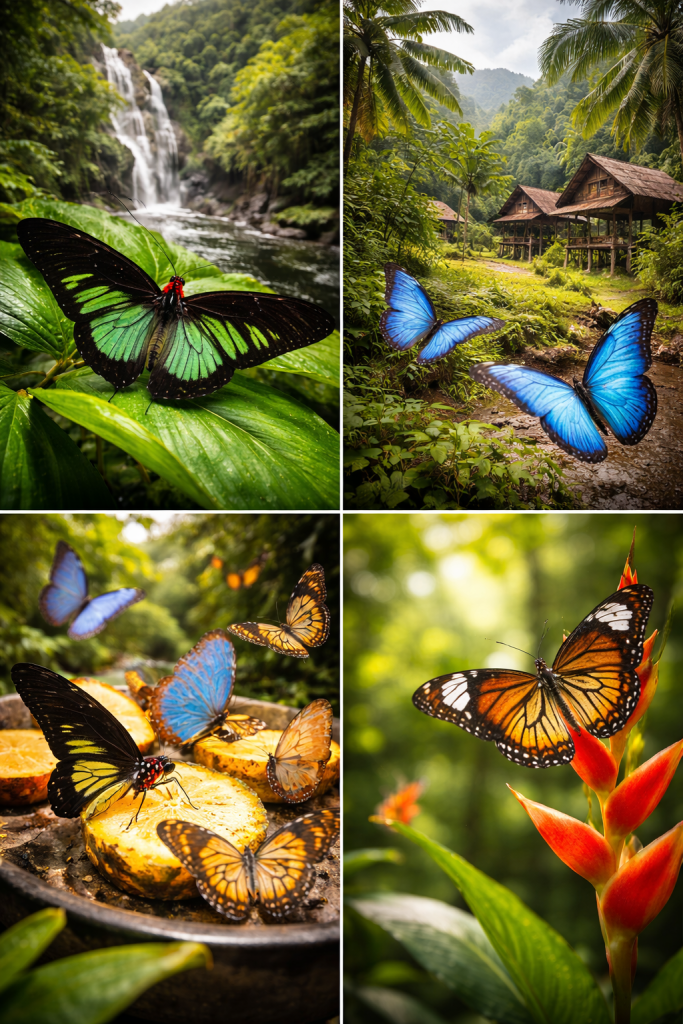
| Butterflies Without Borders Butterflies in Malaysia were not delicate things. Some were huge — wings wide enough to catch your breath, bodies solid, purposeful, built for distance rather than decoration. When they moved through the air, it wasn’t a flutter so much as a passage. You noticed them not because they were rare, but because they owned space. I netted butterflies then, as I had elsewhere, but the scale was different. These were not fleeting moments of colour — they were encounters. You learned quickly that in Malaysia, insects didn’t apologise for their presence. They arrived fully formed, confident, unapologetic. I lived there from 1967 to 1971, and those years rewired how I understood nature. The local kampung children saw butterflies differently again. They used slingshots and small stones, carefully aimed to stun rather than tear wings. The butterflies were pinned, dried, and sold to tourists — colour traded for currency. Even as a child, that stayed with me. Beauty, when abundant, becomes a commodity. And abundance does not guarantee safety or kindness. But butterflies were only half the story. Mosquitoes taught the harder lessons. In Malaysia, mosquitoes were not an inconvenience — they were a threat. Malaria wasn’t theoretical. It wasn’t historical. It lived next door. Friends, neighbours, people you knew and spoke to — some of them didn’t survive it. Death arrived quietly, carried on wings so small they barely registered until it was too late. Protection wasn’t optional. Coils burned constantly. Nets were tucked with ritual care. Tablets — huge, bitter things, the size of small golf balls — were swallowed because not swallowing them carried consequences far worse than the taste. Survival required discipline. It was the first time I really understood that nature does not negotiate. Malaysia was vibrant, energetic, colourful, awe-inspiring — and deadly. The beauty did not cancel the danger. The danger did not erase the beauty. They existed side by side, inseparable. Butterflies soared overhead while mosquitoes waited in shadow. Life and death shared the same humidity, the same breath. As a gardener now, I think about this often. We romanticise wildlife easily in temperate places. We curate it. We soften it. Malaysia taught me that ecosystems are not built for our comfort. They function whether we admire them or not. Insects are not good or bad — they are effective. Behind the spade, I carry that understanding with me. When I design for wildlife, I do so with respect, not sentimentality. Nature doesn’t exist to reassure us. It exists to persist. Butterflies in Malaysia were magnificent, not because they were safe — but because they survived in a world that demanded strength. And once you’ve lived somewhere that beautiful and that dangerous, You never mistake prettiness for peace again. |
| 10 True Facts About Malaysian Butterflies Malaysia is home to some of the largest butterflies in the world Certain species have wingspans so wide they can feel more like birds than insects when they pass overhead. Many Malaysian butterflies are built for long-distance flight Their strong, broad wings allow them to travel through dense rainforest, across clearings, and between feeding sites with ease. Butterfly diversity in Malaysia is extremely high. Hundreds of species coexist, often within very small areas, especially in rainforest and river-edge habitats. Butterflies are active year-round in Malaysia. The warm climate means there is no true dormant season, although activity shifts with rainfall and monsoon cycles. Some species feed on fruit rather than flowers. Overripe and fallen fruit is a major food source, making forest floors just as important as flowering plants. Monsoon rains strongly affect butterfly numbers. Heavy rains temporarily reduce visibility and activity, but populations rebound quickly once conditions stabilise. Bright colours often signal toxicity or bad taste. Many Malaysian butterflies use bold patterns to warn predators that they are unpleasant or harmful to eat. Butterflies play a key role in pollination. While not as efficient as bees, they contribute to the reproduction of many tropical plants. Larval host plants are essential to butterfly survival Without specific plants for caterpillars to feed on, adult butterflies cannot maintain populations — even if nectar is abundant. Butterflies are sensitive indicators of environmental change Shifts in butterfly numbers often reflect changes in forest health, rainfall patterns, and human disturbance. |
 Earthly Comforts
Beautiful butterflies.
LikeLiked by 1 person