
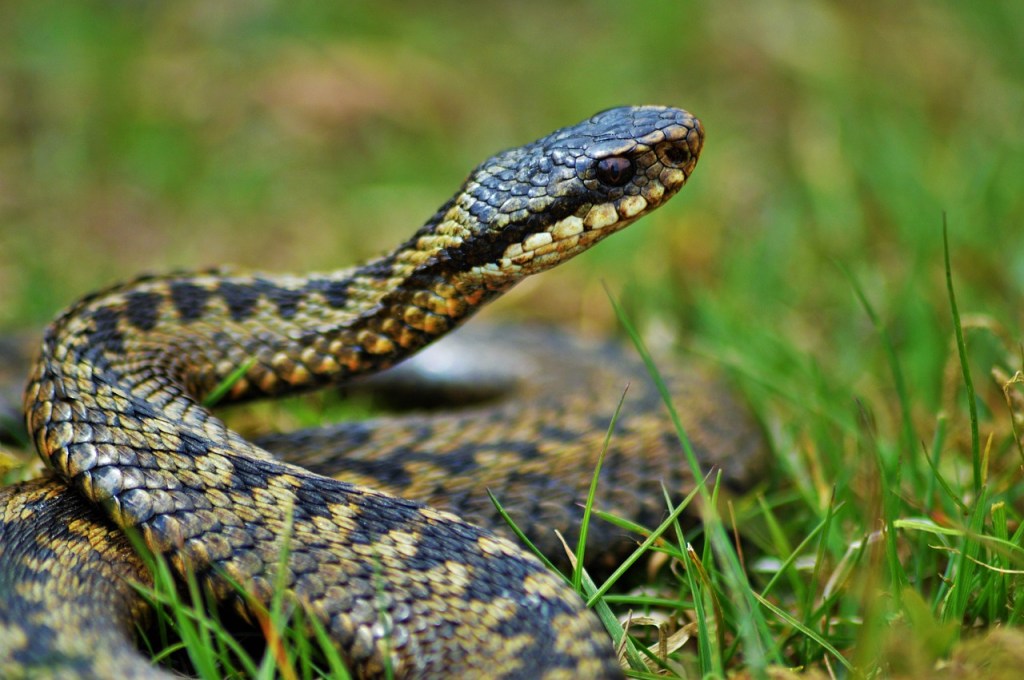
| The Quiet Guardian of Heath and Moor Understanding the European Adder in the UK The European adder holds a unique and often uneasy place in the British imagination. As the UK’s only native venomous snake, it carries a reputation shaped more by fear and folklore than by reality. Yet the adder is a shy, cautious, and ecologically valuable reptile—far more likely to slip away unnoticed than to confront anything larger than its prey. To understand the adder is to replace fear with knowledge. This is not a creature of aggression or menace, but one finely tuned to survival in a cool climate, living quietly in some of Britain’s most fragile and beautiful habitats. |
| A Reptile of Cool Places Unlike snakes in warmer parts of the world, adders are adapted to Britain’s cooler climate. They are most closely associated with heathland, moorland, open woodland, rough grassland, coastal dunes, and sunny south-facing slopes. These habitats provide a mosaic of cover and open ground—essential for basking, hunting, and avoiding predators. Adders rely on sunlight to regulate their body temperature and are often seen basking in spring, coiled quietly in sheltered spots. This need for varied habitat makes adders particularly vulnerable to land-use change. Overgrown sites, excessive disturbance, or loss of open areas can render a landscape unsuitable surprisingly quickly. Shy, Solitary, and Avoidant Despite their fearsome reputation, adders are not aggressive animals. They are naturally secretive and avoid confrontation whenever possible. When disturbed, an adder’s first instinct is to remain still or retreat slowly into cover. Bites to humans are extremely rare and almost always defensive, occurring when a snake is accidentally stepped on or handled. Even then, adders often deliver a “dry bite” with no venom. Adders do not chase, stalk, or attack people. Their survival depends on remaining unnoticed, not on confrontation. Venom: Purpose, Not Weapon The adder’s venom is designed for hunting prey, not for defence against large animals. It allows the snake to subdue small mammals quickly and efficiently, reducing the risk of injury. In the UK, adder bites to humans are seldom life-threatening, especially with modern medical care. Most bites occur on hands or feet and are preventable through awareness and respect, such as wearing boots in suitable habitats and giving snakes space if encountered. Understanding venom as a biological tool rather than a threat helps place the adder in its proper context. Diet and Hunting Style Adders feed mainly on small mammals such as voles and mice, as well as lizards and frogs, and occasionally on birds. They hunt using ambush rather than pursuit, lying in wait near paths or feeding areas used by prey. Once prey is struck, the adder releases it, allowing the venom to take effect before tracking it by scent. This strategy conserves energy and reduces risk, particularly important for a cold-blooded animal living close to its energetic limits. By controlling small mammal populations, adders play a subtle but important role in maintaining ecological balance. Seasonal Life: From Basking to Brumation Adders follow a strong seasonal rhythm. In early spring, they emerge from winter dormancy—often referred to as brumation—and can be seen basking to regain strength. This is the time of year when they are most visible. Mating typically occurs in spring, sometimes accompanied by ritualised combat between males, where they wrestle and entwine without biting. These encounters are displays of strength rather than violence. During summer, adders become more elusive, spending much of their time hunting or sheltering from the heat. In autumn, they feed intensively before returning to hibernation sites, often communal and reused year after year. Birth Rather Than Eggs Unlike many reptiles, adders give birth to live young rather than laying eggs. Females carry developing young through the summer, giving birth to a small number of fully formed juveniles in late summer or early autumn. This reproductive strategy suits the UK climate, where cooler conditions make egg incubation risky. However, it also means females breed less frequently, making populations slow to recover from losses. Young adders are independent from birth but extremely vulnerable, facing high mortality in their first year. Adders and Habitat Fragility One of the greatest challenges facing adders in the UK is habitat fragmentation. Roads, development, intensive farming, and poorly managed green spaces can isolate populations, preventing movement and genetic exchange. Adders depend on connected landscapes—networks of heath, scrub, rough grass, and woodland edge. When these connections are lost, populations can decline quietly and rapidly. Their disappearance often goes unnoticed until it is too late. Adders and Human Spaces Adders rarely enter gardens or built-up areas unless suitable habitat borders them. When they do, it is usually brief and accidental. Most conflicts arise from misunderstanding. Well-meaning attempts to relocate snakes often cause more harm than good, as adders are strongly attached to familiar areas and struggle to survive when moved. The best response to encountering an adder is simple: observe from a distance and allow it to move away on its own. Myth, Fear, and Reality Snakes have long been burdened with symbolism—often negative—and the adder is no exception. Stories of danger, aggression, and malice persist despite overwhelming evidence to the contrary. In reality, the adder is a barometer of environmental health. Its presence indicates intact habitat, prey availability, and low levels of disturbance. Fear has driven persecution in the past, but knowledge offers a far better path forward. Why Adders Matter Adders matter not because they are dramatic or visible, but because they represent balance. They sit quietly within the food web, both predator and prey, shaping ecosystems without drawing attention. They also remind us that not all wildlife conforms to comfort or familiarity. Some species challenge us to respond with understanding rather than instinct. Protecting adders means protecting the landscapes that support countless other plants and animals. Learning to Share the Landscape To walk in adder country is to walk with awareness—not fear. Staying on paths, watching where you step, and allowing wildlife space are simple acts that benefit far more than just snakes. When we learn to share space with creatures that make us pause, we expand our understanding of what coexistence truly means. The adder does not seek dominance. It seeks warmth, cover, and continuity. A Quiet Survivor The European adder has survived for centuries through climate change, land-use shifts, and human pressure. Its continued presence in the UK is not guaranteed—but it is possible. By valuing heathlands, resisting over-management, and replacing fear with respect, we allow this quiet reptile to remain part of Britain’s living heritage. Seen properly, the adder is not a threat—but a reminder that wildness still exists, often in the places we least expect it. |
 Earthly Comforts
Snakes aren’t as scary as most people think. And as you wrote, most bites are defensive. We learn from a young age to make noise and tread heavily to alert rattlesnakes to move when we’re hiking on nature trails.
I got a bite from Younger’s Corn Snake once. That snake is around 23 years old now. I didn’t know a pet corn snake could live so long. They really are amazing creatures.
LikeLiked by 1 person
Hey Grandma, yes they are. Mind you being bitten by a corn is better than being bitten by a rattler l should imagine.
LikeLiked by 1 person