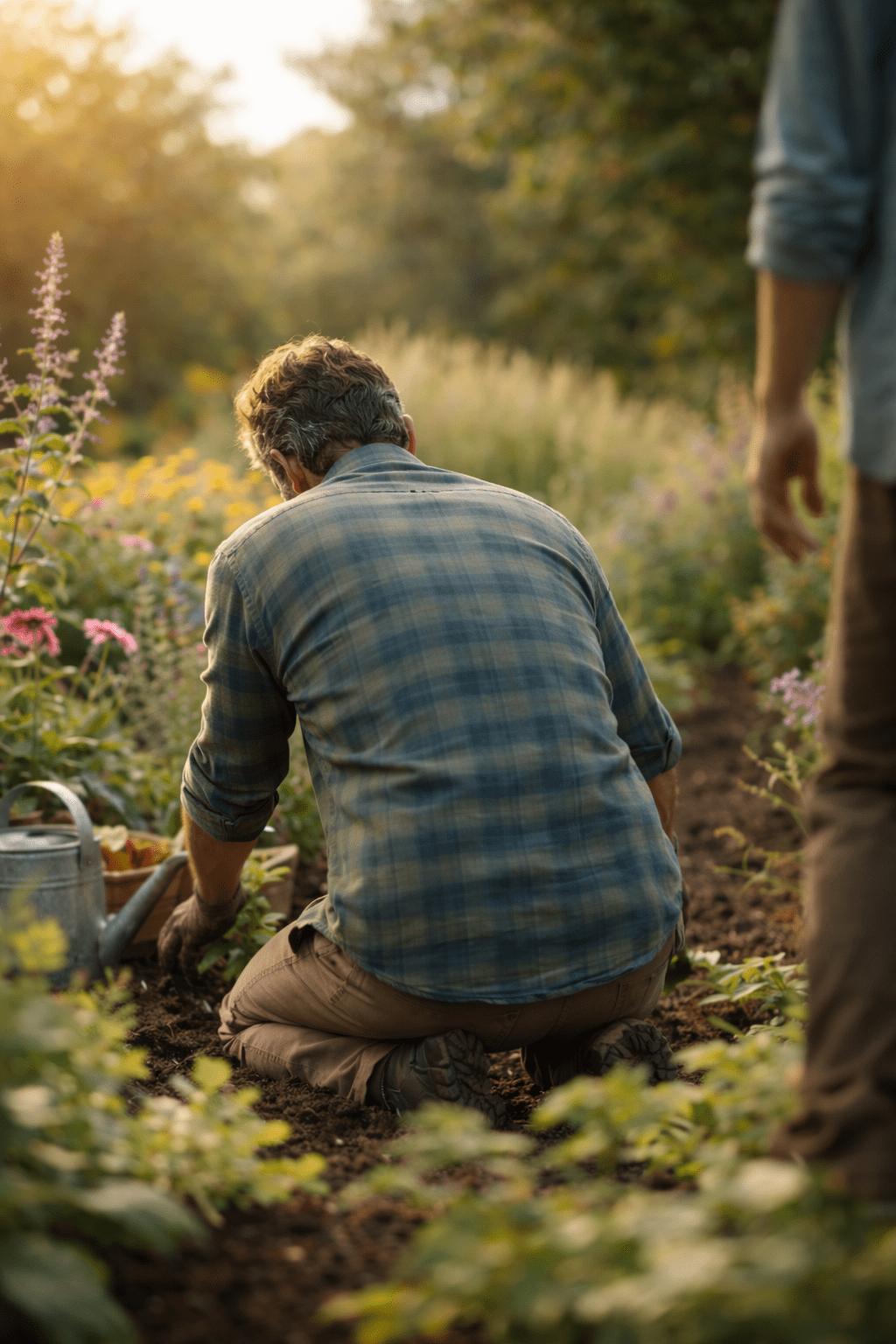
| There is a particular kind of calm that arrives when working in a garden. It is not passive or sleepy. It is alert, grounded, and deeply present. Hands are busy, the body is moving, and yet the mind feels unusually clear. Thoughts flow, observations sharpen, and time behaves differently. For many gardeners, this state feels natural and restorative. For others, it can be so absorbing that interruptions arrive like a shock. This experience is often described as hyperfocus, and while the word can sound clinical, the reality is far more human. Hyperfocus is not about zoning out. It is about zoning in. In a garden, attention narrows in a way that feels safe and purposeful. The senses are engaged in predictable, meaningful ways. Soil texture, plant structure, seasonal rhythm, and physical effort combine into a quiet loop of cause and effect. Nothing demands interpretation. Nothing interrupts with urgency. The environment does not ask questions. This is why gardening creates such a powerful thinking space. The body is occupied just enough to keep restless energy at bay, while the mind is free to reflect without pressure. Problems untangle themselves. Ideas surface without being forced. Observation becomes effortless. Many people find they do their clearest thinking with their hands in the soil, not at a desk. For individuals who are neurodivergent, particularly those with autistic traits or an Asperger’s profile, this effect can be even stronger. Autistic attention often works like a spotlight rather than a wide beam. When that spotlight is allowed to rest on something structured, sensory, and meaningful, it becomes intensely bright. Everything else fades into the background. This is not a flaw. It is a mode of attention that evolved for deep engagement with systems rather than constant social monitoring. In the right environment, it becomes a strength. Gardens are ideal environments for this kind of focus. They are rich in pattern but low in ambiguity. Plants respond honestly. Weather follows rules. Growth is observable. There is no need to decode tone, intent, or subtext. The nervous system can stand down from social vigilance and settle into a state of regulation. When this happens, awareness of people often drops away completely. Not out of rudeness or avoidance, but because attention has been allocated elsewhere. This is why a sudden voice can feel startling. The brain is not scanning for social input. It is immersed in the task. An unexpected interruption arrives without warning, triggering a brief physical response before the mind has time to reorient. Interestingly, this same person may not startle at loud noises in other settings, such as films or busy environments. That is because context matters. When watching a film, the brain is primed for sudden sounds, voices, and movement. Attention is externally guided and socially framed. The nervous system expects interruption. In a garden, the opposite is true. The environment is steady. Sounds are continuous and non-threatening. Change happens slowly. A human voice cuts across that expectation sharply, not because it is frightening, but because it is unexpected. This difference reveals something important. The startle response here is not anxiety-based. It is not hypervigilance. It is the natural result of deep focus combined with a safe environment. In fact, the ability to become this absorbed suggests a well-regulated nervous system. People who remain constantly alert to social input often struggle to enter this state at all. For those with autistic traits, hyperfocus is sometimes framed as a problem to be managed. In reality, it only becomes problematic when it causes distress, exhaustion, or inflexibility. When it occurs in a supportive context and leads to calm, clarity, and satisfaction, it is better understood as a form of alignment. Gardening aligns with how many brains prefer to work. It is physical without being chaotic. Repetitive without being dull. Structured without being rigid. It allows attention to settle into something real. This may also explain why reflective thinking comes so easily outdoors. When social processing quietens, cognitive space opens. Thoughts are no longer interrupted by internal monitoring or external demand. Reflection becomes gentle rather than forced. The mind is free to wander, but within safe boundaries. For gardeners who experience this state regularly, it can feel like switching the world to airplane mode. The noise drops away. The signal improves. When someone breaks that bubble unexpectedly, the contrast is sharp. There is nothing guilty, fragile, or wrong about this. It is simply the nervous system doing what it does best when conditions are right. Understanding this can be deeply reassuring. It reframes the experience not as being “too sensitive” or “away with the fairies,” but as being deeply present in a non-human rhythm. In a world that constantly pulls attention toward screens, alerts, and social performance, the ability to disappear into meaningful work is increasingly rare. Gardens still allow it. For those who work in them, this state is not just pleasant; it is essential. It is protective. It regulates stress, supports mental clarity, and reconnects attention with something slower and more honest than modern life usually permits. If a jump happens now and then when someone speaks, that is simply the sound of focus breaking. It is the body turning back toward people after being fully engaged elsewhere. No apology required. |
When Gardening Switches the World Off
 Earthly Comforts