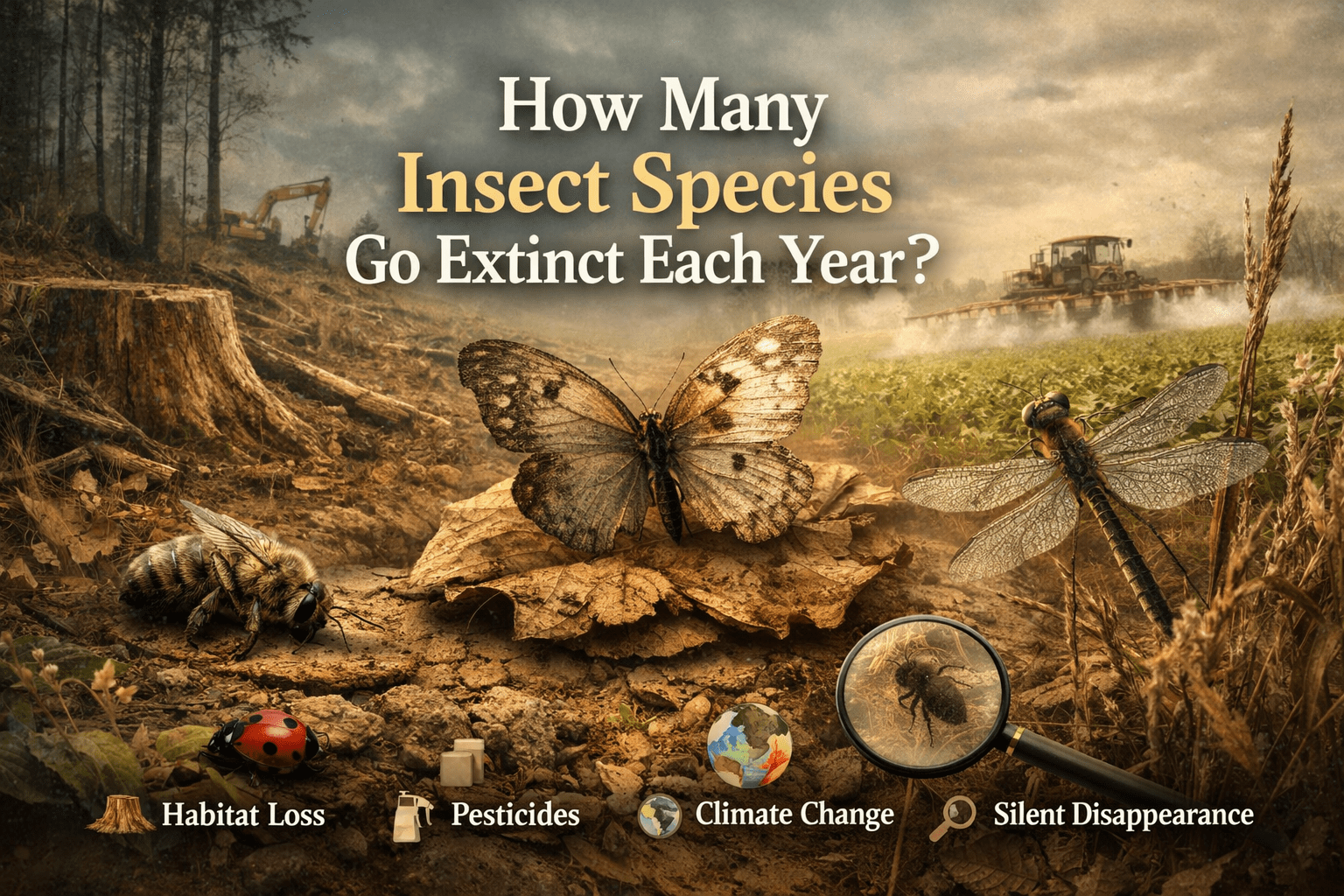
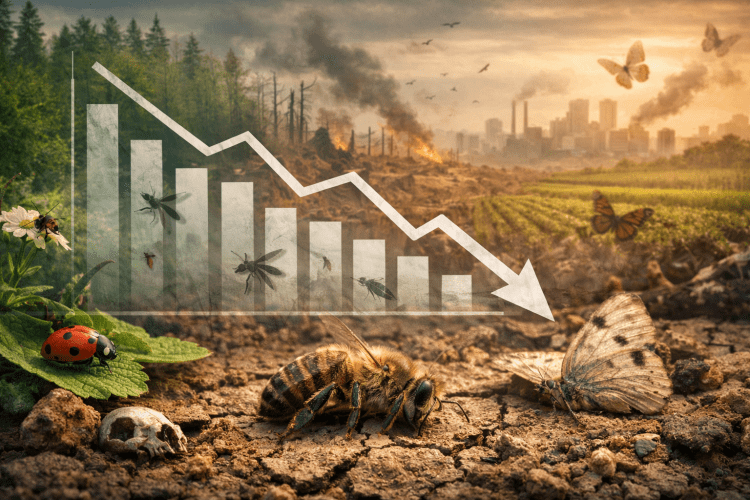
| Insects are everywhere and nowhere at the same time. They pollinate our food, recycle nutrients, build soil, control pests, and quietly hold ecosystems together. Yet most of us rarely notice them unless they sting, bite, or inconvenience us. This invisibility is part of the problem, because while attention is elsewhere, insect species are disappearing — and recent environmental news cycles have begun to reflect that growing concern. So how many insect species go extinct each year? The honest answer remains: we cannot give a precise number. What we can do, however, is understand the scale of the loss, why it is so hard to measure, and why a string of recent reports and scientific discussions has put insect decline into the broader conversation about environmental change. To begin with, insects make up the vast majority of animal life on Earth. Scientists estimate there may be millions of species globally, yet only a fraction have been formally described. This means that extinction often happens silently; species vanish before they are ever named or studied. Recent headlines about species disappearing from protected reserves or the collapse of specific insect populations in well-studied regions reflect this hidden loss becoming harder to ignore. Based on current understanding, many researchers believe that thousands of insect species are likely being lost each year. Some estimates point to figures in the low thousands, while others suggest much higher numbers in regions facing rapid habitat destruction. These figures have been echoed in environmental reporting that highlights sharp declines in insect biomass and diversity over time — data that, for many readers, turned abstract concepts into alarm signals. One reason insect extinctions are so difficult to track is that insects are incredibly specialised. Many depend on a single plant species, a specific soil type, or a narrow climate range. When that habitat is altered or destroyed, the insect often disappears with it. This dynamic has been seen in recent stories about the loss of native plant communities and the cascade effect on the animals that depend on them, especially in landscapes transformed by agriculture or urban development. Another complication is that extinction does not always happen all at once. Populations decline over years or decades, becoming fragmented and isolated. Eventually, reproduction fails, genetic diversity collapses, and the species quietly fades out. By the time anyone notices, it is often already gone — a pattern reflected in conservation updates about insects once common in particular regions but no longer observed there. What we do know with confidence is that insect populations are declining rapidly across much of the world. Monitoring programs and long-term data, amplified by recent coverage in science and environmental sections, show steep declines in both insect numbers and species diversity. This does not mean every insect is disappearing, but it does mean ecosystems are becoming simpler, less resilient, and more fragile. The main drivers of this decline are not mysterious. Habitat loss is the single biggest factor. Natural landscapes are being converted into intensive farmland, roads, housing, and industrial areas. Even where green space remains, it is often heavily managed, stripped of diversity, and hostile to insect life. Many recent environmental stories have highlighted the declining quality of natural habitats and the pressures on wildlife, including insects. Pesticides and herbicides also play a major role. These chemicals do not just target “pests”; they affect entire food webs. Insects that survive exposure may suffer impaired reproduction or weakened immune responses, making populations unstable even when individuals appear present. Public discussions about agricultural practices and chemical use have increasingly referenced these ripple effects. Climate change adds another layer of pressure. Insects are highly sensitive to temperature and seasonal timing. Warmer winters, hotter summers, and unpredictable weather disrupt life cycles that have evolved over thousands of years. Recent climate reports have highlighted temperature shifts and extreme weather events that coincide with changes in species distributions and life cycles — including those of insects. Light pollution, soil degradation, invasive species, and water contamination further compound the problem. None of these pressures acts alone. In most cases, insects are being squeezed from multiple directions at once — a fact underscored in comprehensive environmental reporting that connects multiple strands of ecosystem stress. The ecological consequences of insect extinctions are profound. Insects form the base of many food chains. Birds, bats, amphibians, reptiles, and small mammals all depend on them. When insect numbers decline, these animals struggle, even if suitable habitat remains. Stories about declines in bird populations or changes in seasonal migrations often trace back to shifts in insect availability. Pollination is another critical issue. A large proportion of flowering plants, including many food crops, rely on insects to reproduce. Fewer pollinators mean reduced yields, poorer seed production, and weaker plant populations. Public discussion about food security and agricultural sustainability increasingly connects these dots. Soil health is also deeply connected to insects. Beetles, ants, springtails, and countless other species break down organic matter, aerate soil, and support microbial life. Without them, soils become compacted, lifeless, and less able to store carbon or water — themes that have appeared in broader conversations about regenerative farming and climate mitigation. It is important to understand that insect extinction is not just a conservation issue. It is a systems issue. Insects are not optional extras in nature; they are infrastructure. When they falter, the systems we depend on become unstable. Many commentators have begun to frame environmental issues holistically, showing how insect decline fits into the larger picture of planetary health. Despite the scale of the problem, there is room for cautious hope. Insects respond quickly to positive change. When habitats are restored, chemical levels are reduced and diversity is encouraged, many species rebound faster than larger animals ever could. Recent case studies of recovery in restored landscapes have offered concrete examples of how change is possible. Gardens, parks, verges, and small green spaces collectively make up vast areas of potential habitat. Leaving patches of long grass, planting a variety of native and flowering plants, allowing fallen leaves to remain, and reducing chemical use can all make a meaningful difference. These actions may seem small, but multiplied across communities, they become powerful — and several news features have celebrated grassroots efforts that make real differences for local biodiversity. Understanding how many insect species go extinct each year is not about fixating on a number. It is about recognising that loss is happening largely out of sight, driven by human choices, and deeply connected to our own future. The quieter the disappearance, the more urgent the need to pay attention. Insects do not ask for much. Space, diversity, clean soil, and a little tolerance for messiness go a long way. The question is not whether insects can survive. It is whether we are willing to make room for them to do so. |
| About our writing & imagery Many of our articles are written by us, drawing on real experience, reflection, and practical work in gardens and places we know. Some pieces are developed with the assistance of AI as a drafting and research tool. Featured images may include our own photography, original AI-generated imagery, or—where noted—images kindly shared by other creators and credited accordingly (for example, via Pixabay). All content is shaped, edited, and published by Earthly Comforts, and the views expressed are our own. |
 Earthly Comforts
Very interesting post and one I can relate to. Unfortunately in my country we have already lost visible species such as certain species of butterflies, not to mention the overall decline in numbers.
LikeLike
An excellent post bringing awareness to the importance of insects. They provide invaluable ecosystem services, and make our planet livable.
LikeLike