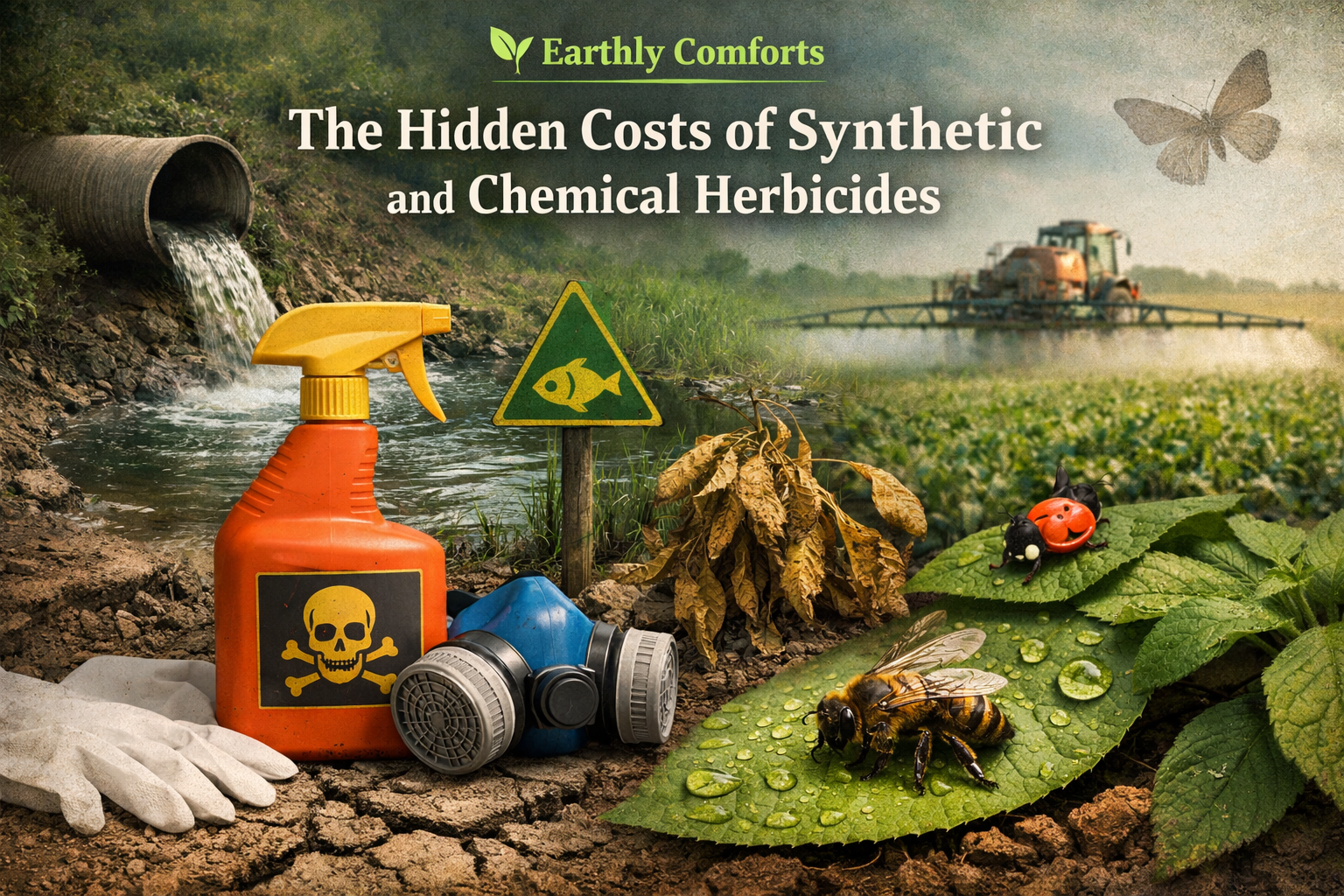
| The Hidden Costs of Synthetic and Chemical Herbicides Synthetic and chemical herbicides have become a common feature of modern land and garden management. Designed for speed and convenience, they promise clean paths, weed-free lawns, and instant visual results. However, beneath their efficiency lies a range of environmental, ecological, and long-term practical consequences that are often overlooked. At Earthly Comforts, our decision to avoid synthetic herbicides is rooted in understanding these wider impacts rather than focusing solely on short-term appearance. One of the most significant negatives of chemical herbicides is their lack of true selectivity. While marketed as targeting specific weeds, many products affect a broad range of plant life either directly or indirectly. Drift, runoff, and soil residues can damage nearby plants, weaken hedges, and reduce overall plant diversity. This loss of diversity matters because gardens rely on varied plant life to remain resilient, self-regulating, and healthy. Chemical herbicides also disrupt soil health. Healthy soil is a living system composed of fungi, bacteria, worms, insects, and other microorganisms that work together to support plant growth. Synthetic herbicides can disrupt this balance by reducing microbial activity and harming beneficial soil organisms. Over time, this leads to compacted, lifeless soil that holds less water, drains poorly, and requires increasing intervention to remain productive. Insects are particularly vulnerable to chemical herbicide use. Even when insects are not killed outright, exposure to residues can impair feeding, reproduction, and navigation. Pollinators may struggle to locate food, while ground-dwelling insects are exposed to treated soil and plant material. These effects accumulate gradually, leading to population decline rather than immediate, visible damage, making the problem easy to underestimate. Another major issue is the loss of so-called “weeds” that actually serve vital ecological roles. Many plants targeted by herbicides provide early- or late-season nectar, insect shelter, and food for wildlife. When these plants are removed systematically, gardens lose an important layer of ecological function. What remains may look neat, but it is often biologically poor and increasingly dependent on artificial inputs. Chemical herbicides can also contribute to resistance. Repeated use encourages certain weeds to adapt and survive treatments, resulting in tougher, more aggressive growth over time. This leads to a cycle where stronger chemicals or more frequent applications are required, increasing costs and environmental harm while delivering diminishing results. Water contamination is another concern. Herbicide residues can be washed into drains, waterways, and groundwater through rainfall and irrigation. Once there, they may affect aquatic insects, amphibians, and plant life well beyond the original treatment area. This movement is largely invisible, meaning damage often occurs far from the garden where the product was applied. From a practical standpoint, reliance on chemical herbicides often masks underlying problems rather than solving them. Poor soil structure, compaction, nutrient imbalance, and lack of ground cover all encourage weed growth. Spraying temporarily removes visible symptoms but leaves the root causes untouched. As a result, weeds return quickly, reinforcing dependency on chemical solutions. There are also human and animal considerations. Many chemical herbicides require strict handling, protective equipment, and exclusion periods to reduce exposure risks. Pets, children, and wildlife can come into contact with treated surfaces long after application, particularly in domestic gardens where paths, lawns, and borders are shared spaces. Over time, gardens managed with frequent chemical herbicide use tend to become less resilient. With reduced soil life, fewer insects, and limited plant diversity, they are more vulnerable to drought, disease, pests, and extreme weather. Maintenance becomes harder rather than easier, contradicting the promise of convenience that chemical products initially offer. At Earthly Comforts, our chemical-free, organic weed-control policy is based on long-term thinking. We choose methods that manage weeds while preserving soil health, insect life, and ecological balance. Organic treatments, manual control, mulching, and preventive care work with natural systems rather than overriding them. While these methods may take more patience, they create gardens that are healthier, more stable, and easier to maintain over time. Avoiding synthetic herbicides is not about neglect or allowing gardens to become untidy. It is about recognising that every garden is part of a wider living network. Choices made at ground level affect soil, insects, wildlife, and water far beyond the garden gate. By rejecting chemical herbicides, we aim to reduce harm, restore balance, and support gardens that thrive naturally rather than depend on ongoing chemical correction. |
| About our writing & imagery Many of our articles are written by us, drawing on real experience, reflection, and practical work in gardens and places we know. Some pieces are developed with the assistance of AI as a drafting and research tool. Featured images may include our own photography, original AI-generated imagery, or—where noted—images kindly shared by other creators and credited accordingly (for example, via Pixabay). All content is shaped, edited, and published by Earthly Comforts, and the views expressed are our own. |
 The Gardener's Curious Journal
An excellent post, Rory. I agree and feel, in the long term, the effects will be even more concerning in humans, and animals.
LikeLiked by 1 person
Indeed.
LikeLiked by 1 person