| A 5-Part Series |
| A curated exploration of Australia’s most iconic, curious, and ecologically important insects |
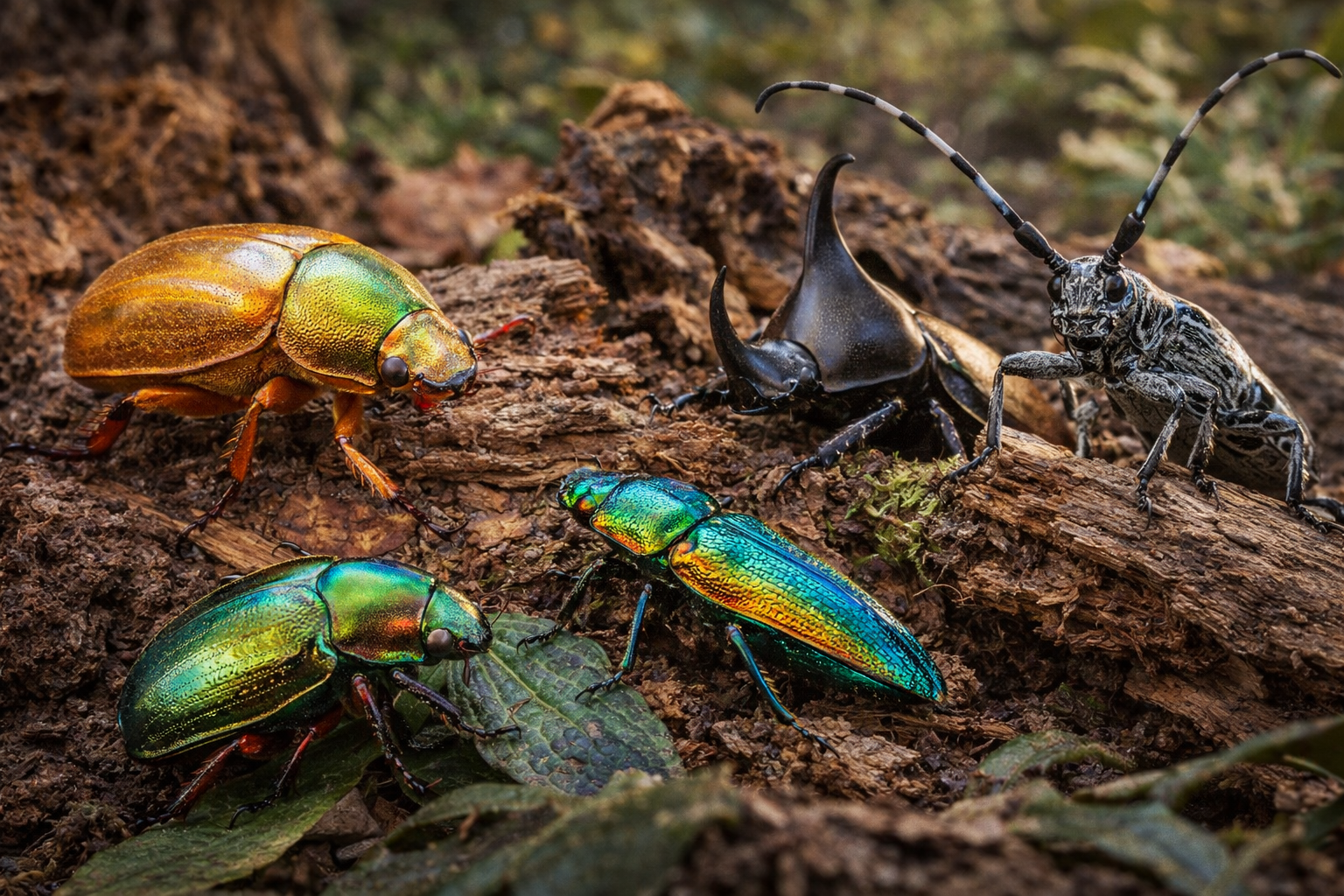
| Part 3 Beetles: Armour, Colour & Power Beetles are the heavy machinery of Australia’s insect world. Armoured, adaptable, and astonishingly diverse, they occupy almost every ecological niche imaginable — from forest canopies and grasslands to deserts, rivers, and decaying wood. In terms of sheer numbers and variety, beetles dominate Australian insect life. What defines beetles is resilience. Their hardened forewings form protective casings that shield delicate flight wings beneath, allowing them to survive abrasion, heat, predation, and drought. Over millions of years, this basic design has been endlessly refined into forms of strength, brilliance, and specialisation. This part of the series explores five beetles that exemplify power, colour, endurance, and ecological importance. |
| Christmas Beetle The Christmas beetle is one of Australia’s most familiar seasonal insects. Emerging in large numbers during early summer, it has become closely associated with warm evenings, cicada calls, and the glow of outdoor lights. Typically rounded and glossy, Christmas beetles vary widely in colour — from earthy browns to shimmering golds and greens. Their sudden abundance results from long larval stages spent underground feeding on plant roots, followed by a brief adult life focused on feeding and reproduction. Though often noticed as a nuisance when they gather around lights, Christmas beetles play an important role in nutrient cycling. Their life cycle links soil health, vegetation, and seasonal rhythms, making them a living marker of the Australian summer. |
| Scarab Beetle Scarab beetles are among Australia’s most powerful insect diggers. Equipped with robust bodies and strong forelegs, they are built for life close to the ground, where they break down organic material and return nutrients to the soil. Many species display remarkable iridescence — shells that shimmer with greens, blues, and bronzes despite living largely unseen beneath leaf litter or dung. This contrast between hidden labour and striking beauty is characteristic of scarabs. Ecologically, scarab beetles are indispensable recyclers. By consuming decaying matter, they reduce waste accumulation, improve soil structure, and support plant growth. Their influence is quiet but foundational, sustaining ecosystems from the ground up. |
| Jewel Beetle Jewel beetles are among the most visually arresting insects in Australia. Their metallic colours appear almost unreal — emerald greens, copper reds, and electric blues that gleam in direct sunlight. These colours are not pigments but structural effects caused by microscopic layers within the beetle’s shell that reflect and refract light. Many species are heat-loving, becoming most active after bushfires or during intense summer heat, when their larvae develop in stressed or dying trees. Jewel beetles are both survivors and indicators. Their presence can signal environmental change, fire recovery, or shifting forest health. They embody the paradox of beauty thriving in harsh conditions. |
| Rhinoceros Beetle The rhinoceros beetle represents brute strength in insect form. Large, thick-bodied, and equipped with prominent horn-like structures, these beetles are built for physical confrontation. The horns are not used for defence against predators, but for competition between males. During mating season, rivals grapple and lever one another in contests of strength, attempting to dislodge opponents from feeding or breeding sites. Despite their intimidating appearance, rhinoceros beetles are slow-moving and largely peaceful. Their larvae play a vital role in breaking down rotting wood, contributing to forest regeneration. They are reminders that power in nature is often purposeful rather than aggressive. |
| Longhorn Beetle Longhorn beetles are instantly recognisable by their extraordinarily long antennae, which can exceed the length of their bodies. These sensitive appendages allow them to detect mates, host plants, and suitable breeding sites over considerable distances. Their larvae develop within dead or dying wood, tunnelling through timber and accelerating decomposition. In doing so, longhorn beetles help recycle nutrients locked within fallen trees, making space for new growth. Though often overlooked, they are essential forest custodians. Their presence indicates natural cycles of decay and renewal — processes without which healthy ecosystems cannot exist. |
| Closing Reflection Beetles are Australia’s survivors. Armoured against adversity and endlessly adaptable, they endure heat, fire, drought, and time itself. Whether glittering in sunlight or hidden beneath soil and bark, their work sustains life at every level. In the next part of this series, we turn to insects of speed and precision — predators and aerial hunters whose lives unfold in flashes of motion and sudden stillness. |
| Beetles: Armour, Colour & Power Beetles dominate Australian insect diversity in both number and form. Christmas beetle A summer icon, often appearing in large numbers around lights. Scarab beetle Strong diggers and recyclers of organic matter, many with iridescent shells. Jewel beetle Metallic, heat-loving beetles with extraordinary colouration. Rhinoceros beetle Powerful beetles with horn-like structures are used in mating battles. Longhorn beetle (added to complete coverage) Recognised by extremely long antennae and are important decomposers in forests. |
Unless stated, featured images are my own work, created independently or with the assistance of AI.

