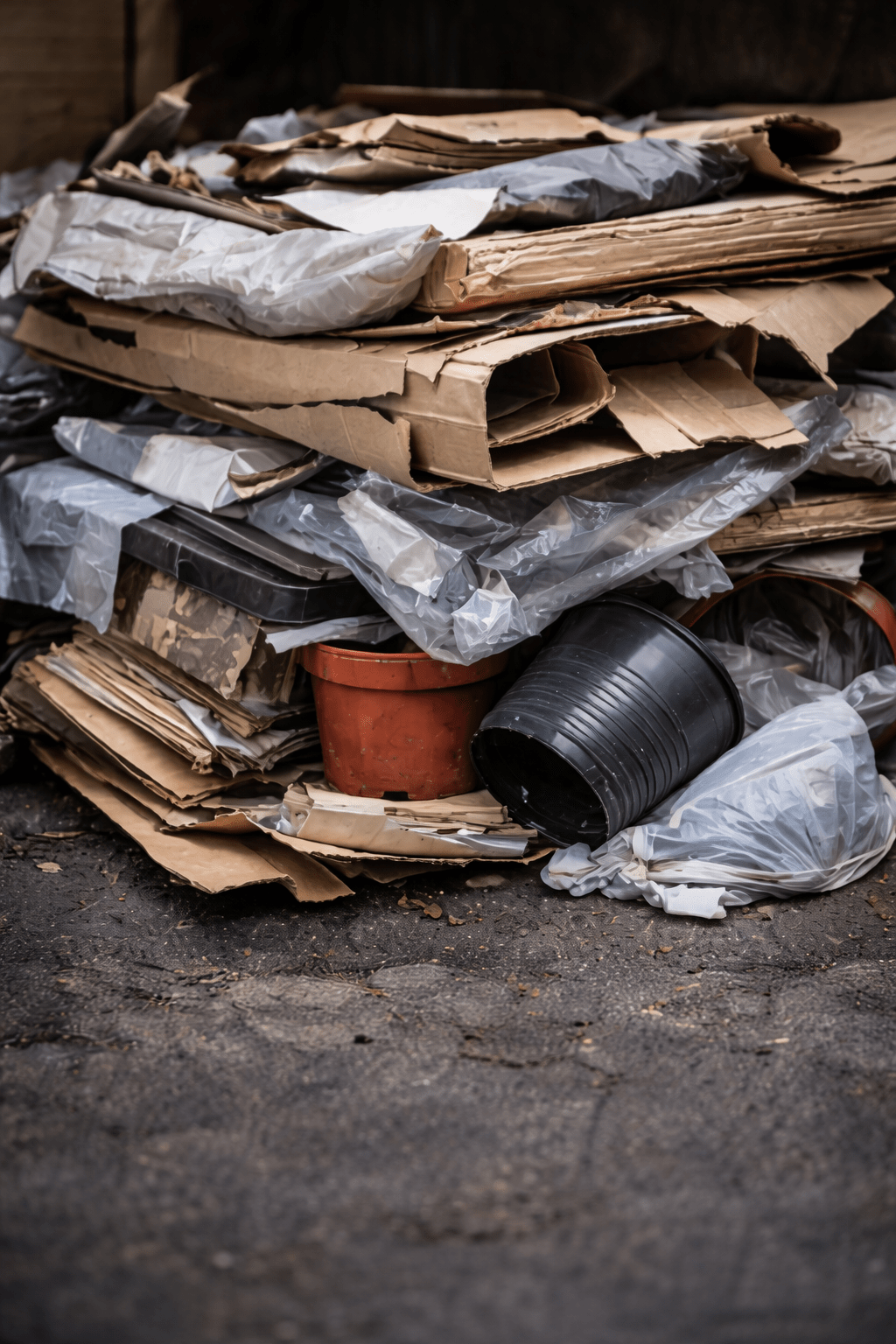
| Packaging is one of those things you only really notice when it starts to pile up. Cardboard stacked by a gate after a delivery day. Plastic film that refuses to tear cleanly. Pots, trays, sleeves, and bags that arrive pristine and leave awkwardly, suddenly your problem. For years, packaging lived in the realm of principle. Reduce, reuse, recycle — a neat hierarchy that sounded decisive but rarely met the texture of real work. In practice, packaging was something you dealt with at the edges of a job. You broke it down, you found a bin, you hoped the system would take it from there. What’s changed is that packaging has moved out of the moral conversation and into the economic one. Responsibility now has invoices attached. Time attached. Admin attached. And that shift has revealed something important: good intentions are not the same thing as good systems. From a working gardener’s point of view, packaging is rarely chosen. It arrives upstream, already decided. Plants come in pots because that’s how they survive transport. Materials arrive wrapped because they need to. The person unwrapping is almost never the person who specified the wrap. Responsibility, until recently, dissolved somewhere in that gap. The internet myth here is that waste is primarily a behaviour problem. That if people cared more, sorted better, and tried harder, the issue would resolve itself. But spend enough time handling waste and a different truth emerges: waste is designed. You can’t recycle your way out of decisions that were locked in before you ever opened the box. This is where policy begins to matter — not as aspiration, but as friction. When the cost of packaging is felt closer to its point of origin, design starts to change. Not perfectly, and not without complaint, but measurably. Lighter materials. Fewer mixed components. Less decorative redundancy. None of it is glamorous. All of it consequential. There are trade-offs here that don’t get enough airtime. Better packaging design can mean higher unit costs. It can shift the burden onto small producers who don’t have the leverage to renegotiate supply chains. It can introduce complexity where there was once simplicity. The idea that reform is painless is comforting, but false. What I’ve noticed on the ground is a growing awareness that “recyclable” is not a synonym for “recycled”. Labels promise possibility, not outcome. A tray that can be recycled is still waste if the local system won’t accept it, or if it’s contaminated, or if it’s combined with just enough of another material to derail the process entirely. There’s also a quiet recalibration happening around responsibility itself. Not blame, exactly — but proximity. Who is closest to the decision that created this object? Who benefits from its existence? Who bears the cost of its disappearance? These questions are less moral than practical, and that’s their strength. Packaging reform, at its best, doesn’t ask people to be better versions of themselves. It asks systems to be more honest. To account for what they create all the way through their life, including the awkward end. In the garden, you learn that waste doesn’t vanish when you turn your back. It waits. It accumulates. It demands a response eventually. Packaging policy is society catching up with that basic lesson — that materials remember the choices made about them. |
| Companion Fact Box — Packaging Responsibility (Neutral Reference) What “Extended Producer Responsibility” means Extended Producer Responsibility (EPR) is a policy approach that holds producers financially responsible for the full lifecycle of packaging, including its disposal. The aim is to shift costs from local authorities and taxpayers to those placing packaging on the market. What counts as packaging Primary packaging (around the product) Secondary packaging (grouping or display) Tertiary packaging (transport and protection) Why design matters Packaging made from multiple materials is harder to recycle. Lightweighting and material reduction can lower environmental impact but may affect durability. Labelling indicates recyclability, not collection certainty. Who is affected Manufacturers and importers Retailers Small businesses that place packaged goods on the market Waste collection and recycling operators System limitations Recycling capability varies by region. Contamination reduces recycling rates. Some materials are technically recyclable but not economically viable to process. Further information (UK) Department for Environment, Food & Rural Affairs — packaging policy and waste reform Environment Agency — compliance and reporting WRAP — packaging design and recycling guidance Local Government Association — impacts on councils and waste services. |
| About our writing & imagery Many of our articles are written by us, drawing on real experience, reflection, and practical work in gardens and places we know. Some pieces are developed with the assistance of AI, used as drafting and research tools rather than as a voice or authority. Featured images may include our own photography, original AI-generated imagery, or—where noted—images kindly shared by other creators and credited accordingly (for example, via Pixabay). All content is shaped, edited, and published by Earthly Comforts, and the views expressed are our own. |


Here in Pakistan, we rarely see the recycling happening properly. People would open up the trash bags and take out glass, cardboard and paper- things that can be recycled and that also can be sold. Our government has no policy for recycling or has not provided any recycling facilities.
LikeLiked by 1 person
Oh wow. I know back in Australia when l was there in the 70’s, my father and l used to collect up cans and bottles and trade those in under a scheme, it worked , back then we were getting 5 cents an items and the rubbish literering stopped as a problem.
LikeLiked by 1 person
That’s a good way to encourage recycling. Here government isn’t bothered. We do sell old newspapers for nominal rates and that paper is recycled.
LikeLiked by 1 person