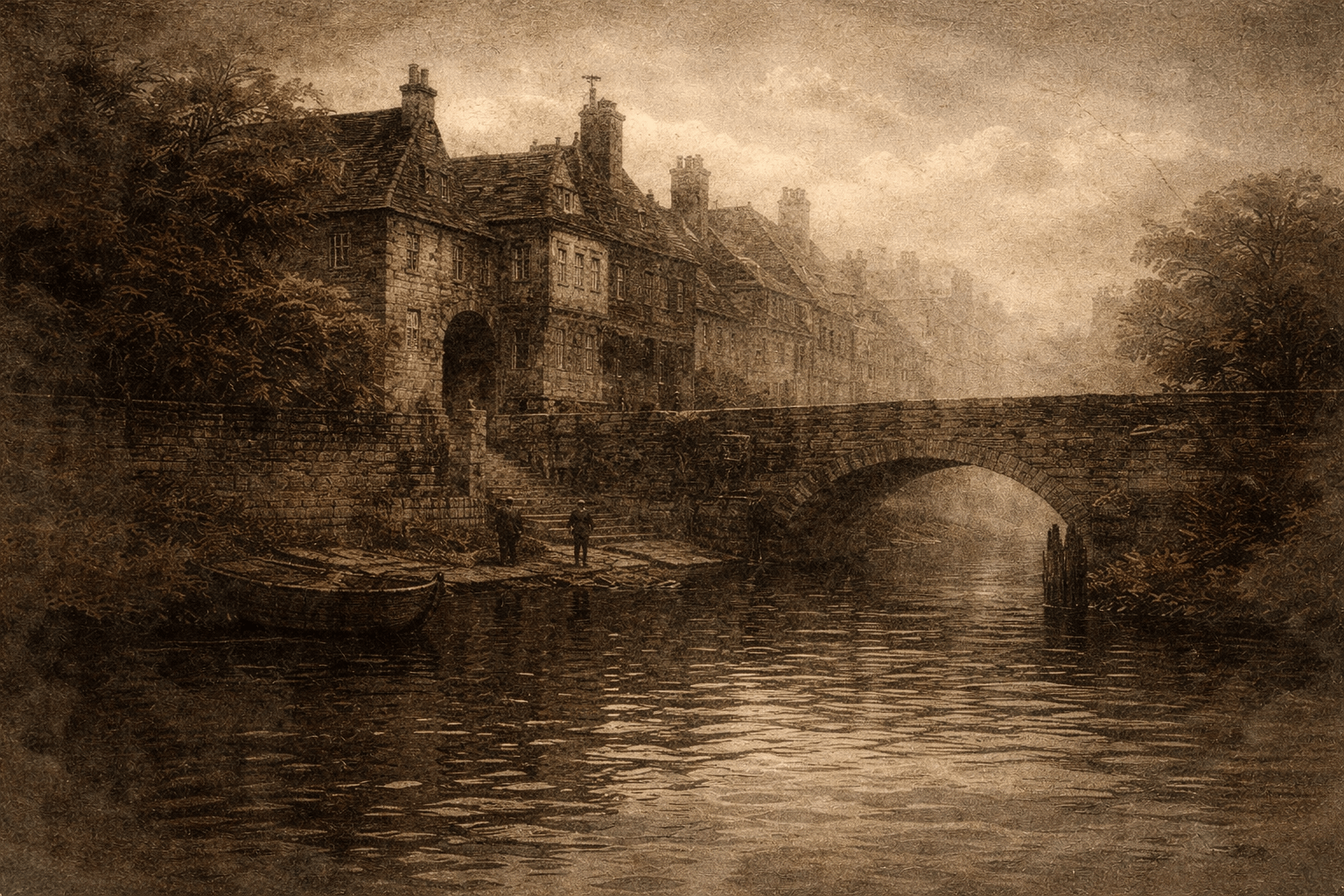
| Part Eleven By the time survival had become ordinary, Sandwich no longer explained itself. It did not argue for relevance or justify its scale. It existed, and that existence had weight because it was continuous. What remained was not the residue of decline, but the outcome of long accommodation. This phase is often mistaken for quietness, but it was more accurately a thinning of noise. Demands lessened. Expectations narrowed. The town’s relationship with the wider world became selective rather than dependent. Connection was maintained, but not chased. Presence replaced assertion. What endured did so because it fit. Streets are aligned with use rather than traffic. Buildings stayed because they continued to serve, even if differently than before. Boundaries remained legible. Nothing here needed to be oversized to prove importance. The town’s coherence came from proportion. The legacy of earlier centuries was still visible, but it no longer dominated decision-making. The Barbican stood not as a statement of defence or authority, but as a reminder of layers passed through rather than returned to. Its presence marked continuity without demanding restoration of purpose. Memory in this phase was settled. It no longer needed to be curated or resisted. The past existed alongside the present without friction. This allowed the town to avoid both erasure and fixation. History became texture rather than script. The environment continued its steady influence. The river remained contained, but not conquered. The land held its limits. These conditions quietly shaped choices, filtering ambition through practicality. The town did not push against them. It worked within them, as it had learned to do over generations. What emerges here is not a story of retreat, but of alignment. Sandwich came to match its scale to its conditions. That alignment reduced strain. Life continued without constant recalculation. Survival stopped being a strategy and became a state. In this way, the town reached a form of equilibrium. Not static, not preserved, but balanced. Change still occurred, but it arrived without urgency. Adaptation no longer requires reinvention. It required attention. A town, by circumstance, does not end its story with prominence. It ends with coherence. Sandwich did not hold onto everything it had been, but it held onto enough to remain itself. That, in the long view, is not a lesser outcome. |
Sandwich: A Town Allowed