| Notes from the garden on food, resilience, and the years ahead |
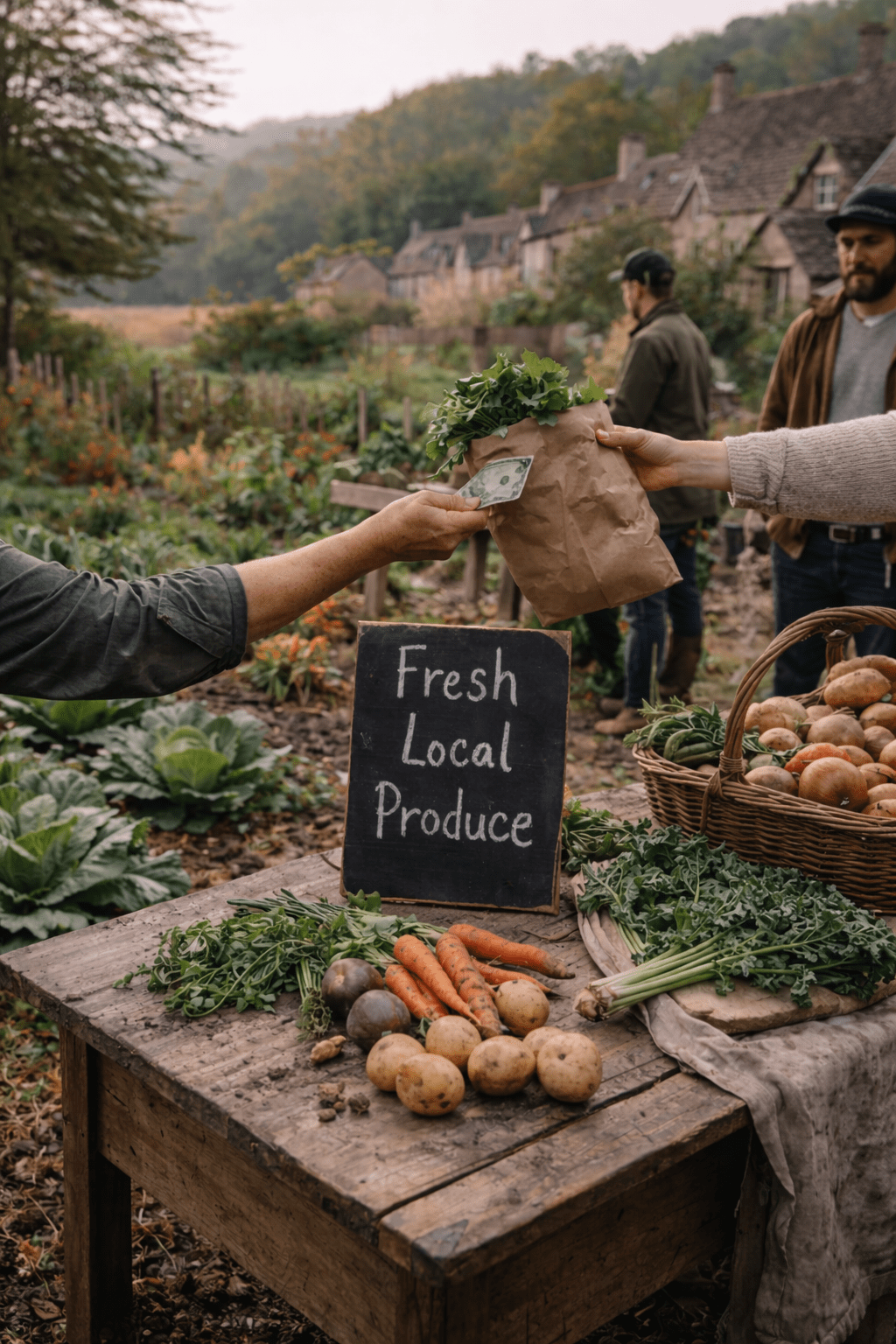
| Local Is Not a Trend, It’s a Shock Absorber For a long time, “local” was treated as a preference. Something you chose because it felt ethical, neighbourly, or vaguely virtuous. A nice-to-have rather than a necessity. If it costs more or requires more effort, you could opt out without consequence. Global systems would pick up the slack. What’s becoming clearer now is that local isn’t a lifestyle choice at all. It’s a structural feature. And when wider systems wobble, it behaves less like a trend and more like a shock absorber. Gardens understand this instinctively. Locality spreads risk rather than eliminating it. One of the misunderstandings around local food is the belief that it’s safer because it’s smaller. That it somehow escapes the pressures affecting larger systems. It doesn’t. Local systems experience weather, labour shortages, rising costs, and unpredictability just as global ones do. The difference is how those pressures are distributed. When something goes wrong locally, the impact is contained. A grower has a bad year. A crop underperforms. Supply tightens briefly. The system bends, but it doesn’t transmit shock outward at scale. Global systems, by contrast, are efficient but brittle. When they’re stressed, the effects travel fast and far. A disruption thousands of miles away can suddenly matter in your kitchen. Gardens operate locally by necessity. They don’t avoid risk; they compartmentalise it. Distance hides effort — proximity reveals it. One reason global food systems feel more reliable is that they obscure the effort required. You don’t see the labour, the timing, the fragility. Food appears as a finished object, detached from place. Local food makes an effort visible again. You notice seasonality. You notice gaps. You notice variability between weeks, even between days. That visibility can feel unsettling if you’re used to consistency. But it’s also what makes local systems resilient. When effort is visible, expectations adjust. People adapt earlier. Disruption is anticipated rather than discovered at the last minute. Gardens are a constant reminder of this. You see what’s coming because you’re close to it. The system talks back. Local doesn’t mean small — it means knowable. Another internet myth worth challenging is the idea that “local” automatically means small-scale, inefficient, or quaint. Local systems can be substantial. What defines them isn’t size, but legibility. You can understand how they work. You can see where stress accumulates. You can identify points of failure before they become critical. In a garden, you know which bed struggles in drought and which holds moisture. You know which crops are reliable and which are temperamental. That knowledge doesn’t prevent problems, but it shortens response time. Local food systems operate the same way. Knowledge travels faster than logistics. Relationships matter more than optimisation. When systems are stable, optimisation wins. Lowest cost, highest efficiency, maximum throughput. When systems are unstable, relationships win. Local systems are relational by default. Growers know customers. Customers adjust expectations. Substitutions are negotiated, not automated. Shortfalls are explained, not hidden. This doesn’t make things smoother. It makes them survivable. Gardens are built on relationships rather than efficiency. You learn what the soil needs. You respond to the weather rather than override it. You accept unevenness because the alternative is exhaustion. That same logic applies beyond the garden gate. Why local feels harder — and why that’s the point Local systems demand participation. You can’t fully outsource decision-making. You have to notice what’s available, what’s missing, and what’s changing. You have to tolerate repetition. You have to accept that not everything will arrive when you want it. That feels like an inconvenience when you’re accustomed to abundance. But inconvenience is also information. It tells you where the system is under strain. It gives you time to adapt before things escalate. Global systems remove inconvenience until they can’t. When they fail, they fail suddenly. Local systems fail slowly. Gardens as rehearsal spaces One of the quieter roles gardens play is as rehearsal spaces for locality. They teach people how to live inside bounded systems. How to adapt to what’s nearby rather than what’s ideal. How to build continuity without uniformity. You don’t expect a garden to provide everything. You expect it to contribute. That expectation is realistic, and it’s calming. When people approach food systems with the same mindset — contribution rather than total provision — anxiety drops. Flexibility increases. Shock becomes manageable. Not retreat, but balance It’s important to say this clearly: valuing local systems does not mean rejecting global ones. Global food systems feed cities. They balance regional shortages. They matter. But systems work best in layers. Local absorbing small shocks. Regional smoothing medium ones. Global handling of what can’t be met closer to home. Problems arise when we expect one layer to do everything. Gardens remind us that resilience comes from overlap, not dominance. Why this matters now As volatility increases — in weather, energy, labour, and costs — systems that absorb shocks quietly will matter more than those that promise uninterrupted supply. Local food doesn’t offer certainty. It offers responsiveness. It doesn’t remove difficulty. It makes it legible. And in unsettled times, legibility is a form of security. Gardens have been teaching this lesson for centuries. We just stopped listening when abundance made it feel optional. Now it doesn’t. |
| About our writing & imagery Many of our articles are written by us, drawing on real experience, reflection, and practical work in gardens and places we know. Some pieces are developed with the assistance of AI as a drafting and research tool. Featured images may include our own photography, original AI-generated imagery, or—where noted—images kindly shared by other creators and credited accordingly (for example, via Pixabay). All content is shaped, edited, and published by Earthly Comforts, and the views expressed are our own. |

